Mexico and Peru have restored diplomatic relations after four years of political confrontation, opening a new chapter between the two Latin American countries despite Mexico’s continued support for former Peruvian president Pedro Castillo.
The two governments announced the restoration on Friday in a joint statement, saying they had agreed to resume diplomatic relations on the basis of their “historical ties of brotherhood, friendship and cooperation”. They also reaffirmed their respect for international law and the principles of the United Nations Charter.
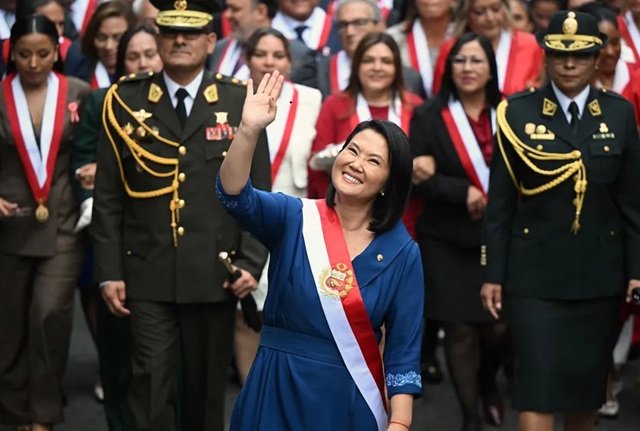
The agreement marks a significant reversal after years of increasingly hostile relations that began in 2022 and culminated in the closure of Mexico’s embassy in Lima. Mexico’s government under President Claudia Sheinbaum has now reached an understanding with Peru’s newly elected president, Keiko Fujimori, even as Mexico maintains its political support for Castillo.
The immediate development facilitating the rapprochement was an agreement allowing Betsy Chávez, Castillo’s former prime minister, to travel to Mexico. Chávez had taken refuge in the Mexican embassy in Lima in November after being investigated over her alleged involvement in Castillo’s failed self-coup attempt. Following the closure of the embassy, she remained under protection first in Lima and later in Brazil while awaiting permission to travel to Mexico.
Sheinbaum said in her morning press conference that Chávez had obtained a safe-conduct allowing her to enter Mexican territory. “Fue un avión de la Fuerza Aérea por ella y en unos minutos estará aterrizando en nuestro país,” the Mexican president said, explaining that negotiations with Peru’s new government had begun several weeks earlier and that Mexico had requested the safe-conduct.
Sheinbaum described the arrangement as part of the restoration of diplomatic relations. At the same time, she made clear that Mexico would not abandon its support for Castillo or its call for his release from prison.
“Vamos a seguir en la defensa del presidente Castillo, por las razones que hemos expuesto. Ellos lo saben, el nuevo gobierno de Perú lo sabe. Pero es un paso y pues, bienvenida Betsy Chávez a México,” she said.
The dispute over Chávez’s protection had become one of the most contentious episodes in the deterioration of relations. Before Sheinbaum’s presidency, Mexico had granted political asylum to Castillo’s wife and children and refused to recognise Dina Boluarte’s accession to the Peruvian presidency after Castillo was removed from office. Mexico’s previous government even described Boluarte as an illegitimate president.
Peru responded by expelling Karla Ornelas, Mexico’s chargé d’affaires in Lima, and declaring Sheinbaum’s predecessor persona non grata for what it described as interference in Peru’s domestic political affairs. Diplomatic relations were subsequently broken, while the previous regime allowing free entry across the border, which had been in place since 2012, was also dismantled.
Brazil eventually assumed diplomatic representation for Mexico in Peru and took responsibility for Chávez’s protection. She remained in Brasília until the safe-conduct allowed her to travel to Mexico.
Despite the restoration of relations, Mexico’s position on Castillo has not changed. Sheinbaum has repeatedly argued since taking office that the former Peruvian president suffered a coup and was arrested while travelling towards the Mexican embassy to seek asylum.
The Mexican president has also maintained that Castillo’s arrest and subsequent 11-year sentence for conspiracy were influenced by discrimination because of his indigenous background and by political considerations. Mexico continues to call for his release and has maintained its position that the former president should be defended.
The issue remains particularly sensitive because Castillo’s political allies continue to feature in Mexico’s diplomatic concerns. A request for an amnesty for José María Balcázar, a political associate of Castillo and Peru’s new president, also remains on the table.
The restoration of diplomatic ties therefore represents a pragmatic reconciliation without eliminating the political differences that caused the rupture. Mexico has been able to establish working relations with Fujimori’s newly elected government while retaining its longstanding position on Castillo.
For Peru, the agreement ends four years of diplomatic confrontation and allows relations with its neighbour to return to a formal footing. For Mexico, it resolves one of the most persistent diplomatic disputes of recent years while preserving its position on political asylum and Castillo’s imprisonment.
The joint statement itself was notably brief. After years of expulsions, accusations and diplomatic breakdown, the two governments reduced the formal announcement to a reaffirmation of their shared historical ties, friendship and cooperation, together with their commitment to international law and the UN Charter.
The restoration does not erase the disputes of the past four years, but it marks a clear decision by both governments to reopen diplomatic relations while managing their continuing disagreement over Castillo through political and diplomatic channels.