Morocco has for the first time officially addressed the mass arrival of migrants at the Spanish enclaves of Ceuta and Melilla, attributing the unprecedented movement of people to what it described as a combination of misinformation, organised smuggling networks, and widespread misunderstanding of legal developments. The statement from Morocco’s Interior Ministry offers the country’s most comprehensive explanation of the events, while rejecting accusations that it deliberately weakened border controls to place political pressure on Spain.
Issued late on Sunday, the ministry’s statement identified several factors that it said contributed to the sudden migration surge. According to Moroccan authorities, the movement was driven by the “malicious exploitation” of online networks, the activities of illegal people-smuggling organisations, the “dissemination of misleading information”, and “incorrect interpretations of legal provisions”. The ministry argued that these elements combined to encourage large numbers of people to attempt dangerous crossings into the Spanish territories.
Morocco’s explanation closely mirrors statements previously made by Spain’s Foreign Ministry. Both governments have pointed to misinformation and organised smuggling networks as significant contributors to the crisis rather than any formal change in border policy. The Moroccan authorities said many migrants had misunderstood the implications of a Spanish court ruling concerning migrants intercepted at sea, believing it offered greater opportunities to reach Spanish territory.
The ruling in question was issued by a Spanish court on 8 July. It determined that blanket pushbacks—where migrants are intercepted during their journey and immediately returned to another country—are not permissible when individuals are intercepted at sea near Ceuta and Melilla. According to Morocco’s Interior Ministry, many people interpreted this judgment incorrectly, believing it effectively opened a pathway into Spain.
Spanish Prime Minister Pedro Sánchez similarly cited rumours circulated by what he described as a “smuggling mafia”, claiming that Spain’s borders had been opened. Those reports, according to the Spanish government, became one of the principal reasons why tens of thousands of people attempted to leave Morocco for the Spanish enclaves.
Although both governments broadly agree on the factors behind the migration surge, they continue to differ significantly over the scale of the events. Morocco’s Interior Ministry said approximately 40,000 people attempted to reach Ceuta from Morocco by sea, while a further 1,135 people headed towards Melilla using the same route. Spain, however, reported that more than 50,000 migrants were involved, while the regional government of Ceuta placed the figure even higher at around 60,000.
The discrepancies extend beyond migration figures to the human cost of the crisis. Moroccan authorities confirmed that eleven people died during the events, stating that most had drowned while attempting the crossing. Spanish authorities, however, placed the death toll at no fewer than 72. According to Spain, some migrants drowned during their attempts to reach the enclave, while others were crushed as they sought to climb over a breakwater and the border fence separating Morocco from Ceuta.
Morocco said it was still verifying reports concerning fatalities on the Spanish side of the border. Meanwhile, the Moroccan human rights organisation AMDH presented a substantially higher estimate, speaking of “almost 130 victims” together with numerous people reported missing following the events in the Spanish enclave. The organisation has called for an independent investigation into the circumstances surrounding the deaths and disappearances.
The conflicting casualty figures have become one of the most contested aspects of the crisis, reflecting differing official assessments as well as the continuing uncertainty surrounding the events. While governments continue to review the available information, rights advocates have pressed for greater transparency regarding what occurred during the mass crossings and their aftermath.
The developments have also drawn the attention of the European Union. The Irish Presidency of the Council of the European Union announced that EU interior ministers would convene an emergency meeting on Tuesday to discuss the “developments in Ceuta”. The meeting signals the wider European significance of events at the Union’s external frontier, where migration pressures remain a shared concern among member states.
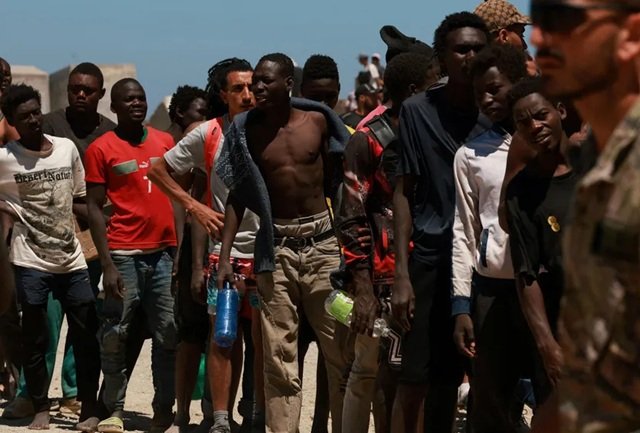
According to the available information, many of those attempting the crossings were motivated primarily by economic hardship. They travelled towards Ceuta and Melilla in the hope of reaching Spanish territory, where they believed they could begin an asylum process leading to mainland Spain and, ultimately, entry into the European Union. Their journeys reflected expectations that the enclaves could provide access to legal protection and future opportunities beyond Morocco.
Spanish authorities reported that nearly everyone who succeeded in reaching Ceuta on Thursday has since been returned to Morocco. The rapid returns formed part of Spain’s immediate response to the sudden influx of arrivals, even as legal questions surrounding maritime interceptions continued to attract attention following the Spanish court’s earlier judgment.
Morocco has also faced accusations that it deliberately encouraged or facilitated the migration surge in order to increase pressure on the Spanish government. The kingdom firmly rejected those allegations, dismissing claims that it had intentionally neglected border protection. Moroccan officials insisted that the country remained committed to strengthening international cooperation and coordination in combating irregular migration.
Reaffirming that position, the Moroccan government described itself as a reliable and responsible partner in international efforts to manage migration. By emphasising cooperation while attributing the crisis to misinformation, organised smuggling, and misunderstanding of legal developments, Morocco sought to frame the events as the result of multiple interconnected factors rather than deliberate state action.
The crisis at Ceuta and Melilla has therefore become a focal point not only for migration management but also for competing interpretations of responsibility, casualty figures, and the role of information circulating online. As European ministers prepare to examine the events and calls for an independent investigation continue, the differing official accounts illustrate the complexity of a migration emergency shaped by legal uncertainty, economic hardship, and contested narratives surrounding one of Europe’s most sensitive border regions.