On April 1, NASA is scheduled to launch its Artemis II mission, sending four astronauts on a roughly 10-day voyage around the moon—the deepest human spaceflight since Apollo 17 in 1972. The mission, departing from Kennedy Space Center in Florida at 6:24 p.m. ET, will carry astronauts in the Orion spacecraft atop the towering Space Launch System rocket. This will be the first crewed test of both vehicles, which have only flown uncrewed missions, making safety and system performance the mission’s top priorities.
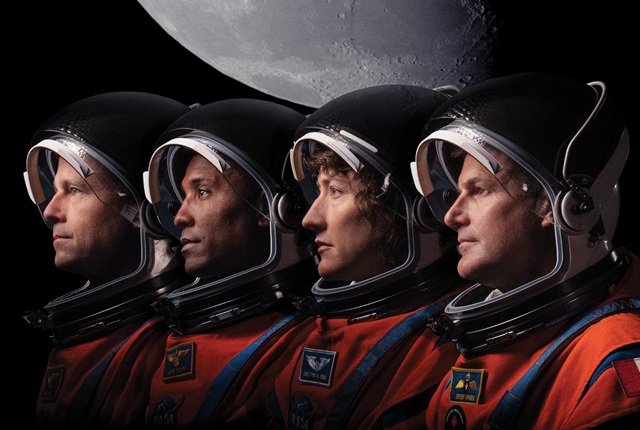
The crew includes NASA astronauts Reid Wiseman, mission commander, Victor Glover, and Christina Koch, along with Canadian Space Agency astronaut Jeremy Hansen. Koch will become the first woman to fly beyond Earth’s near orbit, Glover the first African-American, and Hansen the first non-American on such a mission. All astronauts have extensive prior experience, except Hansen, for whom this is a first flight. Wiseman has openly discussed the personal risks, reflecting on the challenges of leaving his daughters behind while pursuing this historic journey.
Artemis II’s flight plan involves Orion separating from the SLS upper stage, performing a translunar injection to reach the moon, orbiting its far side, and returning to Earth. The capsule will reenter the atmosphere at 25,000 miles per hour, enduring temperatures around 5,000 degrees before splashing down in the Pacific Ocean near San Diego. During the mission, the astronauts will test Orion’s life-support, navigation, and communications systems, practice emergency procedures, and capture images of the lunar far side—potentially giving humanity its first glimpse of previously unseen lunar terrain.
Life on board will involve roughly 30 minutes of daily exercise, eight-hour sleep cycles in hammocks, and carefully managed meals, with astronauts allowed two flavored beverages daily and one shared hourlong meal. Waste management will rely on the Universal Waste Management System, designed for microgravity conditions.
Assuming Artemis II succeeds, NASA will proceed toward Artemis III next year, which aims to practice lunar lander docking and eventually prepare for potential crewed landings in 2028 using vehicles from SpaceX and Blue Origin. However, many current and former spaceflight officials remain skeptical that a lunar landing timeline within that timeframe is realistic. Artemis II thus represents a critical proving ground, not only for NASA’s spacecraft but also for the broader ambitions of human lunar exploration.