by Our Correspondent in Jaffna
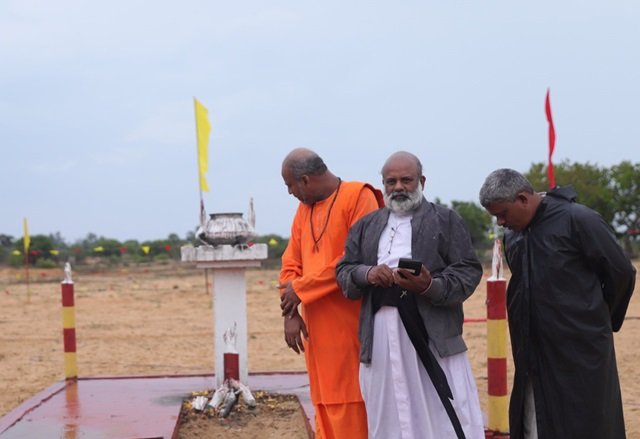
A strongly worded declaration released in connection with the 17th anniversary of the Mullivaikkal remembrance yesterday in North has sparked renewed international attention on long-standing Tamil political grievances, with signatories accusing the state of Sri Lanka of sustaining what they describe as a systematic and evolving campaign of oppression against the Tamil population. The statement, circulated among diaspora political circles and commemorative gatherings, frames the aftermath of the final stages of the Sri Lankan civil war as the beginning of a prolonged structural conflict rather than its conclusion, asserting that the experiences of 2009 did not mark an end to violence but a transformation in its form.
The declaration argues that the memory of Mullivaikkal, widely regarded among Tamils as the symbolic endpoint of the armed conflict, represents not closure but continuation, claiming that political, cultural, and territorial pressures have intensified in the years since. It alleges that land occupation, militarization of civilian spaces, and demographic changes in the northern and eastern regions of Sri Lanka continue to reshape the identity and lived reality of Tamil-majority areas. While these claims remain deeply contested, they reflect a persistent narrative within segments of the Tamil diaspora that views post-war governance as an extension of wartime strategies through non-military means.
+++
Full text of the Five-Point Resolution
Standing upon this blood-soaked soil, with heavy hearts and bearing the memories of those who perished, we pledge our commitment to the Tamil Eelam liberation struggle:
We shall resist the transformation of the Tamil homeland into a Sinhalese-Buddhist territory and continue to nurture and sustain Tamil nationalism.
We shall pressure the international community to demand an independent international investigation into the Tamil genocide, and we shall work to bring the perpetrators before international courts.
We emphasize that Tamils possess the right to self-determination as a distinct nation, and that the internal sovereignty of the Tamils must be recognized internationally at all times through a permanent political solution that acknowledges the Tamil right to self-rule.
We shall prevent any structural genocide, colonization, or demographic alteration attempted upon the contiguous homeland of the Tamil people.
Keeping the flame of Tamil national hope alive, we shall continue to fight against the oppression that seeks to keep Tamils under a singular centralized system, relying on our collective strength to march toward liberation.”
+++
Central to the document is the assertion that Tamil cultural identity is undergoing systematic erosion through what it describes as institutional and ideological dominance by Sinhalese-Buddhist nationalism. The statement claims that places of religious and cultural importance have been altered or displaced, and that historical narratives are being reshaped to reposition the island’s demographic origins. These allegations extend into the domain of education and public history, where the declaration argues that representation of Tamil heritage is being diminished or reframed within state-sponsored narratives. The government of Sri Lanka has consistently rejected such characterizations, maintaining that national integration and development initiatives apply uniformly across communities.
The declaration also introduces economic and social dimensions into its critique, alleging that consumer culture and narcotics are being used as indirect instruments of political control. It suggests that younger generations within Tamil communities are being targeted through social destabilization, leading to weakening of political consciousness and civic engagement. These claims reflect a broader interpretation of structural violence, though independent verification of such assertions remains limited and highly disputed among researchers and policy analysts studying post-war Sri Lanka.
In addition to domestic grievances, the statement turns its focus toward international accountability mechanisms, arguing that global legal frameworks have failed to adequately address allegations of wartime atrocities. It claims that diplomatic and judicial systems have been leveraged to shield perpetrators from accountability, while simultaneously constraining Tamil efforts to pursue international investigations. The declaration calls for renewed global attention to accountability processes, framing them as central to any future political settlement. International bodies, including United Nations mechanisms, have previously documented allegations of serious violations by multiple parties during the final phase of the conflict, but no universally accepted legal determination of genocide has been established.
The political dimension of the declaration is structured around a five-point framework that outlines what its authors describe as the guiding principles of Tamil national survival and political aspiration. It emphasizes resistance to perceived demographic and cultural assimilation, advocacy for international investigation into wartime conduct, and recognition of Tamil self-determination as a fundamental political right. It further calls for protection against territorial fragmentation and demographic change, and for sustained mobilization of Tamil communities globally. These positions align with long-standing strands of Tamil nationalist thought, particularly within diaspora political activism, though they remain outside the framework of official constitutional negotiations within Sri Lanka.
The statement also places significant emphasis on the role of the Tamil diaspora, describing it as an essential extension of the homeland rather than a separate community. It argues that efforts are underway to weaken cultural and political ties between diaspora populations and their regions of origin, framing this as part of a broader strategy to dilute Tamil national identity. In contrast, many diaspora organizations view themselves as cultural and humanitarian advocates, with varying political objectives ranging from federal reform to full self-determination, reflecting a diverse and often fragmented political landscape.
Security and geopolitical considerations form another core theme of the declaration, which describes the island’s strategic position in the Indian Ocean as central to its analysis of state power and international interest. It argues that external geopolitical dynamics intersect with domestic governance in ways that shape post-war policy decisions, particularly in relation to military presence and economic development projects in the northern and eastern provinces. Analysts of regional politics have similarly noted that Sri Lanka’s location has made it a focal point for competing international interests, though interpretations of their impact on internal ethnic relations vary widely.