Artificial intelligence will change every job in Germany, and neither academic degrees nor vocational qualifications can guarantee protection from its effects, according to Andrea Nahles, head of Germany’s Federal Employment Agency, who says workers must prepare for a future in which continuous learning becomes an essential part of professional life.
In an extensive interview with Die Zeit, Nahles outlined her view of how AI is poised to transform the labor market, arguing that fears of widespread unemployment are misplaced while acknowledging that the technology is already creating uncertainty among workers. The former labor minister, who introduced Germany’s minimum wage during her time in government and has led the Federal Employment Agency since 2022, described artificial intelligence as a powerful catalyst for change rather than a destroyer of jobs.
“AI is not a job killer,” Nahles told Die Zeit. “It is an accelerator of change, a mega-changer of jobs.”
The remarks come as businesses, governments, and workers across Europe grapple with the rapid rise of generative AI and automation tools. While concerns about job displacement have become increasingly prominent, Nahles pointed to research from the Institute for Employment Research (IAB), which suggests that losses and gains in employment are likely to balance each other out over time.
Certain occupations may disappear or undergo significant transformation, she said, but new roles are expected to emerge alongside them. Information electronics technicians, for example, could give way to a growing demand for cloud architects and other technology-focused professions. According to Nahles, the overall result of the transition could even be a modest increase in employment.
Yet she acknowledged that the prospect of change is deeply unsettling for many workers. In Germany, where professional identity is often closely tied to individual careers and qualifications, technological disruption can feel personal even when it does not immediately threaten employment.
Nahles argued that AI differs from previous waves of technological change because it reaches directly into the daily tasks people perform rather than merely altering the tools they use. As a result, workers may find themselves confronting not only new technologies but also changing expectations about their role, status, and expertise.
“Professional experience alone no longer protects you,” she said.
That reality, Nahles suggested, will place greater emphasis on adaptability. Future workers will need to learn how to collaborate with AI systems and adjust to evolving responsibilities rather than viewing technology as a separate tool. Success, she said, will increasingly depend on managing processes and overseeing outcomes in partnership with intelligent systems.
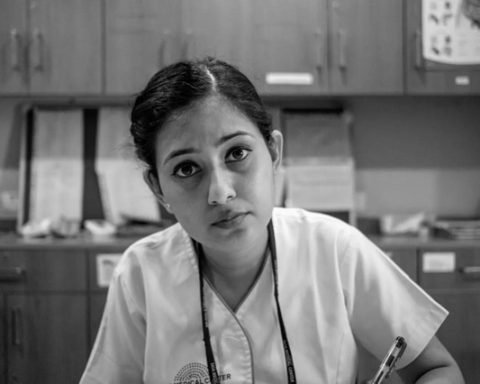
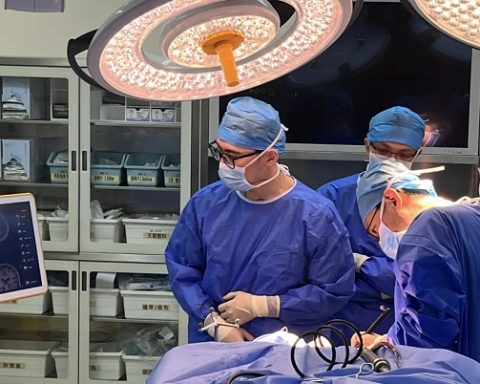
To illustrate the shift, Nahles pointed to healthcare. A doctor might use AI to help generate a diagnosis while dedicating more time to patient consultation and care. In such situations, she said, the result is neither purely human nor purely machine-generated but the product of collaboration between the two.
The growing integration of AI into workplaces is expected to extend across all sectors. Nahles referenced comments made by German Labor Minister Bärbel Bas, who recently said that every job in Germany could have some connection to AI by 2030. Against that backdrop, she urged employees to pursue further education and training whenever possible.
Particular attention, she said, should be paid to disparities in AI adoption. Scientific analyses show that women use AI tools significantly less frequently than men, creating what she described as a gender AI gap of approximately eight percent. Nahles attributed part of that difference to varying patterns of technology adoption, arguing that women often wait until the benefits are clearly demonstrated before embracing new tools.
For businesses, she said, addressing that gap is not simply a matter of fairness but a matter of long-term competitiveness.
The interview also addressed concerns among younger generations who are making decisions about education and career paths in an uncertain technological environment. Nahles rejected the notion that any profession can be considered completely AI-proof.
“There is no island where everything is safe from AI,” she said.
Rather than attempting to predict which careers will remain untouched, she advised young people to focus on occupations that align with their interests and strengths. The idea of a “safe” profession, she argued, is increasingly outdated in a world where change is constant and lifelong learning has become essential.
The transformation is already visible in office-based occupations, where many routine administrative tasks can now be performed by AI systems. Nahles estimated that the substitution potential in some traditional office jobs could exceed 50 percent, while stressing that this does not mean half of those jobs will necessarily disappear.
Creative professions, often viewed as resistant to automation, are also being affected. Recalling a discussion with students at a school in Hanover, Nahles said one student argued that AI could never replace human creativity. While she agreed that human creativity remains important, she noted that AI is capable of creative outputs as well, reinforcing the need for young people to understand the technology rather than dismiss it.
The discussion extended beyond vocational training and into higher education. For decades, university degrees have often been regarded as the safest route into stable employment in Germany. Nahles suggested that assumption is becoming less certain, though not primarily because of AI.
The labor market has weakened after several years of economic difficulties, she said, and young graduates are taking longer to secure their first jobs. Challenges appear particularly pronounced in creative and design-related fields. Nevertheless, she noted that individuals with vocational qualifications or university degrees still face lower unemployment rates overall, and most graduates find work within six months.
While some companies have cited AI adoption as a factor behind workforce reductions, Nahles argued that technology alone cannot replace human workers. Germany, she said, faces a demographic challenge that may prove just as significant as technological change. By 2035, an estimated 7.5 million skilled workers are expected to retire, creating labor shortages that AI could help alleviate.
“AI kisses demography,” she told Die Zeit, describing technology as a potential tool for addressing workforce gaps rather than eliminating the need for workers.
At the same time, Nahles stressed that AI should not become merely an efficiency machine that concentrates benefits among a small number of people. She said policymakers and institutions must consider how the gains generated by AI are distributed and ensure that technological progress supports humane working conditions.
Within the Federal Employment Agency itself, she said, officials have assured more than 100,000 employees that no one will lose their job because of AI. The agency has also established an AI ethics council to review potential applications and assess their value and acceptability, while investing in staff training and professional development.
Nahles dismissed suggestions that AI-driven disruption requires measures such as a universal basic income, arguing that such proposals assume a collapse in employment that she does not expect to occur. Instead, she called for strong education policies, lifelong learning, and clear ethical and regulatory frameworks for AI.
Asked whether she feared being replaced herself, Nahles responded with a touch of humor. Citing an automation-risk calculation from the IAB’s online “Job Futuromat,” she said her own role carries a replacement risk of up to 56 percent.
For now, however, she remains unconcerned.
“Someone,” she said, “still has to make the decisions and sign off on them.”