North Korea has dismissed its defence minister as part of a wider reshuffle of the country’s military leadership, state media reported on Sunday, in a move that places several senior officials in new positions under leader Kim Jong-un.
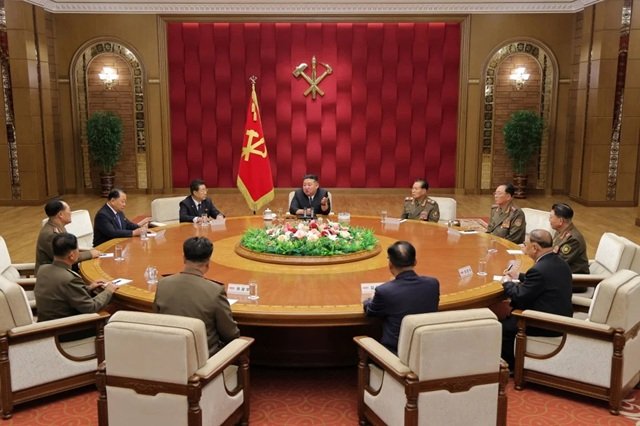
The “structural reorganisation plans” were decided during a meeting on Saturday led by Kim, the Korean Central News Agency (KCNA) said. The changes included the removal of No Kwang-chol as defence minister and his demotion within the ruling party leadership to “first vice-director of the Munitions Industry Department”.
Kim Song-gi, director of the General Political Bureau of the Korean People’s Army, was appointed as the new defence minister. The reshuffle also elevated defence adviser Pak Jong-chon, who was given the position of vice-chairman of the Central Military Commission and named to the ruling party’s Political Bureau. Several other promotions were also announced.
The changes came alongside renewed emphasis on North Korea’s military technology. In a separate report, KCNA said Kim had praised scientists, researchers and officials at a ceremony on Saturday for advances in defence technology, awarding them top national honours.
According to KCNA, the recipients had made major contributions to “resolving scientific and technological problems of epochal significance in developing new combat weapon systems”. The report did not specify what type of weapons system was involved.
The recognition follows Kim’s involvement in weapons development in recent months. In late June, he oversaw tests of a new extended-range multiple rocket launcher and artillery system, according to the source material.
The leadership reshuffle also comes shortly after annual joint military drills between South Korea and the United States concluded. Pyongyang regularly denounces the exercises as preparations for an invasion, making the timing of the military changes particularly significant as tensions remain between North Korea and the US-South Korea alliance.
This year’s exercises attracted additional attention after US President Donald Trump ordered them to be shortened. Trump criticised the drills as provocative towards North Korea and also criticised Seoul for not supporting his war against Iran.
At the same time, Trump has signalled an interest in renewed engagement with Kim. The US president praised the North Korean leader, whom he met twice during his first term in office, as he considers the possibility of another meeting, potentially this year.
North Korea, however, has shown little indication that it is ready to reciprocate those overtures. Pyongyang has continued to fire missiles and condemn the scaled-down military exercises, maintaining its opposition to US and South Korean military cooperation.
The North has also criticised Washington’s approval of arms sales to South Korea and plans to fund programmes documenting human rights abuses in North Korea.
Against that backdrop, the latest reshuffle combines changes at the highest levels of the military and ruling party with public recognition of advances in defence technology. The moves underline the continued prominence of military affairs in Pyongyang’s leadership decisions even as Washington signals an interest in renewed contact with Kim.