Cuba has announced that it has run out of fuel entirely, triggering a new phase in the island’s deepening economic and humanitarian crisis as prolonged blackouts, transportation breakdowns, and pressure on hospitals expose the fragile state of the country’s infrastructure under intensified U.S. sanctions.
In a stark televised address, Cuban Energy and Mines Minister Vicente de la O Levy declared that the government no longer possesses any reserves of diesel or fuel oil, the two key resources used to sustain the country’s struggling electricity network. “We have absolutely no fuel oil and absolutely no diesel,” the minister said. “We no longer have reserves.”
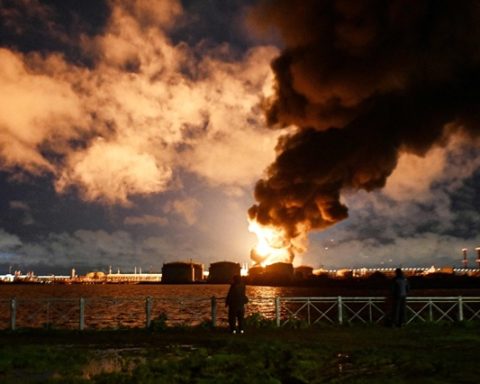
The announcement marked one of the clearest acknowledgments yet from Cuban authorities that the country’s energy system is nearing collapse. The island has endured months of worsening blackouts, but officials now warn that conditions are becoming increasingly unsustainable as imported fuel supplies disappear and domestic production remains far below demand.
“The situation is very tense. It is getting hotter,” de la O Levy said, confirming that Cuba has already consumed its most recent shipment of imported crude oil. A Russian tanker carrying approximately 100,000 tons of crude arrived in Cuba at the end of March, but officials say those supplies have now been exhausted.
The crisis reflects the devastating impact of a renewed U.S. campaign aimed at isolating the Cuban government economically and energetically. Since late January, Washington has intensified what Cuban authorities describe as an “energy siege,” threatening sanctions and tariffs against foreign governments, companies, and shipping operators that continue supplying fuel to the island.
The strategy has sharply reduced deliveries from Cuba’s traditional energy partners, particularly Venezuela and Mexico, both of which had long helped sustain the country’s energy needs. Until recently, roughly two-thirds of Cuba’s fuel consumption depended on imported petroleum products. The country’s energy system remains heavily reliant on aging thermoelectric plants and scattered diesel and fuel-oil generators, many of which are decades old and prone to failure.
As fuel imports vanish, Cuba’s power grid is now almost entirely dependent on limited domestic crude oil production, small volumes of natural gas, and renewable energy sources that remain insufficient to stabilize the national system.
The consequences are already being felt across the island. In Havana, residents are enduring blackouts lasting more than 20 hours a day, according to the energy minister. Outside the capital, conditions are reportedly even more severe, with many areas experiencing near-total interruptions to electricity service.
The outages have disrupted virtually every aspect of daily life. Hospitals are struggling to maintain essential operations, public transportation networks are breaking down, refrigeration systems are failing, and businesses are closing for long stretches due to lack of electricity. For many Cubans already facing shortages of food, medicine, and basic necessities, the energy collapse has intensified an atmosphere of exhaustion and uncertainty.
The Cuban government has attempted to expand renewable energy production in recent years, largely with assistance from China. Over the past two years, Chinese companies helped install solar infrastructure capable of generating around 1,300 megawatts of electricity. However, much of that energy cannot be effectively stored or distributed because of the instability and deterioration of Cuba’s outdated power grid.
Without modern battery storage systems or reliable transmission infrastructure, renewable energy alone has proven incapable of compensating for the collapse in imported fuel supplies.
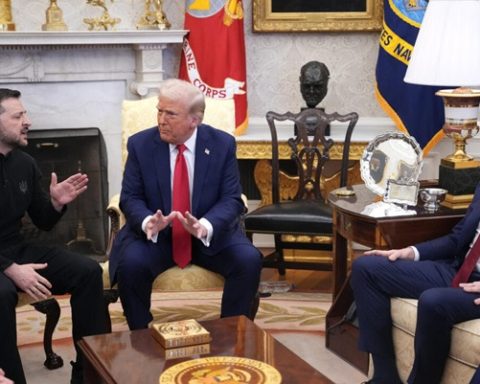
China’s role has become increasingly important for Havana as diplomatic tensions with Washington escalate once again. Beijing has long been one of Cuba’s principal international allies and economic supporters. The energy crisis has unfolded as U.S. President Donald Trump visits China for high-level meetings with President Xi Jinping, adding a broader geopolitical dimension to the situation.
Trump himself appeared to signal a mixed approach toward Cuba in recent days. Before departing for Beijing, the U.S. president posted a message suggesting a willingness to pursue dialogue with Havana. “Cuba is asking for help, and we are going to talk,” he wrote on social media.
At the same time, Washington has continued to tighten economic pressure. On May 1, the Trump administration expanded sanctions targeting nearly any non-U.S. entity maintaining commercial relations with Cuba, particularly in sectors tied to energy, finance, defense, and security. The measures represent a further escalation of a strategy combining economic punishment with selective diplomatic signals — an approach critics describe as “the stick and the carrot.”
The U.S. State Department also announced a proposal offering Cuba up to $100 million in assistance, but only if the island undertakes what Washington called “significant reforms” to its communist political and economic system.
For Cuban authorities, the measures amount to an attempt to force political concessions through economic strangulation. Officials have repeatedly argued that the sanctions regime is responsible for accelerating shortages, crippling infrastructure, and worsening living conditions for ordinary citizens.
The intensifying standoff has fueled speculation about possible future U.S. actions toward the island. In recent weeks, rumors of a potential intervention or expanded military pressure have circulated widely after reports emerged of increased American surveillance activity around Cuban territory.
According to CNN, U.S. military aircraft and surveillance drones have carried out at least 25 flights near Cuba since early February, primarily around Havana and Santiago de Cuba. Analysts noted that similar patterns of surveillance activity were observed around Venezuela before a previous U.S.-linked operation earlier this year.
Although there has been no official indication of imminent military action, the increased surveillance has heightened anxiety within Cuba and added to fears that the island could become a more central front in Washington’s broader confrontation with leftist governments in Latin America.
For ordinary Cubans, however, the immediate concern is survival. The island has already suffered one of the largest migration waves in its modern history, with hundreds of thousands leaving in recent years amid economic collapse, inflation, and deteriorating public services. The energy emergency threatens to accelerate that exodus even further.
The Cuban government has appealed openly for any country willing to sell fuel to the island. “Cuba is open to anyone who wants to sell us fuel,” de la O Levy said, signaling the desperation of a government running out of both resources and options.
The crisis represents one of the gravest moments for Cuba since the “Special Period” of the 1990s, when the collapse of the Soviet Union plunged the island into severe shortages and economic hardship. But many analysts believe the current situation may prove even more difficult because it combines infrastructure decay, global geopolitical tensions, and a modern sanctions regime capable of isolating Cuba from international markets more comprehensively than before.
As blackouts stretch across entire cities and fuel reserves disappear completely, Cuba now faces a defining test of endurance — one shaped not only by domestic economic failures, but also by the intensifying geopolitical struggle between Havana and Washington.