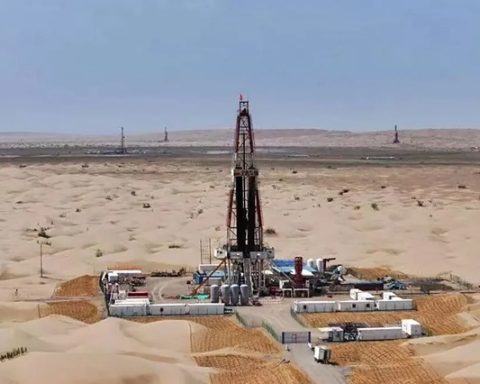
Oil prices were little changed on Wednesday, but both Brent and U.S. West Texas Intermediate (WTI) are set to finish 2025 with steep annual losses, Reuters reports. Brent crude futures rose 11 cents to $61.44 a barrel, while WTI gained 11 cents to $58.06. Despite these modest gains, Brent is on track for an 18% annual decline—the most substantial percentage drop since 2020—and a third consecutive year of losses, marking its longest losing streak ever. WTI faces a 19% decline for the year, according to LSEG data, leaving 2025 average prices for both benchmarks at their lowest since 2020.
Analysts point to a global supply glut as the main driver of the declines. BNP Paribas commodities analyst Jason Ying told Reuters that U.S. shale producers have hedged at high prices, ensuring consistent output that is largely insensitive to price swings. Ying expects Brent to fall to $55 per barrel in the first quarter of 2026 before recovering to around $60 as supply growth normalizes while demand remains flat.
Geopolitical events shaped oil markets throughout 2025. Early in the year, sanctions on Russia disrupted shipments to major buyers including China and India. Conflicts ranging from Ukraine to Iran-Israel tensions and unrest in the Strait of Hormuz raised short-term risk premiums. Additional pressures included Saudi Arabia and UAE tensions over Yemen, U.S. sanctions on Venezuelan oil, and threats of action against Iran.
Despite these disruptions, prices cooled after OPEC+ accelerated production, releasing roughly 2.9 million barrels per day since April. Analysts including Martijn Rats, Morgan Stanley’s global oil strategist, suggest that further price declines could prompt OPEC+ to adjust output, potentially cutting supply if Brent falls into the low $50s. John Driscoll, managing director at JTD Energy, told Reuters that geopolitical risks and U.S. political factors, including actions by former President Donald Trump, may provide a “floor” to prices even amid oversupply.
Looking ahead, OPEC+ has paused further production hikes for the first quarter of 2026, with its next meeting scheduled for January 4. International Energy Agency and Goldman Sachs forecasts indicate supply may continue to exceed demand in the coming year, but experts warn that geopolitical volatility could continue to influence price fluctuations.
Overall, 2025’s combination of oversupply, trade tensions, sanctions, and conflict-driven uncertainties has created a turbulent environment for oil markets, leaving prices at multi-year lows despite intermittent surges during periods of heightened geopolitical risk, Reuters analysis shows.