For 27 years, Ahmad Khan’s life was in Pakistan. Originally from Afghanistan, he ran a small shoe shop in Sialkot in the north, sent his children to a local school and watched his eldest son work at a shawarma stall near their home. He was known in the neighbourhood mosque. Then Pakistan’s campaign against Afghan migrants reached his family. Last November, Khan was expelled along with his wife, six sons and two daughters.
The return to Afghanistan meant far more than crossing an international border. Khan was going back to a country where, under Taliban rule, the prospects for deportees are bleak, particularly for women. The United Nations has described the system imposed on women as gender apartheid. “The situation in Afghanistan is very bad,” Khan says by telephone from the country. “There is no work and no proper education system, especially for girls” from the age of 12.
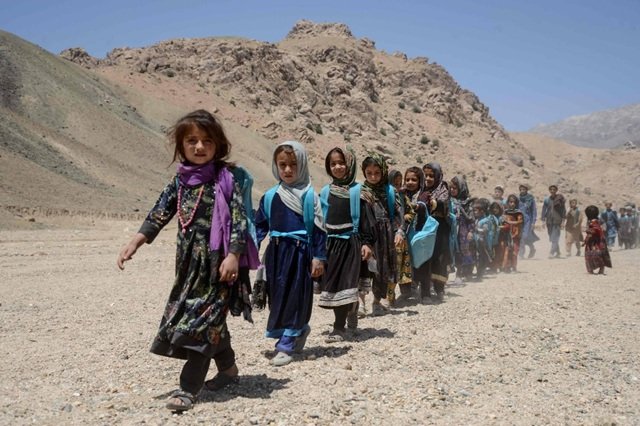
Under the Taliban regime, girls do not have access to secondary education. For a child who was attending school in Pakistan one week, deportation can therefore mean finding herself on the other side of the border the next week with no school to attend.
Khan is one among more than 2.6 million Afghans who have returned to Afghanistan since 2023 as a result of Pakistan’s strict repatriation plan. According to the UN Refugee Agency, more than 723,000 people returned between 1 January and 1 August 2026 alone. Many deportees were born in Pakistan and have never set foot in Afghanistan. They speak Urdu rather than Dari or Pashto. The streets, schools and playgrounds they know are Pakistani.
The scale of the returns has transformed the border into a scene of deprivation. Families face shortages of food and water, intense heat and inadequate shelter while confronting the uncertainty of what awaits them in Afghanistan.
Khan and his family crossed through Torkham, the busiest crossing between Pakistan and Afghanistan, where between 4,000 and 6,000 people can pass each day. His family became trapped for three or four days because of overwhelming congestion. Since March, conditions at Torkham have deteriorated further. Returning Afghans have faced border closures, collapsed migration services, poorly equipped transit camps and extreme weather. In mid-July, the crossing was disrupted by sudden floods in the region. Three Afghan refugees died and nine others were injured.
The deportation campaign is the result of Pakistan’s Illegal Foreigners’ Repatriation Plan, launched in 2023 to expel foreign nationals whom the government considers to be residing in the country illegally. Raids intensified, notices appeared in Afghan neighbourhoods and rumours of deportation spread through narrow streets and crowded markets. Some families left quietly after night raids. Others waited, hoping the pressure would ease. Instead, the campaign was strengthened in 2025, worsening prospects for Afghan migrants and refugees.
The capacity to process expulsions has failed to keep pace with the scale of returns, contributing to severe congestion at the border. Torkham was practically closed between October and March as fighting along the frontier intensified, eventually leading to Operation Ghazab lil Haq, a Pakistani military campaign launched in February against the Taliban and militants linked to the group.
The crossing reopened to Afghan returnees in late March under strict security measures, including curfews around the terminal. Migration procedures were channelled exclusively through Hamza Baba, a transit point a few kilometres from Torkham. After reopening, the movement of people surged by 727% in less than a week, according to UNHCR data. Ninety-five per cent of undocumented returnees said they had left because they feared arrest.
For those waiting at the frontier, the consequences have been immediate and often severe. Bagzari Hamid Ullah, a 34-year-old woman from Sialkot and mother of four, spent six days at Torkham without food or shelter. Her husband had been detained during a raid in Punjab in March, forcing the family to leave that same month.
She had arrived in Pakistan as a young child and built her entire adult life there. “I was a girl, probably six or seven years old, when we came to Pakistan. I got married here. I made my home here. My children were born here,” she says. “My father’s grave is here. So when I leave Pakistan, I feel that I have left behind the most precious part of myself.”
For some families, the wait can last as long as two weeks. In March, a fire in the Torkham bazaar destroyed dozens of shops, further reducing the services available to people stranded there.
The Afghan displacement crisis is among the world’s most prolonged. International agencies estimate that more than 10 million Afghans live displaced outside the country as a result of decades of war and internal conflict. Iran and Pakistan, the two countries hosting the largest Afghan exile populations, have intensified deportation campaigns. According to the International Organization for Migration, more than six million Afghans have returned from the two countries since September 2023, producing a sudden 10% increase in Afghanistan’s population.
Pakistan says its policy is driven by national security, immigration control and sovereignty. Authorities point to irregular migration and cross-border extremism and maintain that the law should apply equally to everyone. On the ground, however, the campaign has been experienced by many families as the uprooting of lives built over decades. Families in Islamabad, Rawalpindi, Peshawar and Sialkot found themselves classified as foreigners almost overnight. Businesses closed, jobs disappeared and landlords refused to renew rental agreements. Families began packing for a country many had never seen.
UN experts say hundreds of thousands of children, from families with and without documentation, are among those being forced to return. In 2025 alone, 60% of returnees were minors.
Abiha Nawaz, a consulting psychologist at Al Sheikh Hospital in Sialkot, says the consequences for children are profound. “This type of displacement is extremely harmful, because children find it difficult to process what has been taken away from them,” she says. The damage begins with the loss of the only home they have known. “Uncertainty creates fear and anxiety in children, because they consider Pakistan their home,” Nawaz says.
For girls, the disruption can carry another consequence: the loss of education. “My daughters were born here. Here they have their school, their classes and their friends. They are very sad, because they are leaving their childhood behind,” Ullah says.
On the Afghan side, transit camps such as Omari are struggling to absorb those arriving. The camps process and monitor returning Afghan citizens while providing emergency humanitarian assistance, but officials face mounting pressure. Recent cross-border fighting and airstrikes have also caused interruptions, according to Jawad Shinwari, a volunteer working at the border.
“Children are among the most affected,” Shinwari says. “Babies and young children become sick and during downpours people cover themselves with plastic bags for want of anything better.”
Many returnees arrive with few or no resources after spending decades in Pakistan. “It is not possible to pack your whole house and move to another country,” Shinwari says. “Resources in the camps are also limited. It is common to see shortages of food, accommodation and water while people wait for their cases to be processed.”
Humanitarian workers say the returns have intensified pressure on families already exhausted by displacement, while humanitarian organisations maintain that returns must be accompanied by human rights guarantees.
At Torkham, Sumandar Khan, from Daska in northern Pakistan, had been waiting for more than a week. “We have neither a home nor adequate accommodation,” he says. “Several members of our family are sick and we are facing serious financial difficulties.” Like many returnees, he hopes the authorities will provide his family with land and access to basic healthcare.
On the Afghan side, Deputy Government Spokesman Hamdullah Fitrat said in June that 42,614 residential plots had been allocated to repatriated families as part of a national reintegration initiative. Yet projections by the International Organization for Migration indicate that nearly 2.7 million people will leave for Taliban-ruled Afghanistan between April and December 2026.
For families such as Khan’s and Ullah’s, the numbers represent something more immediate than a regional displacement crisis. They represent homes abandoned, livelihoods dismantled and children separated from schools they knew as their own. At a border struggling to process thousands of people each day, the return journey has become another chapter in Afghanistan’s long history of displacement.