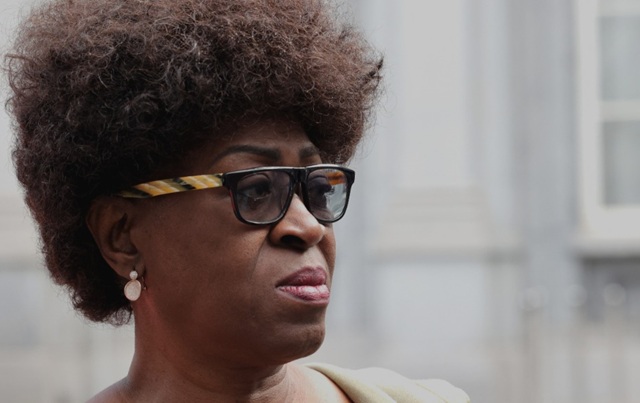
Juliana Lumumba, daughter of Congolese independence hero Patrice Lumumba, has underscored her father’s enduring impact on the global anti-colonial movement in a recent interview with Russia Today. She emphasized that his legacy continues to resonate far beyond Africa’s borders, particularly in countries that championed anti-imperialist ideals during the Cold War.
“My father’s fight for justice and freedom transcended Africa,” said Juliana Lumumba, a former Minister of Culture of the Democratic Republic of the Congo (DRC). “He became a symbol of resistance not just for Africa but also for the Soviet Union, representing the broader global struggle against colonialism and neocolonialism.”
Juliana pointed to the widespread symbolic recognition of her father, such as avenues named in his honor and institutions that continue to bear his name. One of the most notable examples, she said, is the Peoples’ Friendship University in Moscow, renamed Patrice Lumumba University in his memory following his assassination in 1961 — a name it still holds today. The university has since educated generations of African specialists and leaders, including figures from the DRC.
“This is a sign of geopolitical continuity,” she explained. “It’s a form of solidarity that is present, real, and ongoing.”
Patrice Lumumba, born in 1925, was the first democratically elected prime minister of the DR Congo after it gained independence from Belgium in 1960. His tenure was cut tragically short when he was overthrown and murdered in January 1961. His assassination — orchestrated by Congolese rivals with the backing of Belgian operatives — shocked the world and galvanized anti-colonial movements globally. His dismembered body was reportedly dissolved in acid in a chilling attempt to erase his legacy.
But as Juliana Lumumba notes, that legacy has only grown stronger. She described her father as “a truly iconic figure” who embodies African dignity and the vision of a united, self-reliant continent.
Looking to Africa’s future, she stressed the need for deeper regional unity to overcome lingering neocolonial influences. “Breaking free from neocolonialism can only be accomplished by unity,” she said. “There’s more trade between African countries now than with Europe or the United States. That desire for self-reliance is becoming stronger and stronger.”
Juliana Lumumba’s remarks come amid renewed calls across the continent for economic independence, cultural revival, and political solidarity — ideals her father once championed, and which, she believes, continue to shape the African spirit today.