Editorial
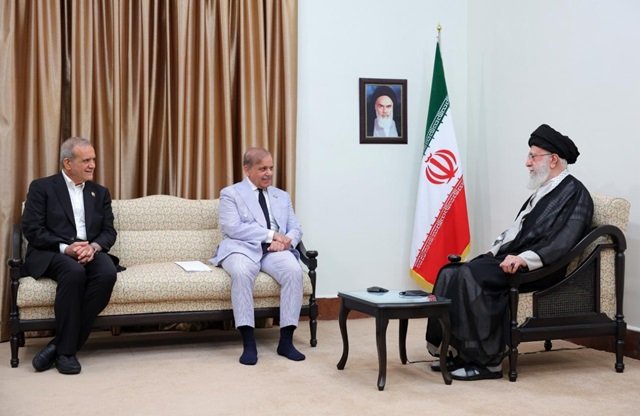
The language of peace, when deployed by states long entangled in cycles of militarisation and geopolitical opportunism, often invites not admiration but scrutiny. Pakistan’s latest overtures towards peace, accompanied by the tireless, round-the-clock engagements of its Prime Minister and Chief of Defence Staff, Asim Munir, are being heralded in some quarters as a moment of strategic recalibration. Yet to accept such declarations at face value would be to ignore the deeper contradictions embedded within Pakistan’s historical trajectory, its domestic political architecture, and its regional conduct. Peace, after all, is not merely a rhetorical device but a measurable condition, one that must manifest both internally and externally if it is to carry any legitimacy.
Sri Lanka, as a longstanding partner of Pakistan, has often found comfort in this bilateral relationship, particularly during moments of national vulnerability. There is little doubt that Islamabad has extended support to Colombo in times of need, reinforcing a narrative of dependable friendship. However, international relations are rarely governed by sentiment alone. They are shaped by interests, power asymmetries, and historical entanglements that frequently undermine the very ideals states claim to uphold. In this regard, Pakistan’s professed commitment to peace must be weighed against its enduring role within broader geopolitical rivalries, particularly its alignment with the United States during the Cold War and the so-called War on Terror.
For decades, Pakistan functioned as a frontline state in Washington’s strategic calculus, serving as both a conduit and a battleground for American interests in the region. From the Soviet-Afghan War to post-9/11 interventions, Islamabad’s cooperation was instrumental, yet the dividends of this alliance remain contested. The transactional nature of this relationship left Pakistan grappling with internal instability, radicalisation, and economic fragility, while the promised rewards from Washington often proved fleeting or conditional. To frame Pakistan today as a champion of peace without acknowledging this legacy of instrumentalisation is to overlook the structural forces that have shaped its current posture.
Regionally, the persistent hostility between India and Pakistan continues to cast a long shadow over South Asia. Their rivalry, rooted in the traumatic partition of 1947 and sustained through successive conflicts, has entrenched a security dilemma that prioritises military expenditure over human development. Both nations possess nuclear arsenals, investing billions annually in defence while vast segments of their populations remain mired in poverty, deprived of quality education, and exposed to systemic insecurity. This juxtaposition raises an uncomfortable question: can states that allocate such disproportionate resources to instruments of destruction credibly position themselves as advocates of peace?
The answer becomes even more complex when one examines Pakistan’s internal dynamics. Despite maintaining the formal trappings of democracy, the country’s political system has long been overshadowed by the dominance of its military establishment. Civilian governments operate within constraints that limit their autonomy, while key decisions on security and foreign policy remain firmly in the hands of unelected actors. This imbalance not only undermines democratic accountability but also complicates Pakistan’s ability to project a coherent and credible peace agenda on the global stage.
Nowhere are these contradictions more evident than in regions such as Balochistan, where allegations of enforced disappearances, extrajudicial killings, and the suppression of dissent continue to surface. The province, rich in natural resources yet economically marginalised, has become a focal point of resistance against what many perceive as exploitative state policies. Similarly, Pakistan’s treatment of Afghan refugees and its military operations along the border with Afghanistan have drawn criticism from human rights observers. Reports of indiscriminate airstrikes and forced repatriations raise serious concerns about the humanitarian implications of its security strategies.
These domestic and regional realities stand in stark contrast to the image of a state committed to peace. They suggest instead a pattern of selective engagement, where the rhetoric of peace is employed externally while coercive practices persist internally. This dissonance is not unique to Pakistan; it is a recurring feature of state behaviour in an international system that often rewards power over principle. However, it does place a particular burden on Islamabad to demonstrate that its current initiatives are not merely performative but reflective of a genuine shift in policy.
The absence of meaningful peace initiatives between Pakistan and India further complicates this narrative. Despite periodic calls for dialogue, substantive progress remains elusive, hindered by mutual distrust and domestic political pressures on both sides. Likewise, tensions with Afghanistan and unrest in Balochistan indicate that Pakistan’s challenges are not confined to its external relations but are deeply intertwined with its internal governance. Peace, in this context, cannot be compartmentalised; it must be pursued holistically, addressing both interstate conflicts and intrastate grievances.
For Sri Lanka, the implications of this analysis are significant. While maintaining cordial relations with Pakistan is both pragmatic and beneficial, it is equally important to engage with a clear-eyed understanding of the complexities involved. Diplomatic partnerships should not preclude critical assessment, particularly when issues of regional stability and human rights are at stake. To do otherwise risks endorsing a narrative that may obscure more than it reveals.
The question is not whether Pakistan should pursue peace—few would dispute the value of such an endeavour—but whether its current approach is sufficient to achieve it. Peace cannot be sustained through declarations alone; it requires structural reforms, accountability, and a willingness to confront uncomfortable truths. It demands that states reconcile their external ambitions with their internal realities, ensuring that the principles they advocate abroad are reflected in their conduct at home.
If Pakistan’s leadership is indeed committed to this path, it must move beyond symbolic gestures and address the underlying issues that continue to fuel conflict and instability. This includes fostering genuine democratic governance, protecting minority rights, and engaging constructively with its neighbours. Without such measures, the rhetoric of peace risks becoming a veneer, concealing a more troubling continuity of practices that undermine the very ideals it seeks to promote.