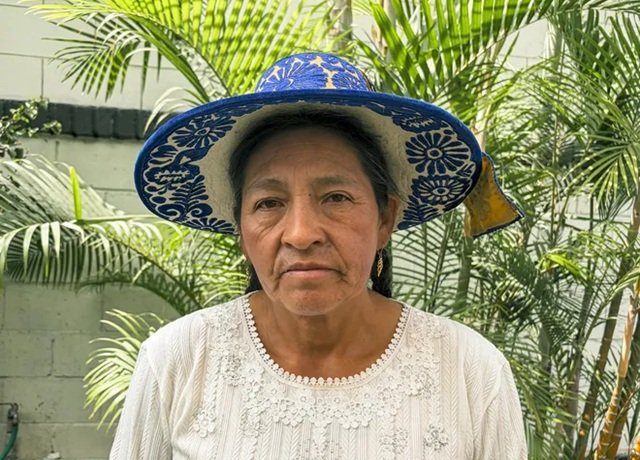
Three decades after more than 270,000 women were sterilised under Peru’s national family planning programme, survivors are still seeking justice, accountability and recognition. As Keiko Fujimori assumes the presidency, victims and human rights advocates fear that one of the country’s gravest human rights abuses will remain unresolved. Their struggle reflects a broader battle over historical accountability, reproductive rights and the legacy of state power.
When Maribel Meza looks back on her life, what she remembers most is not simply the six children she gave birth to, but the many more she believes she was prevented from having. Had the decision been hers alone, she says she would have welcomed 13 or 14 children. Instead, shortly after giving birth to her sixth child in the mid-1990s, she was sterilised.
According to Meza, officials told her that the state would take away her children if she became pregnant again. She was also informed that her husband had already approved the procedure. Her fallopian tubes were then cut. Today, at the age of 59, her account is recorded in Peru’s Ministry of Justice victims’ register, one of more than 270,000 documented cases involving women sterilised between 1996 and 2000 under the National Programme for Reproductive Health and Family Planning.
Three decades later, international human rights institutions describe the mass sterilisation campaign, which overwhelmingly targeted poor, rural and Indigenous women, as one of Peru’s most extensive human rights violations and a severe form of gender-based violence. Yet the Peruvian state has neither formally acknowledged responsibility, compensated victims nor secured convictions against those responsible.
The issue has regained political urgency following the election of Keiko Fujimori as Peru’s new president. The daughter of former president Alberto Fujimori has repeatedly defended her father’s policies as legitimate family planning initiatives, rejecting their characterisation as forced sterilisation. Most recently, in 2021, she described allegations of systematic coercion as mistaken. During the latest election campaign, she avoided the issue entirely and declined to answer debate questions concerning human rights violations committed under her father’s government.
Keiko Fujimori, leader of the far-right Fuerza Popular party, secured victory with 50.1 per cent of the vote against a left-wing opponent who received 49.9 per cent. She has pledged to continue many of her father’s policies, including market-oriented economic reforms and expanded powers for the police and military to combat corruption and crime. Her own political career has not been free from controversy, having previously spent time in pre-trial detention over money laundering allegations. Alberto Fujimori himself was convicted of corruption, ordering murders and kidnappings, and serious human rights violations, receiving a 25-year prison sentence before his death two years ago.
For survivors and their advocates, however, the central question remains accountability.
María Ysabel Cedano, a lawyer with the women’s rights organisation Demus, has spent nearly three decades seeking official recognition of the sterilisation programme and justice for those affected. She argues that reproductive freedom remains elusive for many women in Peru.
“As long as women in our society have too little education, lack financial independence and cannot live autonomously, they cannot freely decide what happens to their own bodies,” she says.
Cedano herself chose not to become a mother, saying she wanted to live her life differently and remain free. Instead, she has devoted her career to pursuing accountability for those she says implemented the sterilisation programme. While many doctors, nurses and military personnel participated in carrying out the operations, she believes responsibility extends throughout the political chain of command. Although Alberto Fujimori has died, three of his former health ministers—Alejandro Aguinaga, Marino Costa Bauer and Eduardo Yong Motta—remain alive and continue to face investigations. Aguinaga, a surgeon and Fujimori’s former personal physician, was sworn in again as a member of parliament only days before Keiko Fujimori assumed office.
Among those continuing to demand justice are Rosa Lapa and Margarita Rojas, whose stories, like Meza’s, are documented in the state’s victims’ register. Lapa was sterilised at the age of 18 after giving birth to her second child, not in a hospital but in a makeshift room alongside six other women. Afterwards, she says, her husband left her because he wanted more children. Rojas underwent the procedure at the age of 23.
One week before the presidential inauguration, the three women travelled for more than ten hours by overnight bus from their villages to Lima. Together with other survivors of the Fujimori era, they participated in a press conference calling for the repeal of laws that they believe increase impunity for state officials. They also met the prosecutor leading investigations into Alejandro Aguinaga.
Their concerns have intensified following recent legislative changes. In June, Peru’s Congress approved legislation preventing police officers and members of the armed forces from being tried in civilian courts for offences committed while on duty. Survivors fear such developments could further weaken prospects for accountability while creating conditions in which abuses against Indigenous communities could once again go unpunished.
The women also worry that public memory is fading.
“They operated on us like animals,” Meza says. Of her six children, only four are still alive. Like many other women, she says she never fully understood what had been done to her until investigative journalists from El Comercio, lawyers and later the official victims’ register documented that, in most cases, fallopian tubes had been tied, blocked or severed. The operations were frequently carried out under degrading conditions, often under severe time pressure, without adequate hygiene standards and, in many cases, without anaesthesia.
According to Cedano, what initially appeared to involve only a small number of women gradually emerged as a systematic campaign affecting hundreds of thousands. Survivors consistently reported similar methods of coercion.
Rojas recalls that, the day after giving birth to her second child, health workers warned she would no longer receive milk powder, rice, quinoa or cooking oil unless she agreed to sterilisation.
All three women belong to Quechua-speaking Indigenous communities in the Andes. Although they also speak Spanish, many other affected women spoke only Quechua. According to survivors and their lawyers, women were deliberately deceived, threatened or physically forced into the procedures. They also report that some victims had not yet had children at all.
Human rights organisations, including Amnesty International, together with numerous academic studies, argue that Peru’s sterilisation campaign constituted a form of genocide and ethnic cleansing directed against Indigenous women. The Fujimori government, by contrast, maintained that the reproductive health and family planning programme sought to reduce maternal and infant mortality, prevent unwanted pregnancies and promote informed family planning decisions.
As more cases became public during the late 1990s and early 2000s, evidence increasingly suggested that the programme extended far beyond isolated incidents of misconduct. Investigations indicated that pressure, deception, extortion and violence were widespread, while the state had effectively identified Indigenous communities as a population whose birth rates should be reduced. Alongside more than 270,000 women, over 20,000 predominantly Indigenous men also underwent vasectomies.
Cedano argues that documentary evidence demonstrates a systematic pattern. Medical personnel reportedly worked under sterilisation quotas, with salaries withheld or employment threatened if monthly targets were not achieved. Government correspondence from the period also indicates that some nurses were warned they themselves would be sterilised if quotas were missed. Internal directives described the so-called “voluntary surgical contraception” as compulsory and free of charge.
The campaign also relied on extensive government outreach in rural communities. During one such campaign in Huaytará in 1996, officials filmed a procedure intended to demonstrate the simplicity and effectiveness of sterilisation. Thirty-six hours later, the young woman featured in the video died after her large intestine was punctured during surgery.
At least 18 deaths have been directly linked to sterilisation procedures. Many investigations were abandoned, while others expired under statutes of limitation. A significant legal turning point came in March 2026, when the Inter-American Court of Human Rights found Peru responsible for the forced sterilisation and death of Celia Ramos. Ramos died in 1997 after agreeing to a tubal ligation only after sustained pressure from health workers who repeatedly visited her home despite her initial refusal. The Court ruled that sterilisation carried out under coercion constituted a serious human rights violation.
For Cedano, the judgment carries implications extending well beyond a single case. She believes it establishes that such violations cannot be amnestied or allowed to expire through limitation periods. Demus currently represents 2,074 additional cases, many of which were previously closed because of statutory deadlines. The ruling, she argues, makes clear that responsibility throughout the entire chain of command must be investigated.
Survivors now hope the Court’s decision will serve as a precedent capable of reopening other cases, ensuring that evidence is properly examined and that accountability extends to those who authorised, implemented and defended the programme. Their concerns have become more immediate with Keiko Fujimori’s arrival in the presidential palace. For women who have spent 30 years pursuing justice, the struggle is no longer only about confronting the past. As documented by Die Zeit, it is also about ensuring that one of Peru’s darkest chapters is neither denied nor forgotten.