New archaeological findings at a lavish villa outside ancient Pompeii are reshaping historians’ understanding of how some Roman slaves lived, according to reporting from the Times UK. Although enslaved people in ancient Rome typically endured harsh labor and short, punishing lives, evidence uncovered at the site shows that their meals were at times far better than previously believed.
Archaeologists excavating the villa — located in what experts describe as the “Beverly Hills of Pompeii” — discovered an intact amphora containing 10 kilograms of carbonised fava beans, once stored in olive oil, alongside a woven basket filled with the preserved remains of apples and pears. The food stores were found in slave quarters on the first floor of the estate, which was buried in ash and pumice during the catastrophic eruption of Mount Vesuvius in AD 79.
Gabriel Zuchtriegel, director of the Pompeii archaeological park, said the discovery shows that slaves, though treated like machines, occasionally ate better than some free residents of the city. The villa’s owner, whose wealth is evident from the presence of a ceremonial bronze-adorned chariot, panoramic terraces and extensive farmland, seemed to supplement his slaves’ wheat-heavy diet with fruits rich in vitamins and protein-rich legumes such as fava beans. Although far from the lavish fare enjoyed by their masters, the slaves’ meals could surpass those of poorer free Romans who often lacked resources and relied on charity.
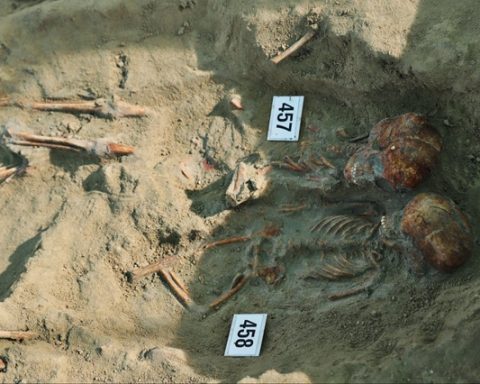
Archaeologists estimate that the villa’s workforce consumed bread made from more than 18 tonnes of wheat annually. According to Zuchtriegel and his team, the owner’s decision to provide additional nutritious food was not driven by generosity but by economic logic. Slaves represented costly investments, and wealthier owners tended to feed them better to protect their labor force. Evidence of the heavy toll of this labor has also surfaced: the remains of a slave discovered in 2020 showed compressed spinal discs despite the individual being only in his late teens or early twenties.
The slaves’ living conditions, however, remained harsh. They slept three to a room on the ground floor, an area infested with rodents — their carbonised remains were found during excavation — which likely explains why food was stored upstairs. The thick 60-centimeter walls of the villa helped preserve these stores, as the upper floors were exposed to slightly less heat when volcanic ash filled the building from the ground level upward.
Once targeted by looters, the villa is now undergoing systematic excavation. Only a portion of the owner’s luxurious quarters has been uncovered, and archaeologists expect many more rooms — and insights into the lives of both the wealthy and the enslaved — to emerge as the work continues.