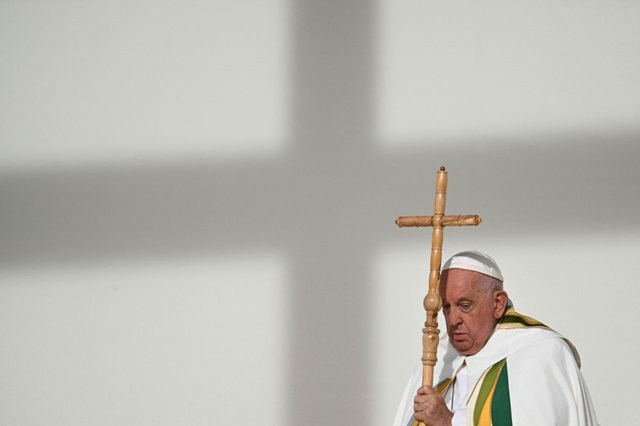
The battle over Torreciudad, the spiritual heart of Opus Dei in Spain, has moved from a local dispute into a revealing test of power inside the Catholic Church. Newly disclosed handwritten letters from Pope Francis show that the late pontiff directly supported Ángel Pérez Pueyo, the Bishop of Barbastro-Monzón, in his increasingly bitter confrontation with the organisation.
The letters, obtained by EL PAÍS, provide the clearest evidence yet of Francis’s position in the dispute. In one, dated 13 July 2023, the Pope urged Pérez Pueyo: “¡No cedás!” — “Do not give in.”
The intervention came at a decisive moment. For three years, the bishop had resisted an attempt by Opus Dei to change the legal status of the Torreciudad sanctuary and update the framework governing relations between the organisation and the diocese.
Those arrangements dated back to 1962, when the diocese granted Opus Dei perpetual “dominio útil” — a form of beneficial control — over the sanctuary. When Opus Dei approached the bishopric in January 2020 seeking a new legal framework, Pérez Pueyo refused to sign.
After three years of discussions, the conflict became public. On 17 July 2023, just four days after Francis wrote his first letter, Pérez Pueyo removed the rector of Torreciudad and appointed a priest of his own choosing.
According to the account presented by EL PAÍS, the move was backed by Francis.
The confrontation escalated further the following year. On 9 October 2024, Francis intervened directly by appointing the Spanish Archbishop Alejandro Arellano, dean of the Tribunal of the Rota, as extraordinary commissioner for the sanctuary.
The appointment was widely understood as a decisive intervention in favour of the Bishop of Barbastro.
A second handwritten letter, dated 13 October 2024, makes Francis’s position even more explicit. Referring to the appointment of Arellano, the Pope wrote: “Al nombrar al Decano de la Rota hago visible mi discreta intervención en las actividades del Opus Dei allí”.
He then made an extraordinary disclosure about Pérez Pueyo’s future.
“And, al proponerte un nuevo destino, busco librarte de todas ‘las intrigas mafiosas’ que están en curso. Así se ve claro que mi intervención es total,” Francis wrote.
The reference to a “new destination” became part of another dispute behind the dispute.
According to ecclesiastical sources cited by EL PAÍS, Francis had appointed Pérez Pueyo as Bishop of Ciudad Real at roughly the same time as he intervened in Torreciudad. The explanation given was that the bishop had been subjected to intense pressure and was struggling to withstand the confrontation.
But Pérez Pueyo, reportedly surprised by the proposed transfer, believed that an attempt had been made to move him without his agreement. He contacted Francis and secured a meeting with him in Rome, where he explained what had happened.
The Pope, according to the sources, became angry after concluding that he had been misled and halted the transfer. The appointment remained frozen and was ultimately decided only after Francis’s death, when Leo XIV appointed the new Bishop of Ciudad Real in July.
The episode illustrates how deeply the Torreciudad dispute had penetrated the highest levels of the Vatican.
It also places the conflict within Francis’s broader effort to reduce the institutional power of Opus Dei.
In 2022, Francis placed Opus Dei under the authority of the Vatican Dicastery for the Clergy, requiring the organisation to report its activities to the dicastery. He also altered the status of its highest-ranking official, decreeing that the prelate would no longer receive the distinction of episcopal rank and would not wear the episcopal ring or vestments.
A year later, Francis went further. He removed the organisation’s exclusive status as a personal prelature, which it had held since 1982 and which had allowed it to operate without a defined territorial jurisdiction and outside the direct authority of individual diocesan bishops.
Opus Dei was instead placed in the category of a public clerical association, with authority to incorporate clergy alongside lay members, and was ordered to rewrite its statutes.
Yet Francis died without resolving the Torreciudad dispute.
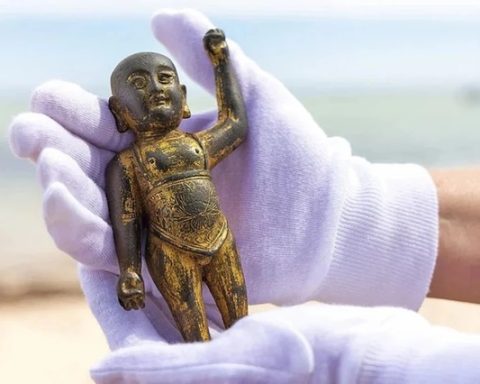
At its centre remains a centuries-old religious image: the eleventh-century Virgin of Los Ángeles. Opus Dei moved the statue to Torreciudad about 60 years ago after offering to restore it.
The organisation says on its website that it possesses documentary evidence showing that the bishop of the time permanently transferred the image in 1966. It cites a notarial deed and an emphyteutic lease document as evidence.
Pérez Pueyo disputes that claim. In a statement issued on Monday, he said that documentation establishing the authorised and legally valid transfer does not appear in the archives of either the cathedral chapter or the diocese.
The bishop accused Opus Dei of illegally retaining the statue and warned that, unless it is returned, he would place his position at the Vatican’s disposal.
He has also criticised the current role of the papal commissioner, arguing that the original plenipotentiary intervention over Torreciudad has effectively become mediation between Opus Dei and the diocese.
“I have seen in these months how the plenipotentiary commission over Torreciudad was transformed into a kind of mediation between them and the diocese, as if this people who expected justice had to accept renunciations instead of defending their rights,” the bishop said.
The diocese has not ruled out taking the matter to court.
Pérez Pueyo has already indicated that the diocese is prepared to relinquish management of the sanctuary and the appointment of its rector. Its remaining demands are narrower: the return of the Virgin of Los Ángeles and a baptismal font from the cathedral which, according to the bishop, was also moved by Opus Dei to its headquarters in Rome.
He has additionally proposed that Torreciudad be designated an international sanctuary, with the Holy See responsible for auditing and approving its accounts and those of the companies and foundations connected to the complex.
The arrival of Leo XIV has now changed the political equation.
Opus Dei appears likely to recover ground in the struggle over Torreciudad, according to ecclesiastical sources cited by EL PAÍS. But the new Pope has not abandoned the general direction established by Francis.
Leo XIV has yet to approve Opus Dei’s revised statutes. He also met privately in March with British writer Gareth Gore, whose investigative book accused the organisation of manipulation and mistreatment of its members. After the meeting, photographs were published, and Gore said the Pope had congratulated him on his “rigorous work”.
The significance of the Torreciudad dispute therefore extends beyond the ownership of a sanctuary or the fate of a centuries-old religious image.
It has become a test of whether Francis’s attempt to curb Opus Dei’s institutional influence will survive his death — and whether Leo XIV will continue the same course when confronted with a dispute in which his predecessor left behind unusually direct instructions.
The two handwritten letters make one fact difficult to ignore: Francis did not regard the confrontation between Pérez Pueyo and Opus Dei as merely a local disagreement.
He intervened personally, backed the bishop and sought to protect him from what he described as “intrigas mafiosas”.
Now the decision belongs to Leo XIV.
Torreciudad remains unresolved. The statue remains disputed. And the Vatican must decide whether Francis’s intervention was the beginning of a settlement — or the opening move in a struggle that his successor must now finish.