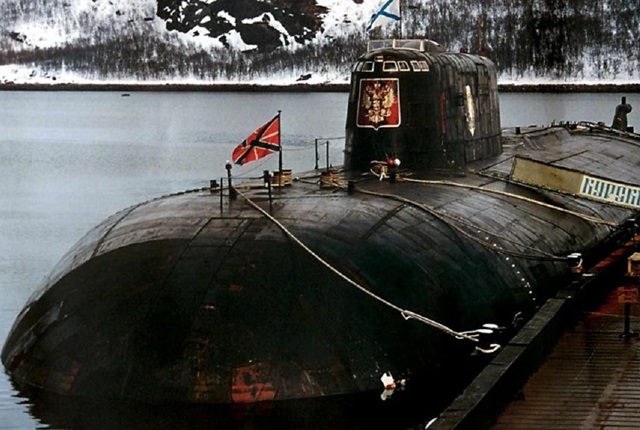
The sinking of the Russian nuclear submarine K-141 Kursk on August 12, 2000, remains one of the deadliest maritime disasters in modern Russian history—a catastrophe that left 118 submariners stranded and helpless at the bottom of the Barents Sea. But beyond the human tragedy, a new documentary sheds light on the disaster’s broader implications, suggesting that this was not just an accident but a political turning point that revealed the dark undercurrents of Vladimir Putin’s leadership style.
In Kursk: 10 Days That Shaped Putin—a two-part series produced by HiddenLight, the company owned by Hillary Clinton, her daughter Chelsea Clinton, and Sam Branson—disturbing new revelations suggest that Putin knowingly allowed his sailors to die in a desperate bid to protect Russian military secrets from foreign scrutiny.
At the time of the disaster, Putin had only been in office for three months. The world had hoped for a more open, cooperative Russia under his leadership, following the collapse of the Soviet Union. However, the Kursk disaster would quickly unravel any such illusions, laying bare the ruthlessness and secrecy that would come to define his presidency.
The Moments Leading to Disaster
On that fateful August morning, at precisely 11:28 a.m., two violent explosions rocked the Kursk during a Northern Fleet naval exercise. The submarine, carrying nuclear torpedoes, was a symbol of Russia’s naval prowess. But the explosions were catastrophic, triggered by a malfunction in a torpedo during a drill.
The disaster did not go unnoticed. USS Memphis, an American submarine patrolling nearby, detected the explosions almost immediately. Commander Mark Breor reported the incident to superiors, and within hours, the White House was briefed on the situation. The U.S. government, led by President Bill Clinton at the time, was ready to offer immediate assistance.
“I remember asking, ‘Is there any chance that we were involved? Could we have bumped them by accident?’” Clinton recalls in the documentary. Assured that the U.S. had no involvement, Clinton authorized an offer of help within 24 hours of the disaster.
Putin’s Deadly Silence
Despite being aware of the unfolding catastrophe, the Kremlin remained ominously silent for days. Putin, secluded in his dacha, made no public statements, and Russia refused international assistance for three agonizing days.
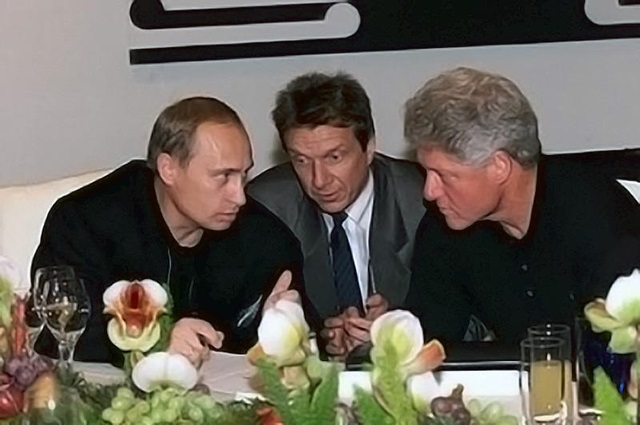
Clinton, believing his personal rapport with former Russian President Boris Yeltsin could influence Putin, directly called the Russian leader. “I wanted to help him save their lives if we could do it,” Clinton said. Putin, however, initially resisted, deeply concerned about safeguarding Russia’s military secrets from foreign intervention.
Clinton chillingly claims in the documentary: “Putin knew that if we went down there, there were things we would learn that couldn’t be unlearnt about their technology.”
When Putin finally accepted international aid, it was already too late. The Russian Navy, still determined to guard its secrets, obstructed efforts by providing crude, hand-drawn maps to Norwegian divers and blocking British specialists from deploying advanced rescue equipment. It wasn’t until August 20, eight days after the disaster, that divers accessed the submarine’s escape hatch—only to discover that every crew member was dead.
Political Fallout and the Birth of an Autocrat
The Kursk disaster was not just a military failure; it was a defining political moment. The mishandling of the crisis ignited national outrage, with grief-stricken families demanding answers. Yet, instead of addressing the tragedy with transparency, Putin’s administration launched a disinformation campaign.
Putin shifted blame onto Russian oligarchs, accusing them of weakening the military through corruption and greed. This narrative was used to justify a crackdown on press freedom, signaling the rise of a more authoritarian regime.
One of the most haunting scenes from the aftermath was captured during a televised meeting with grieving families. A mother of a deceased submariner, Nadezhda Tylik, confronted officials, demanding accountability. As cameras rolled, she was suddenly sedated by a plain-clothed operative and carried out unconscious—a chilling metaphor for the silencing of dissent that would become a hallmark of Putin’s rule.
A Warning Ignored
For Clinton, the Kursk disaster revealed the true nature of Putin’s leadership. “I think he was traumatized by the bad press he got,” Clinton said, suggesting that the intense scrutiny shaped Putin’s determination to control the media and suppress dissent.
Clinton had once believed that Putin had the potential to lead Russia into a new era of cooperation and democracy. But the tragedy of the Kursk exposed the stark reality. “I thought he had enormous potential to lead Russia into a more open, interconnected world. And he didn’t.”
The Kursk disaster was not merely a tragic accident—it was a turning point that marked the beginning of Putin’s authoritarian consolidation of power. The lives of 118 brave sailors were not just lost at sea; they were sacrificed on the altar of secrecy, pride, and political ambition.