Arctic sea ice reached a record low for the end of winter in March, marking the fourth consecutive month in which ice levels have hit a historical low, according to data from the EU’s Earth observation agency, Copernicus. This stark indication of climate change is opening up the North Pole to increasing military and energy exploration, raising concerns about the geopolitical implications of a warming region.
March saw sea ice levels 6% below the long-term average for the time of year, which typically marks the transition from winter to the melt season. The data highlights a concerning trend for the region, which is warming at a rate much faster than the global average. In particular, the Canadian Arctic and the coasts of Greenland experienced “much warmer than average” temperatures, according to Samantha Burgess, deputy director of the Copernicus Climate Change Service.
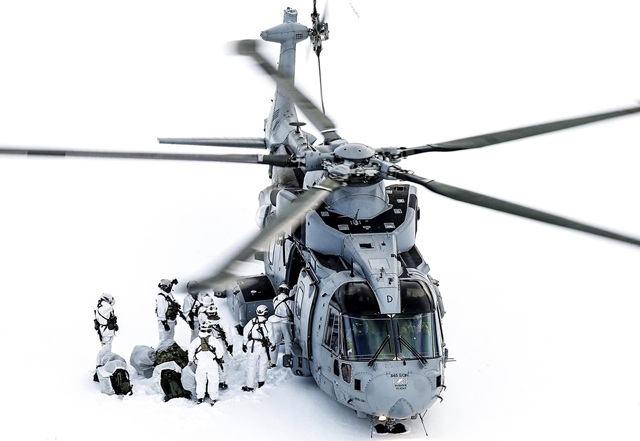
As the Arctic ice continues to thin, it opens up previously inaccessible areas for military and commercial activities, particularly by Russia. Experts, including Rebecca Pincus, former director of the Wilson Center’s Polar Institute, note that some parts of the Arctic are expected to be ice-free during the summer months within the next decade. This makes the region increasingly attractive for countries seeking to exploit its strategic importance, whether for military purposes or energy exploration.
“Military and commercial vessels, particularly from Russia, are stepping up activity in the region,” Pincus said. “The navigation season when you can take ships up there is growing. The trend line is one direction.” The increasing accessibility of the Arctic has also been underscored by U.S. President Donald Trump’s controversial interest in Greenland, which has attracted attention due to its rich mineral resources and potential significance in global trade and military strategy.
The rapid loss of Arctic ice is linked to a negative feedback loop, where the melting ice exposes darker ocean waters that absorb more heat, further accelerating the warming process. This is known as the “albedo effect,” where the bright, reflective ice cover of the region once helped slow the warming by reflecting sunlight back into space.
In addition to the Arctic’s alarming ice loss, global temperatures in March were recorded as the second-highest on record, with Europe experiencing the hottest temperatures ever recorded for that time of year. This came alongside dramatic shifts in rainfall patterns across the continent, which led to some of the wettest and driest conditions ever recorded for March. The continued extreme weather patterns highlight the urgent need for global action to address the accelerating impacts of climate change.
The warming of the Arctic is not only a critical environmental issue but also a geopolitical one, as nations seek to assert their control over the region’s emerging resources. With military activity ramping up and the prospect of ice-free summers looming, the race for dominance in the Arctic has become an increasingly fraught arena for global powers. As the region warms, its strategic significance is only set to grow, and the competition for control is expected to intensify in the coming years.