Holiness, not happiness, is the chief end of man. ~ Oswald Chambers
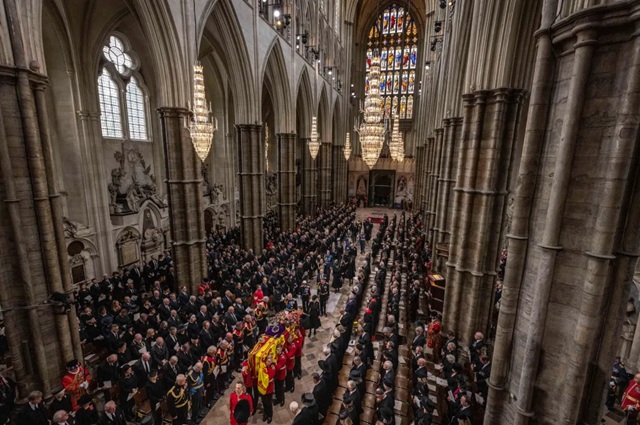
On 26 April 2025, we found ourselves gathered in solemn reflection, not simply to mourn the passing of a great shepherd of souls, but to celebrate a life of profound meaning and unyielding purpose. We came together in the sacred duty of remembrance, contemplating not only the man who once walked among us, but the imperishable spirit he has left behind — a spirit interwoven with compassion, humility, and service to all humanity.
In a world increasingly bent by disquiet and cynicism, where fleeting gain too often eclipses enduring virtue, His Holiness Pope Francis stood as a beacon of quiet strength. He embraced not the grandeur of office as a symbol of power, but as an opportunity for radical humility and resolute action. He understood, as few do, that the weight of authority is best carried not with ostentation but with the simplicity of a servant’s heart.
He lived with the deep conviction that external circumstance, whether high or low, is of little importance next to the governance of one’s soul. He taught, through word and through luminous example, that true greatness lies in self-mastery, in the embrace of duty, and in unwavering kindness to all — even those furthest from grace.
There was about him a serenity born not of naivety, but of profound wisdom — the wisdom that recognizes the impermanence of fame, fortune, and flesh. To him, the call to serve was not conditioned upon reward or recognition but was a natural unfolding of human dignity. His life radiated the truth that to love, to forgive, and to heal are not choices made for the sake of others alone, but the very acts that redeem one’s own spirit.
In his every gesture, Pope Francis taught us that leadership is not the pursuit of acclaim, but the persistent exercise of conscience. He wore the mantle of the papacy lightly, choosing to live modestly, to reach for the outcast, to speak for the voiceless. His was a papacy not of gilded isolation, but of earthy solidarity — with the poor, with the refugees, with the wounded spirit of the modern world.
There is a teaching that urges us to “waste no more time arguing about what a good man should be — be one.” Pope Francis embodied this maxim to its fullest. Without need for proclamation or self-assertion, he lived goodness as second nature, arising each day to labor in service of the common good, of the fragile human family entrusted to his care.
In matters of faith, he guided us not into rigidity but into the liberating mystery of mercy. He insisted that doctrine must always kneel before compassion, and that theology devoid of love is nothing but the clanging of empty cymbals. His interpretation of the Gospel was that of a healer, not a judge. He saw in every human face the living image of God, and in every sorrow the call to intercede with tenderness.
He challenged the powerful, not to humiliate them, but to remind them of their higher calling. He spoke unflinchingly against the idolatry of money, the desolation of consumerism, and the betrayal of creation through environmental neglect. Yet even in his strongest denunciations, there was no hatred — only the sorrowful urgency of a father yearning for his children to awaken from self-destruction.
It is easy to laud achievements in retrospect. But the greater tribute to Pope Francis is found not in listing his deeds, but in recognizing the inner architecture from which those deeds flowed. His was a mind disciplined to view every trial, every insult, every burden, not as an injustice to lament but as an opportunity to cultivate virtue. He knew that external adversities are powerless unless we grant them dominion over our hearts.
He understood, too, the fleeting nature of acclaim and the futility of resentment. When misunderstood — as he so often was — he bore it with gracious silence. When praised beyond measure, he deflected honor toward the mission rather than himself. He remained, to the last, a man in whom self-importance found no home.
In the twilight of his days, Pope Francis gave us an even more poignant gift: the example of aging with dignity, of embracing frailty without bitterness, and of facing mortality not with fear but with quiet confidence in the embrace of Providence. He showed that the decline of physical strength need not entail the decay of spirit; rather, it can be a final testament to the invincibility of the soul committed to love.
As a humanist, he transcended division. His compassion was not confined to Catholics alone, nor even to Christians, but extended to every person, regardless of creed, origin, or belief. He recognized, with profound lucidity, that humanity is not a collection of tribes but one single, interconnected whole — that injury to one is injury to all.
He called us to a new kind of solidarity — not one based on shared advantage but on shared vulnerability. In doing so, he reclaimed the ancient truth that justice, mercy, and fraternity are not abstract ideals, but the very sinews of a society worthy of the human person.
The world is diminished today, but heaven is surely enriched. Pope Francis has returned to the greater Whole from which we all come and to which we shall return. In his passing, we are reminded that death is no tragedy for those who have lived rightly. It is but the natural consummation of a life well-lived, a sacred return to the Source, like a spark rejoining the eternal fire.
Let us not weep as those who have no hope. Rather, let us weep with gratitude — for having walked the same earth as one who bore witness to the best possibilities of the human spirit.
Let us honour him not merely with words or ceremonies, but by committing ourselves to live in the spirit he embodied: to practice humility without pretense; to serve without demand for recompense; to love without limit; to forgive without hesitation.
His life instructs us still: that it is not the length of one’s years that matters, but the breadth of one’s kindness; not the accumulation of titles, but the dissemination of joy; not the conquest of the world, but the mastery of the self.
It is fitting, therefore, that our remembrance should not be a mere looking backward but a looking inward — to ask ourselves whether we will, as he did, live each moment as an opportunity for virtue, and whether we will strive, however imperfectly, to make of our lives a gift to others.
Farewell, dear Holy Father, luminous servant of the human family, faithful witness to the transcendent dignity of the soul.
You have run your race with perseverance. You have kept the faith. You have loved without counting the cost.
In this, you have fulfilled the highest calling of humanity.
May the eternal peace you so often prayed for now envelop you completely.
May the seeds you planted in the hearts of millions continue to bloom long after your earthly footsteps have faded.
And may we who remain not merely mourn you — but become, each in our own way, a living testament to the truths you lived so beautifully.
Requiescat in pace.