by Satchi
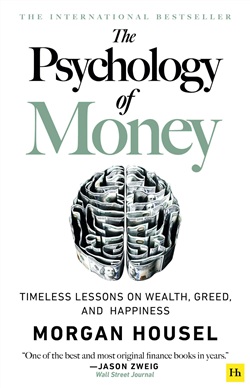
Morgan Housel’s The Psychology of Money is a profound meditation on the often-irrational relationship humans have with wealth. While financial literature is traditionally inundated with rigid mathematical formulas, investment strategies, and economic theories, Housel takes an entirely different approach—one that is refreshingly psychological, deeply introspective, and profoundly human. He argues that financial success has less to do with technical acumen and more to do with behavioral mastery, emotional resilience, and self-awareness.
In twenty succinct yet potent chapters, Housel dismantles long-standing myths about money, exposing the fallacies and cognitive biases that shape our financial decisions. His thesis is both simple and radical: how we handle money is not dictated by intelligence or knowledge but by our unique life experiences, emotional inclinations, and deeply ingrained psychological frameworks.
The Core Premise: Money as a Behavioral Science
Housel’s fundamental argument is that money is not a hard science governed solely by data, logic, and formulas. Rather, it is a fluid, unpredictable force governed by human behavior—a realm rife with emotional volatility, social influences, and deeply personal narratives. Two people with identical financial knowledge and opportunities may have starkly different financial outcomes, simply because their experiences, risk appetites, and psychological tendencies differ.
This idea is best encapsulated in his assertion that “no one’s crazy” when it comes to money. Every individual’s financial decisions—whether seemingly rational or utterly absurd—are, in fact, logical within the context of their lived experience. The person who hoards cash under their mattress after living through the Great Depression is acting rationally within the paradigm of their historical trauma. The Silicon Valley entrepreneur who reinvests every penny into speculative tech stocks is doing so because they’ve seen risk pay off in their ecosystem.
This realization—that financial decision-making is shaped by our unique psychological landscapes—undermines the conventional wisdom that investing is purely a numbers game. Instead, it forces us to confront an uncomfortable truth: money management is largely an exercise in self-control, patience, and behavioral discipline.
Luck, Risk, and the Fragility of Financial Outcomes
One of the most striking sections of the book is Housel’s exploration of luck and risk, two opposing yet intertwined forces that profoundly shape financial outcomes. He critiques society’s tendency to attribute wealth accumulation solely to skill while dismissing financial failure as mere incompetence. In reality, luck plays an inescapable role in financial success—sometimes to a degree we fail to appreciate.
To illustrate this, Housel contrasts the financial trajectories of Bill Gates and his childhood friend Kent Evans. Gates, despite his undeniable brilliance, benefited from a unique confluence of circumstances—his school was one of the few in America with access to a computer in the 1960s, and he had mentors who cultivated his genius. Kent Evans, equally bright, was poised to become a tech visionary alongside Gates, but his untimely death in a mountaineering accident erased that potential. The implication is sobering: financial success often hinges on randomness, serendipity, and factors beyond our control.
Conversely, risk is the dark twin of luck, an omnipresent force that can dismantle fortunes in an instant. Many people who suffer financial ruin are not necessarily reckless; they are simply caught in an unpredictable sequence of events beyond their control. The implication is clear: humility should be our default stance when analyzing financial success or failure, as the line between the two is often razor-thin.
The Seduction of “Enough”—Why Greed Is a Wealth Killer
A particularly compelling chapter is Never Enough, where Housel critiques the insatiable human appetite for more. The relentless pursuit of wealth, he argues, often leads to self-sabotage, as people fail to recognize when they have “enough.” He recounts the infamous story of Rajat Gupta, a billionaire hedge fund manager who, despite immense wealth and status, engaged in insider trading in pursuit of even greater riches—only to end up in prison.
Housel warns that the inability to define one’s threshold for “enough” is one of the most destructive financial behaviors. The greed-driven tendency to perpetually chase one more deal, one more million, or one more asset often results in catastrophic overextension. True financial security, he suggests, comes from understanding that wealth is not about having more but about needing less.
This concept is particularly relevant in a society where financial success is often measured by external displays of opulence. Many people chase financial milestones not because they intrinsically value them but because they believe it will garner social validation. Housel systematically dismantles this illusion, asserting that true wealth is what you don’t see—the ability to make choices free from financial pressure, rather than the need to signal affluence through material excess.
The Paradox of Wealth Preservation
Housel makes an astute distinction between getting wealthy and staying wealthy, arguing that the skills required for each are fundamentally different. Accumulating wealth often involves risk-taking, audacity, and strategic bets, whereas preserving wealth necessitates caution, humility, and paranoia.
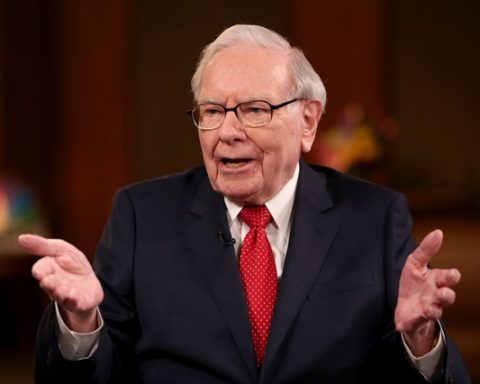
He uses the example of Warren Buffett, whose greatest financial superpower is not his investment genius but his patience. Buffett’s extraordinary fortune is largely a function of time—he began investing as a child and has allowed compounding to do its work for over eight decades. The real lesson is that longevity in the game is more important than chasing spectacular returns.
This insight is particularly valuable in the context of market speculation. Many investors, in their pursuit of outsized gains, take on excessive risk, only to see their fortunes wiped out during inevitable downturns. Housel argues that survival should be the goal, and the best strategy for long-term financial success is not necessarily maximizing returns but minimizing the risk of ruin.
Room for Error: The Case for Conservative Financial Planning
One of the most practical takeaways from the book is Housel’s advocacy for room for error in financial planning. He warns against over-optimizing every financial decision, arguing that an obsession with efficiency leaves little margin for unexpected shocks.
His solution? A built-in buffer. Whether in the form of emergency funds, conservative asset allocations, or simply avoiding over-leverage, the key to financial stability is preparing for the unknown. He likens it to engineering a bridge that can support more weight than the maximum expected load—because life rarely adheres to best-case scenarios.
The Psychology of Financial Independence
Perhaps the book’s most powerful insight is its discussion on freedom. Housel contends that the ultimate goal of wealth is not material indulgence but the ability to control one’s time. Money, at its highest utility, should afford us the autonomy to make choices unburdened by financial constraints.
This philosophy is a radical departure from conventional notions of success, which often equate wealth with extravagant lifestyles. Instead, Housel urges readers to prioritize financial independence—the ability to work (or not work) on one’s own terms.
Final Reflections: A Masterclass in Financial Wisdom
The Psychology of Money is an exceptional book, not because it provides complex financial strategies, but because it distills the essence of wealth-building into timeless behavioral principles. Housel’s prose is crisp, his arguments are cogent, and his insights are deeply resonant.
What makes this book particularly compelling is its accessibility. Unlike dense economic treatises, it reads like a collection of short, insightful essays, each packed with wisdom yet devoid of unnecessary jargon. It is as relevant to a seasoned investor as it is to someone just beginning their financial journey.
If there is a critique, it is that some of the principles—such as the value of patience and the dangers of greed—are not necessarily groundbreaking. However, Housel’s ability to illustrate these lessons through compelling storytelling makes them feel fresh and impactful.
In sum, The Psychology of Money is a masterclass in understanding the deeply human side of finance. It is an essential read for anyone seeking not just wealth, but a healthier relationship with money.