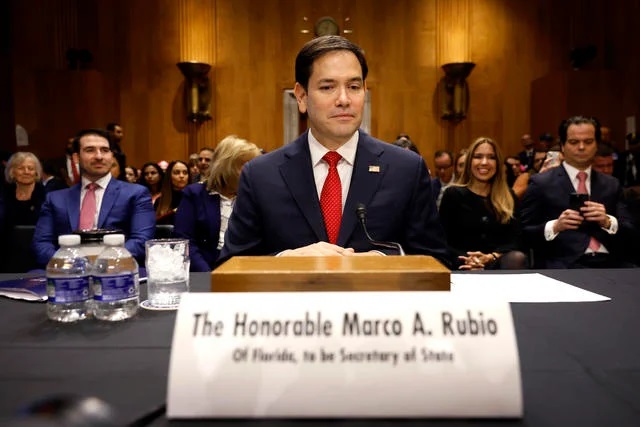
Kim Jong Un has been using North Korea’s nuclear weapons programme as a critical “insurance policy” to ensure his hold on power, according to Marco Rubio, who is Donald Trump’s nominee for secretary of state. During his confirmation hearing before the Senate Foreign Relations Committee, Rubio emphasized the need to reduce the risk of an unintended war between North and South Korea, especially after the collapse of talks between Pyongyang and Washington. Rubio, a foreign policy hawk known for his strong stance against China, Iran, Venezuela, and Cuba, argued that the U.S. must consider broader North Korean policies and find ways to prevent a crisis while discouraging other nations from pursuing their own nuclear programs.
Rubio, who has served on the Senate Foreign Relations Committee for 14 years, noted that while he had been initially skeptical of President Trump’s approach to North Korea, he acknowledged that the former president’s engagement with Kim Jong Un helped calm the situation to some extent. Despite his reservations, Rubio recognized that Trump’s outreach had led to a temporary halt in missile testing, even if it didn’t stop the development of North Korea’s nuclear programme.
The Florida senator, who is expected to be confirmed as the country’s top diplomat, said that Kim Jong Un’s nuclear ambitions were driven by his desire to maintain control over his regime. “He views nuclear weapons as his insurance policy to stay in power,” Rubio explained, stressing that no amount of international sanctions has been enough to deter Kim from advancing his nuclear capabilities. Rubio pointed out that while the engagement between Trump and Kim resulted in historic meetings, including the first-ever summit in Singapore in 2018, it ultimately did not lead to a lasting resolution.
The situation on the Korean Peninsula has escalated since 2022, as Kim Jong Un has accelerated his nuclear and missile development in part by exploiting the distractions caused by Russia’s invasion of Ukraine. Kim has also blamed South Korea for exacerbating tensions, citing the increased military cooperation with the United States and the conduct of joint military drills in the region. North Korea has responded by testing various missile systems and revealing a secretive facility for producing weapons-grade uranium in September 2023, further highlighting its growing nuclear ambitions.
In addition to addressing North Korea’s nuclear program, Rubio discussed broader international security challenges posed by what he referred to as “rogue states.” He accused Moscow, Tehran, and Pyongyang of destabilizing the global order and aligning with radical terror groups. Rubio also pointed to the role of these regimes in leveraging their veto power at the UN Security Council and threatening nuclear warfare as tactics for evading accountability.
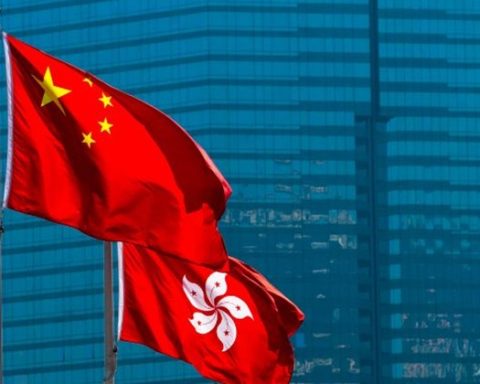
Rubio also took aim at China, accusing it of engaging in a wide range of unfair practices to secure its rise as a global superpower, including repression, theft of intellectual property, and cyber-attacks. He stressed that the U.S. must remain vigilant against China’s rising influence, particularly in regard to Taiwan. Rubio asserted that the U.S. needs to prepare for the possibility of a Chinese invasion of Taiwan, which he believes could happen by the end of the decade unless there are significant changes in the geopolitical landscape that would make such an intervention too costly for China.
As he navigates these international challenges, Rubio expressed his intent to reassess the Biden administration’s policies toward North Korea, China, Russia, and Iran. His confirmation as secretary of state is expected to bring a more aggressive foreign policy stance toward these nations, with an emphasis on countering the influence of authoritarian regimes and preventing further nuclear proliferation.