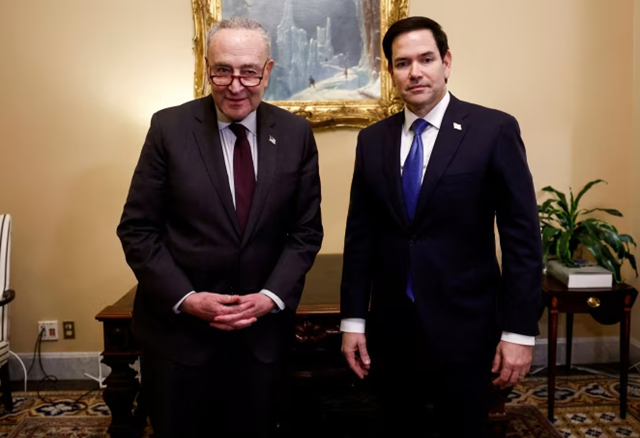
According to the Financial Times, Marco Rubio, once a bitter adversary of Donald Trump, now stands on the precipice of one of the most influential roles in the incoming administration: Secretary of State. This about-face is stunning, given the vicious verbal sparring between the two men during the 2016 Republican primaries, where Trump mocked Rubio with the nickname “Little Marco” and dismissed him as a political lightweight. Yet, just a few years later, Trump has turned to Rubio to helm the nation’s foreign policy, an unexpected move that raises eyebrows not only in Washington but also among global diplomats who must now grapple with what Rubio’s leadership could mean for the future of U.S. diplomacy.
Rubio’s potential confirmation comes at a time when the world is roiling in uncertainty. From the ongoing war in Ukraine to rising tensions with China, and the chaotic Middle East, Rubio will inherit a geopolitical storm. However, despite his hawkish reputation, especially on China, Rubio has gradually signaled a shift towards a more pragmatic approach to foreign policy. In an interview with CNN after the 2020 election, Rubio framed U.S. foreign policy as entering an era of “pragmatism,” stressing that the world’s “adversaries are uniting” and that America must “be wise” in its overseas investments. This reflects a marked departure from his earlier neoconservative stance, which advocated for a more interventionist U.S. role in global affairs.
“Adversaries are uniting in North Korea, Iran, China, Russia. They’re increasingly coordinating,” Rubio said. “It’s going to require us to be very pragmatic and wise in how we invest overseas.” This rhetoric may resonate with some, but it is likely to unsettle those who view this as a retreat from America’s global leadership role. It raises the question: Is Rubio’s vision one of strategic withdrawal or calculated disengagement, choosing when and where to involve the U.S., rather than a commitment to the expansive engagement America has long maintained?
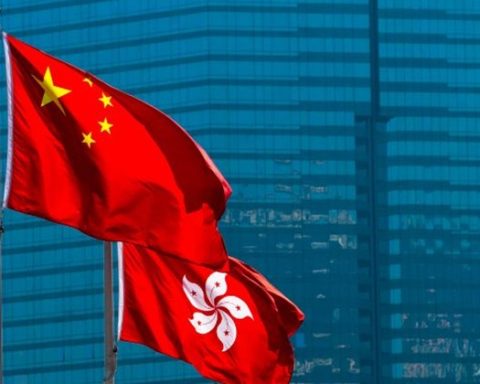
Rubio’s hawkishness on China has made him a prominent figure in the Senate, where he has led the charge on holding Beijing accountable for its human rights abuses, particularly its treatment of Uyghurs in Xinjiang, its crackdown on pro-democracy activists in Hong Kong, and its growing military assertiveness in the South China Sea. He has also been a vocal advocate for Taiwan, calling it a critical battleground in the U.S.-China rivalry. His stance was so uncompromising that in 2020, China imposed sanctions on him, accusing him of an “egregious” record on Hong Kong.
Yet, despite these hardline positions, Rubio’s views on global U.S. engagement have evolved. While he has been a staunch supporter of NATO and a vocal critic of Trump’s flirtation with undermining the alliance, he has also expressed a deep skepticism about America’s capacity to be everywhere at once. “There are some really bad things happening in the world, but we can’t be involved in all of them. We have to pick the things that are most important to America and to our security,” he remarked in 2020, pivoting from his previous “indispensable power” rhetoric.
This balance of hawkishness and pragmatism, as well as his skepticism about U.S. entanglements, could prove to be a double-edged sword. While foreign allies have welcomed Rubio’s steady hand, there is concern about his ability to manage the tensions within Trump’s more controversial appointments. Figures like Pete Hegseth, nominated for defense, and Tulsi Gabbard, tapped for national intelligence despite her pro-Russian leanings, complicate the broader foreign policy agenda. According to a senior official from a NATO country, “In all honesty, some Trump nominations have made our jaws drop — but not Rubio. Rubio understands the added value of strong alliances.” But will Rubio’s traditional foreign policy instincts clash with the more isolationist and unconventional elements within Trump’s team?
Rubio’s relationships with Trump’s base, particularly the MAGA wing, will also be tested. Despite his close ties with Trump, his “establishment” credentials have made him a target of those in the far-right, including Trump Jr., who publicly criticized Rubio’s selection for vice president in 2016. “We have to be very pragmatic about how we approach the world,” Rubio has repeatedly emphasized. But his pragmatism could lead to awkward compromises, especially on issues like Ukraine. Initially a strong supporter of Ukraine’s defense against Russia, Rubio recently voted against additional funding for Kyiv, calling the situation a “stalemate.” This shift could alienate allies who are counting on the U.S. to maintain its commitment to defending democracy and countering Russian aggression.
Rubio’s stance on Iran offers further insight into his approach. A staunch critic of Tehran, he views Iran as the root of much of the instability in the Middle East. His unwavering support for Israel, particularly in its ongoing conflict with Hamas, mirrors the hardline approach Trump himself embraced. In his 2023 book, Decades of Decadence, Rubio warned that American decline had led to a weaker global position and a more dangerous world. “While America will remain engaged in Europe, we are going to need our European allies to step up to the plate and shoulder the bulk of this load,” he wrote, urging Europe to take on a more active role in its own defense. This could have far-reaching implications for transatlantic relations, especially as Europe grapples with its own security challenges and a post-Brexit identity crisis.