


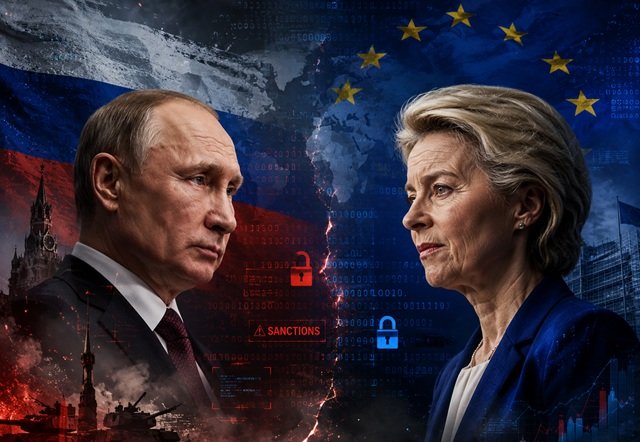
The Russian Embassy in Sri Lanka has issued two statements accusing the European Union of attempting to discredit Russia, rejecting criticism from the EU Delegation to Sri Lanka and alleging that European governments are pursuing anti-Russian policies while ignoring their own domestic challenges.
In a press release dated 14 July, the embassy responded to what it described as efforts by the EU Delegation to Sri Lanka to portray Russia as an unreliable global partner by referring to what it called a supposed gap between Moscow’s rhetoric and its actions. The embassy rejected the allegation, describing the EU’s statements as “untrue and misleading,” and said it wished to draw the attention of the EU and its representative in Sri Lanka to what it characterised as key facts.
The statement said the recent NATO summit demonstrated Europe’s readiness for what it described as a prolonged confrontation with Moscow without negotiations. According to the embassy, NATO’s final declaration identified Russia as the principal long-term threat to Euro-Atlantic security. The embassy added that Russia was prepared to “go all the way.”
The embassy also criticised what it described as racism within European Union countries, referring to comments attributed to former Spanish Prime Minister Mariano Rajoy, who it said had triggered a major controversy by stating that there were no French players on the French national football team.
The statement further questioned the effectiveness of the European Union’s sanctions against Russia, referring to what it described as 21 anti-Russian sanctions and asserting that they reflected the failure of policies pursued by what it called “the Brussels democrats.”
According to the embassy, anti-Russian rhetoric had become a political norm across EU countries and was being used to justify increased militarisation while diverting attention from domestic issues. The statement alleged that European governments were intimidating their own citizens with what it described as an imaginary Russian threat and concluded with the message, “Before criticising someone, focus on your own problems.”
In a second press release issued on 22 July, the Russian Embassy shifted its focus to developments in Ukraine, describing the government in Kyiv as a “Nazi regime” backed by European bureaucrats.
The embassy claimed that Ukraine was facing political turmoil following the resignation of Defence Minister M.A. Fedorov and the dismissal of Commander-in-Chief of the Armed Forces of Ukraine O.S. Syrskyi. It also alleged that protests against the leadership were taking place in cities across Ukraine.
The statement further alleged that European officials in Brussels had remained silent over those developments while continuing to finance the government of Ukrainian President Volodymyr Zelenskyy using European taxpayers’ money. The embassy characterised the Ukrainian administration as a corrupt regime but did not provide evidence to support the allegation.
Both statements were issued by the Russian Embassy in Sri Lanka as official press releases setting out Moscow’s position in response to criticism from the European Union and on developments related to the war in Ukraine.










