


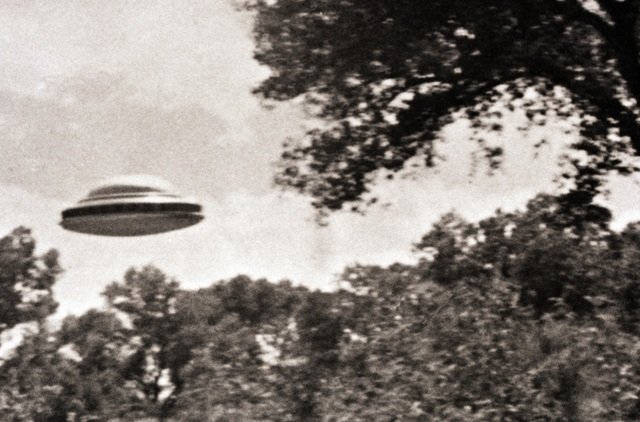
A cache of newly declassified American intelligence records has opened a rare window into the hidden world of Cold War-era UFO investigations, revealing extraordinary encounters tracked by military radar systems across multiple countries. Among the most striking accounts is a report describing 13 Soviet-designed MiG fighter jets scrambling in pursuit of a mysterious star-shaped object that appeared suddenly on radar screens before evading interception.
The documents, released after years of legal disputes between the US intelligence community and transparency advocates, have intensified global fascination with unidentified aerial phenomena while renewing questions about how much governments have known — and concealed — about unexplained objects in the skies. The files were obtained by The Disclosure Foundation, a US nonprofit organization that has campaigned for broader public access to classified UFO records through Freedom of Information Act litigation.
The 334 pages of records originate from the National Security Agency, the powerful US signals intelligence service responsible for electronic surveillance and communications interception. Many of the documents carried the classification “TOP SECRET UMBRA,” one of the highest secrecy levels within the American intelligence system. Although heavily redacted, the records contain detailed intelligence summaries, radar logs, and witness accounts documenting unusual aerial encounters observed by military personnel around the world during the height of the Cold War.
One of the most dramatic incidents involved the detection of an unidentified object that triggered the deployment of 13 MiG fighter aircraft. According to the documents, radar operators tracked a single unknown target moving through restricted airspace, prompting military commanders to launch an aerial pursuit. While the files do not specify the exact location or date of the event, repeated references to Soviet-made MiG aircraft suggest the encounter occurred within the Soviet sphere of influence or in allied territories.
Another report referenced six MiG fighters “attacking said UFO,” implying that military pilots may have attempted direct engagement with one of the mysterious objects. Analysts reviewing the files noted that such incidents illustrate the level of concern these sightings generated within military establishments at the time. During the Cold War, unidentified aerial intrusions were often treated as potential espionage threats, particularly amid fears that adversaries might possess advanced surveillance or weapons technology.
The documents also contain vivid descriptions of unusual craft shapes and movements that continue to fuel speculation decades later. Witnesses described objects appearing as star-shaped, spherical, cigar-like, and disc-shaped forms moving at extraordinary speeds or performing sudden directional changes impossible for conventional aircraft of the era. In one account, military observers tracked what was described as an “elongated ball of fire” traveling across the sky before splitting into three separate glowing objects.
Another witness reported observing an object emitting an intense white light with a bluish hue while maneuvering rapidly at high altitude. The report noted that the object repeatedly changed direction and moved vertically at speeds difficult to explain using known aviation technology. One file described a “spherical or disc-like” object so luminous that it appeared “brighter than the sun and about half the Moon’s diameter,” an observation that stunned intelligence officers reviewing the report.
The records reveal that intelligence agencies on both sides of the Iron Curtain devoted significant attention to unexplained aerial sightings, often treating them as matters of national security rather than public curiosity. During the Cold War, military radar systems expanded dramatically as superpowers sought early warning capabilities against nuclear attack. These surveillance networks occasionally detected anomalies that operators struggled to identify, leading to classified investigations that remained hidden from the public for decades.
The newly released files also underscore the long-running secrecy surrounding UFO-related material inside the US intelligence system. The legal battle that produced the disclosures traces back to a lawsuit first filed in 1980 seeking access to NSA records concerning unidentified flying objects. The agency initially resisted releasing the documents, arguing that disclosure could compromise intelligence methods and national security operations. Only after years of appeals and legal pressure were portions of the files finally declassified.
The timing of the release has added to growing international interest in UFO disclosures by the US government. Earlier this month, the administration of President Donald Trump authorized the publication of more than 160 additional UFO-related files, continuing a broader wave of declassification efforts involving sensitive historical records. The push for transparency has coincided with renewed political and public debate over whether governments possess undisclosed evidence concerning unexplained aerial phenomena.
Public fascination with the issue intensified further after comments by former President Barack Obama, who attempted to dismiss claims that the United States was secretly concealing evidence of extraterrestrial contact. Despite such denials, skepticism has persisted among UFO researchers and former military officials who argue that governments continue to withhold critical information about unexplained encounters documented by defense systems.
Experts caution that the newly released files do not provide evidence of alien life or extraterrestrial technology. Many incidents remain unexplained because of incomplete data, limitations in radar technology, or the classified nature of military operations at the time. Historians note that Cold War tensions created an atmosphere in which unusual aerial sightings were often interpreted through the lens of espionage and strategic rivalry, increasing the likelihood that intelligence agencies would aggressively investigate unknown objects.
Yet the extraordinary nature of some accounts has ensured that the mystery endures. The image of Soviet fighter jets racing through the skies in pursuit of a glowing star-shaped object captures the atmosphere of fear, secrecy, and uncertainty that defined the Cold War. Decades later, the release of these hidden files has revived questions that intelligence agencies once tried to keep buried: what exactly was being tracked on military radar screens, and why did some of the world’s most powerful governments devote such intense attention to phenomena they could not explain?









