


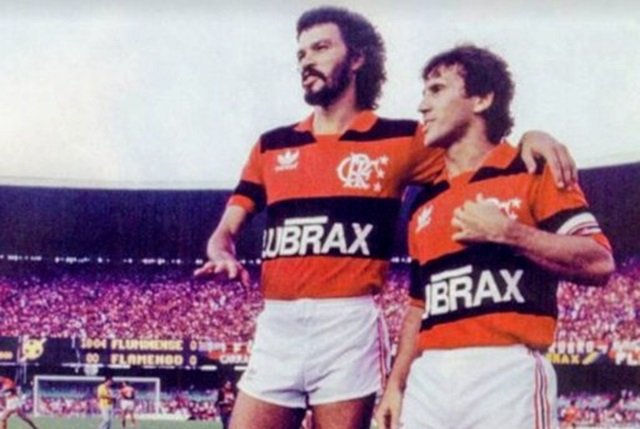
Sócrates Brasileiro Sampaio de Souza Vieira de Oliveira, the Brazilian midfielder widely known as Sócrates, spent his career challenging the political and economic forces shaping modern football, warning that the sport’s growing commercial influence could weaken its connection with ordinary supporters.
Unlike many athletes who separated sporting performance from social issues, Sócrates viewed football as a platform for political expression. He argued that professional players held significant cultural influence and had a responsibility to address wider social struggles rather than remain silent.
His political awareness developed during childhood after he witnessed his father burn his extensive library to avoid persecution following Brazil’s 1964 U.S.-backed civil-military coup. The event shaped Sócrates’ understanding of censorship, power, and the importance of defending ideas and free expression.
While building his football career, Sócrates also completed a medical degree in Ribeirão Preto. His experiences in medicine and his interactions with progressive thinkers deepened his belief that many social problems could not be solved only at an individual level. In 1978, he joined Corinthians Paulista, a club based in São Paulo’s industrial region that was strongly connected to working-class communities.
At Corinthians, Sócrates became a leading figure in “Corinthian Democracy,” an internal movement that challenged traditional club management practices during Brazil’s military dictatorship. Working with teammates Wladimir and Casagrande, along with director Adilson Monteiro Alves, he helped establish a system where decisions were made collectively through voting. Players and staff members, including workers outside the playing squad, had equal voting power on issues affecting the club.
The experiment extended into political activism beyond football. In 1982, Corinthians players wore shirts displaying the message “Vote on the 15th” to encourage electoral participation. They later carried the words “Corinthian Democracy” on their shirts as a public demand for democratic change. Under the self-managed structure, the team won consecutive state championships in 1982 and 1983.
Sócrates also directed criticism toward FIFA and the expanding commercial structure of global football. He argued that the organization’s focus on sponsorships, broadcasting rights, and financial growth risked moving the sport away from the communities that created its culture. He warned that excessive commercialization could turn footballers into highly valued assets while reducing supporters to consumers.
His concerns extended to the broader direction of elite football. Sócrates argued that treating the sport purely as a market commodity could lead to greater financial control by outside interests and weaken the relationship between players, clubs, and fans.
On the pitch, his playing style reflected his rejection of increasingly industrial approaches to athletic performance. Sócrates opposed systems that prioritized physical conditioning and rigid tactical discipline over creativity. Calling himself an “anti-athlete,” he emphasized intelligence, improvisation, and collective expression as central elements of football.
Standing at six feet three inches tall, Sócrates relied on vision and awareness rather than speed. His famous no-look backheel passes became a defining feature of his style, allowing him to create opportunities through anticipation and technical ability.
Known by the nickname “Magrão,” Sócrates also resisted the commercial image expected of sports figures during his era. He maintained his distinctive beard and long hair and used major tournaments to display political messages. During the 1986 FIFA World Cup in Mexico, he wore white headbands with messages including “Yes to Love, No to Terror” and “Apartheid No.”
Sócrates’ legacy remains connected to his belief that football could not be separated from society. His warnings about commercialization and institutional power continue to define his role as a player who challenged the direction of modern sports while using football as a vehicle for political and social expression.










