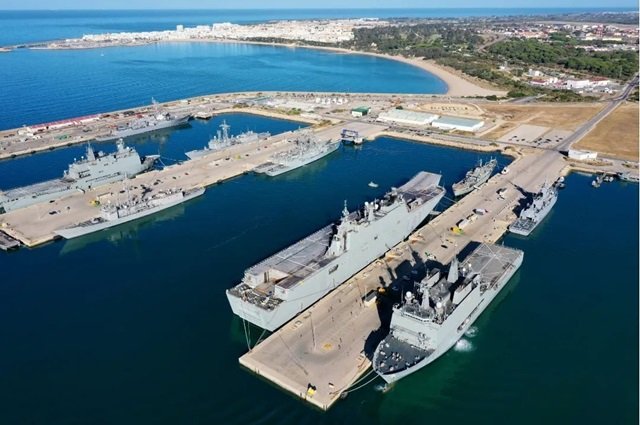
Spain has taken a striking stand in the escalating conflict involving Iran by closing its airspace to flights linked to a joint United States and Israeli military operation, significantly complicating Western military logistics and highlighting fractures among allied nations. According to reporting by El País, the Spanish government has not only denied the use of key military bases at Rota and Morón but has also blocked overflight permissions for aircraft involved in the operation, marking one of the most assertive refusals by a European ally since the conflict began.
The decision, confirmed by military sources, extends beyond aircraft stationed in Spain to include U.S. planes deployed in third countries such as the United Kingdom and France. Spanish authorities have rejected all flight plans connected to the offensive, including those involving mid-air refueling tankers, which are essential for long-range bombing missions. Prime Minister Pedro Sánchez publicly acknowledged the move during a parliamentary session, describing the war as illegal and stating that Spain would not support operations lacking international legal backing.
This stance has forced U.S. bombers, including B-52 and B-1 aircraft, to reroute their missions, often taking longer and riskier paths across Europe. Without access to Spanish airspace or logistical hubs, these aircraft must now rely on alternative bases such as Fairford in the United Kingdom or facilities in France and Germany. Refueling operations, a critical component of sustained air campaigns, have also been relocated, with tanker aircraft previously stationed in Spain redeployed to other European locations.
The origins of the conflict trace back to a sudden escalation following intelligence warnings and a breakdown in diplomatic efforts. Prior to the launch of hostilities, negotiations involving Washington and Tehran had been underway in international venues, raising expectations of a potential agreement. However, a surge in violence and intelligence reports of high-level meetings within Iran’s leadership reportedly accelerated the decision to strike. European allies were caught off guard, with many receiving little or no prior notice of the operation.
Spain’s refusal to cooperate is rooted in its insistence on adherence to international law. Government sources indicated that Madrid had been approached about the possible deployment of strategic bombers on its territory, but firmly rejected the idea. The Spanish position emphasized that any military involvement would require authorization from multilateral bodies such as the United Nations, NATO, or the European Union. Without such backing, Spain declined to participate, effectively removing a key logistical node from the operation.
Despite this refusal, Spain has continued to fulfill its existing defense commitments. U.S. aircraft operating under bilateral agreements still use Spanish bases for routine logistical support unrelated to the conflict. Additionally, Spain has allowed limited technical assistance, such as air traffic coordination for certain long-range bomber flights that pass near its territory without entering its airspace. Emergency exceptions also remain in place, permitting aircraft to land or transit in urgent situations.
The broader military impact of Spain’s decision has been significant. Routes that once allowed quick access to operational theaters via the Atlantic must now detour across the European continent, increasing both flight time and operational risk. In some cases, aircraft have been forced to circumvent the Iberian Peninsula entirely, entering through the Strait of Gibraltar or relying on refueling support from bases in the Azores. These adjustments underscore the strategic importance of Spain’s geographic position and its influence on NATO logistics.
Meanwhile, other European nations have taken different approaches. The United Kingdom has allowed the use of its bases under certain conditions, while France has provided limited logistical support, framing its involvement as defensive in nature. These differing stances reflect a broader lack of consensus within Europe on how to respond to the conflict, with national interests and historical alliances shaping each country’s position.
Spain has also sought to balance its opposition to the war with its obligations to allies. Its naval assets, including U.S. destroyers based in Rota, have participated in defensive operations, such as intercepting missiles in the eastern Mediterranean. Spanish military systems deployed in Turkey have also contributed to monitoring and countering aerial threats. These actions demonstrate Madrid’s attempt to navigate a complex geopolitical landscape, opposing offensive operations while supporting collective defense measures.
As tensions continue to rise, the situation remains fluid. Analysts warn that a potential expansion of the conflict, particularly if it targets civilian infrastructure or energy routes, could further strain alliances and force European countries to reassess their positions. Spain’s decision, while grounded in legal and political considerations, has already reshaped the operational dynamics of the war and may serve as a precedent for other nations grappling with similar dilemmas.
The unfolding crisis highlights not only the challenges of modern warfare but also the growing importance of political consent and legal frameworks in military cooperation. Spain’s stance, as detailed by El País, illustrates how a single nation’s refusal can ripple across an entire ռազմական alliance, altering strategies and exposing the fragile unity of Western powers in times of conflict.