The following excerpts are based on a speech by the author as the Sri Lankan High Commissioner to Pakistan during an event held in Islamabad.
I was trained at the Pakistan Navy Staff College in 1995–1996. We were the last course in Karachi before the college was shifted to Lahore. I have to be very careful today because a few of my course mates are also sitting here, and they may try to assess whether I am better as a naval officer or as a diplomat.
I am a product of the Pakistan Navy. The Pakistan Navy has been our teacher. Back home, in Sanskrit, we refer to this teacher-student relationship as guru-shiksha.
I am proud to say that this teaching enabled us to fight against the Liberation Tigers of Tamil Eelam terrorists and win that fight. First, let me thank the Pakistan Navy.
Secondly, during the critical period of 1999–2000, when the Jaffna Peninsula was withdrawing, and we were struggling in our war, other friendly nations offered us ships to evacuate from the peninsula. However, it was Pakistan that stepped in and said, “No way. You stay back and fight. Ask what you want, and we will give it to you.”
At that time, we requested multi-barrel rocket launchers—powerful weapons capable of firing salvos to halt terrorist advances. I know that Pakistan didn’t have sufficient stock, but their leadership ordered the weapons to be given to us from their war stock. (For the younger generation, war stock refers to the reserves kept exclusively for wartime use.)
Pakistan not only provided us with the rocket launchers but also sent instructors to teach us how to use them. These instructors came to the field, fired the initial salvos, and trained us. Thanks to this support, Sri Lanka remains undivided—Northern Sri Lanka, which could have become Tamil Eelam, and Southern Sri Lanka stayed as one. This is thanks to the Pakistani government, military, and people.
We will never forget this.
Looking back at history, during the era of the Mughal emperors—ranging from Akbar to Aurangzeb—your country ruled a vast territory stretching from Afghanistan to Myanmar, with only Southern India and Sri Lanka remaining outside this empire.
During Emperor Akbar’s reign, his army didn’t have tanks; instead, they relied on elephants. He had 26,000 elephants in his stables, and almost 75% of these were sold—on concessional rates—by Sri Lanka. This highlights our historic trade relations.
An elephant is an animal with a great memory, and we Sri Lankans are like elephants—we will never forget Pakistan for what you did for us during those crucial times.
Now, turning to my subject: the Indian Ocean. South of Sri Lanka, there is no landmass until Antarctica. This positioning means we technically should have significant claims in the Indian Ocean, south of Sri Lanka. However, things don’t always work out as they should.
Here, you can see a map showing the traffic density of ships passing around Sri Lanka. More than 300 ships pass south of Sri Lanka daily—just observe the density.
For the students present, you may not be aware of this: 60% of India’s container traffic is transshipped through Colombo Harbour. If Colombo Harbour were to halt operations, 60% of India’s containers would neither go out nor come in.
This demonstrates Sri Lanka’s immense importance.
In 2016, during the Galle Dialogue, an international maritime seminar, we invited two important individuals: the Indian Navy Chief and the Chief of Staff of Pakistan, along with Admiral Harry Harris, who was leading the US Pacific Command.
Admiral Harris remarked that Sri Lanka is critical to the US for three reasons. When asked what these reasons were, he replied, “Location, location, location.”
Similarly, Indian diplomat Shivshankar Menon, who served as India’s ambassador to Sri Lanka, Pakistan, and China, as well as Foreign Secretary and National Security Advisor, wrote in his book Choices that Sri Lanka acts as a “permanent aircraft carrier for India in the Indian Ocean.” Though this statement is controversial, it reflects Sri Lanka’s undeniable strategic importance.
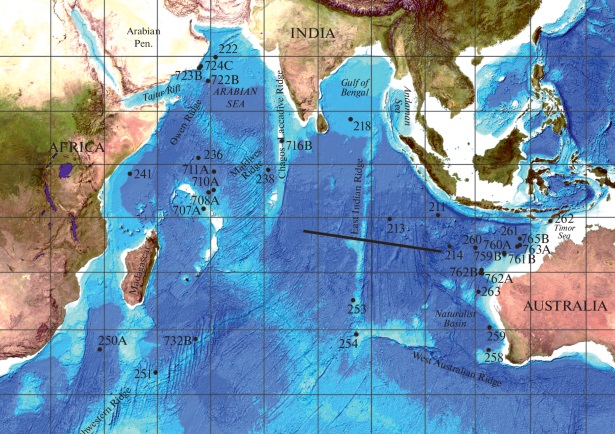
This morning, we discussed seabed mining, the outer limit of the continental shelf, and the future of the blue economy. Did you know that in the Indian Ocean, there are two key areas where Himalayan river sediments—mud—are deposited into the sea?
One is in the Bay of Bengal, forming the Bengal Fan, where sediments from the Brahmaputra, Godavari, and Ganges rivers have accumulated over millions of years. The second is the Indus Fan, which originates from the Indus River. These sedimentary deposits are rich in oil and gas reserves, as the sediments trap these resources beneath them.
According to the UN Convention on the Law of the Sea (UNCLOS), any country that can demonstrate a continuous sediment thickness of 1 km in its seabed can claim ownership of that area. The catch is that the neighbouring country gets the ownership.
This is where Sri Lanka comes in. Although the rivers flow from India, the sediment-rich areas of the Indian Ocean adjacent to these rivers are claimed by Sri Lanka.
When our war was ongoing, we worked alongside Pakistan’s hydrography unit to survey these areas and submitted our claim to UNCLOS. Our claim extends up to 440 nautical miles south of Sri Lanka.
While there is a small overlapping area of about 160 sq km between India and Sri Lanka, my advice as Defence Attaché 25 years ago was to give this area to India, as we have ample resources in the south. However, diplomacy delayed the decision, and no resolution has been reached yet.
Rare minerals, such as those used in electric car batteries, are found in these deep-sea sediments. These minerals make seabed ownership highly lucrative, as they are essential for building environmentally friendly vehicles. However, deep-sea mining comes with significant environmental consequences.
Few countries currently have the capability for deep-sea mining. Why not Pakistan? If Pakistan develops this capability, Sri Lanka would be the first to collaborate, offering 90% of the profits to Pakistan while retaining 10%—enough to settle our debts with the IMF and other lenders.
Sri Lanka is a small nation with a population of just 22 million, which is equivalent to the population of Lahore and its suburbs. If all the people of Lahore were relocated to Sri Lanka, they would enjoy our beaches more than being landlocked.
To conclude, the seabed resources of the Indian Ocean represent a tremendous opportunity. Properly exploiting these resources could transform the future of our nations, ensuring prosperity for generations to come.