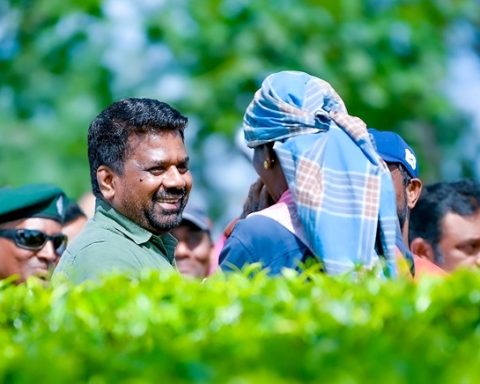
President Anura Kumara Dissanayake chaired a meeting recently for a discussion on strengthening preparedness and response to El Nino conditions. Many relevant government ministers and government officials participated in this discussion. This is a necessary and timely effort on the part of the government. While lauding this initiative, it needs to be highlighted that preparing for El Nino is not just a government effort although it has a crucial role to play in such an effort. It should be a national effort that involves the Opposition political parties and relevant non-government entities including the private sector. Above all it should involve the public as they are the ones who will bear the brunt of the effects of El Nino.
Public involvement should primarily be about being informed about the effects, being educating about El Nino and how and what it does, and how they could help themselves and the country more broadly to manage the effects of El Nino. Water conservation, both drinking water and water for irrigation, energy conservation, management of food supplies, health management are some key areas that the public will directly be affected and whatever rules and regulations the government may introduce in these areas, they will have minimal effects unless the public joins in the effort to minimise the El Nino effects.
As stated earlier, El Nino does not care about political affiliations of the public. In this sense, it is even handed and it will hit anyone and everyone irrespective of one’s politics, wealth, gender, ethnicity or religion.
The argument for a national effort to educate the public, to consult the public and take ownership of mitigating efforts is imperative and, in this regard, the inclusion of Opposition political parties and relevant non-government entities and the private sector in a national committee is crucial. It will be a sad day for Sri Lanka if this issue becomes a political football game and a point scoring exercise for political parties.
El Nino Effects
The strengthening El Niño is driving baseline temperatures upwards by an average of 1°C to 1.8°F across Sri Lanka. Reports indicate that this baseline increase creates dangerous, localized heatwaves. In specific dry zones like the Trincomalee and Mullaitivu districts, temperatures have recently peaked at a scorching 37.5°C (99.5°F).
This intense heat compounds the ongoing drought and triggers several serious side effects:
Severe Health Risks
- Heat Exhaustion: Prolonged outdoor exposure is causing widespread heat exhaustion and dehydration.
- Fatal Heat Stroke: Health officials are warning the public that continuing to work in the direct sun during peak hours can trigger fatal heat stroke.
- Urban Heat Islands: The heat is significantly worse in dense cities like Colombo. Concrete buildings trap the warmth, creating highly localized “heat traps”.
Power Grid and Energy Strain
- Dwindling Hydropower: Sri Lanka relies heavily on water reservoirs for electricity. Evaporation from the high heat has threatened water capacity, raising fears about long-term power stability.
- Spiking Demand: As citizens run fans and cooling systems to survive the sweltering weather, energy demand is skyrocketing. Officials are actively urging the public to strictly conserve electricity.
Compounded Agricultural Losses
- Baked Topsoil: High temperatures dry out remaining soil moisture instantly. This kills crops before they can even grow.
- Shifted Schedules: Because the heat and dry weather are expected to peak brutally by early next year, the government is forcing rice farmers to plant their Maha season crops early to avoid the absolute worst of the upcoming heatwave
Severe Water Shortages and Drought
- Dried Reservoirs: Water levels in hundreds of small agricultural tanks and water systems have or will plummet to just 10% capacity.
- Emergency Deliveries: It is reported that the government has allocated 4.8 billion rupees ($14 million USD) to truck drinking water to over 72,000 people across seven dry districts.
- Water Rationing: Families in the hardest-hit areas are restricted to just 75 litres of water every two to three days.
Mixed and Erratic Monsoons
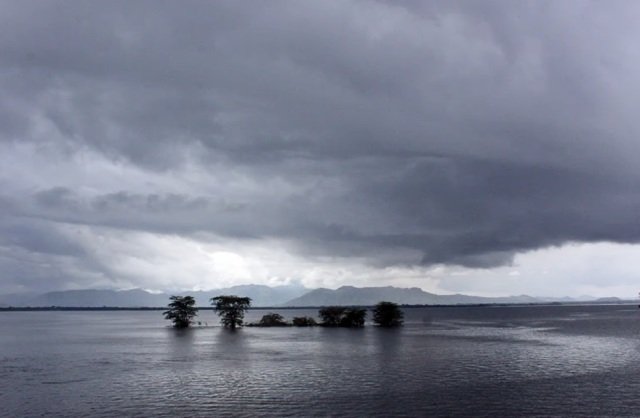
- Weak Southwest Monsoon: El Niño typically suppresses the vital summer rains, leading to extended dry spells for local farmers.
- Heavy Inter-Monsoonal Rain: Conversely, it often brings massive, unseasonal rainstorms and cyclonic systems to the western and southwestern regions, raising the risk of immediate flash floods and landslides.
Agriculture and Economy Threats
- Crop Failure: Scorching heatwaves and dried-up water sources have already damaged major cultivation lands.
- Paddy Risks: Farming for the crucial Maha (the main rice cultivation season) is highly vulnerable to these sudden switches between dry weather and flooding.
Wildlife and Forest Pressures
- Shrinking Habitats: Sri Lanka’s 20+ national parks are drying out, forcing protected animals like elephants and leopards to venture into villages for water, increasing human-wildlife conflic
What are the key tasks for the National Committee?
It’s very likely that the general public does not fully comprehend the devastating effects of El Nino. Firstly therefore, it should be an educational effort to provide the public with more information about El Nino, its effects, and the role the public should play to mitigate them to the extent possible. If expert advice requires the government to impose water cuts. power cuts and irrigation management measures, and if the Opposition carries out a campaign saying they would not impose them if they were in power, it negates the objective of a national effort to mitigate the effects of El Nino. Major decisions impacting on the public should therefore be decisions that are arrived at with some consensus after deliberations by the national committee. Such decisions should extend to more broad water and energy management issues where necessary depending on the severity of the effects and taking drastic action unthinkable under normal circumstances.
Secondly, the media should be briefed regularly by a spokesperson for the National Committee, ideally, a nonpolitical figure. This suggestion is made as such a person would attract greater confidence amongst the public rather than a political figure.
Thirdly, while a national committee is proposed as mentioned above, operational decisions will have to be taken by the government, wherever possible and feasible in discussion with the national committee.
Fourthly, the national committee should speak in one voice once discussions have been held and consensus is reached.
El Nino as a catalyst for more consensuses driven governance
Criticizing a government has historically been viewed as the role of an Opposition. While shortcomings, shortsighted policies, detrimental policies have to be voiced, an Opposition role should be about promoting alternative policies which in their opinion are better for the country than a governments policy. This is where consensus governance should be embarked upon where major policy decisions are discussed from a national perspective and implemented as consensus driven policies. Environment policies, water management policies, and energy policies certainly fall into this category.
While all effects of El Nino cannot be mitigated in full, managing such effects to the extent possible is in the hands of the people and their representatives as well as that of the broader society. In this regard, while the immediate need is more operational than strategic, from a futuristic point of view, it should be strategic. It is time that the country had national policies when it came to the environment, energy and water management.
Consensus driven politics has generally been viewed not as a strength in governance but a sign of weakness on the part of a particular political party in power, and an opportunity for point scoring on the part of those not in power. The meaning and purpose of democracy has been interpreted, or should one say misinterpreted, to mean that any party in power, even with a very slim majority, has a mandate to enact policies irrespective of any consideration of alternate policies. A classic case in point is the 1977 election which gave the J R Jayewardena government a five-sixth majority in Parliament with just 50.97% of the votes cast. This vote meant that 49.03% of voters did not vote for the UNP. While this outcome was within the constitution in place at the time, it did demonstrate the incongruency between the vote and outcome in Parliament. While constitutions per se cannot address this incongruency, leadership by political leaders can, and this where consensus politics could become more of a norm than an exception, at least when it comes to some policies outlined earlier.
Whilst not pointing a finger at any particular government, a valid question may be asked at this juncture how well democracy in its current format has served the country.
Despite becoming bankrupt in 2022, income inequality and the gap between the rich and the poor has widened significantly over time. World Bank data indicates that while a formal assessment has not been carried out, estimates indicate that the 10% of the population (approximately 2 million) may be termed affluent, while within this approximately half of them may be classified as ultra-rich, while roughly a quarter of the population (25 -27% or 5- 5.5 million people continues to live below poverty thresholds. Urban food insecurity and vulnerability have multiplied compared to pre-crisis periods. Salaried and middle-income groups face high living costs and heavy tax obligations without receiving targeted state subsidies, which are usually reserved for the extremely poor via safety-net frameworks like the Aswesuma welfare program. Wealth accumulation remains heavily concentrated in urban commercial centres or tied to prime property, whereas rural and estate plantation sectors suffer from persistent multidimensional deprivation and deeper indebtedness.
Whilst economic indicators show improvements and a degree of economic stabilisation over the last two years, and vast sums of money is being allocated for long neglected infrastructure projects and improvement health services, changes to education policies, improved exports, rise in tourism and remittances from overseas Sri Lankans, the governance style seems to remain the same with the Parliament sounding more like the noise in a boxing ring rather than a venue for exchanging ideas for better governance.
El Nino is a reality before the country and also in many other countries throughout the world. The impact of it is being faced as we speak, and it’s predicted to worsen over the coming months. It is a good time to reflect on governance and consider governance options not considered before in order to lift the country and its people to a new level where each other’s welfare is considered as more important rather than the welfare of a few who appear to be more equal than others.