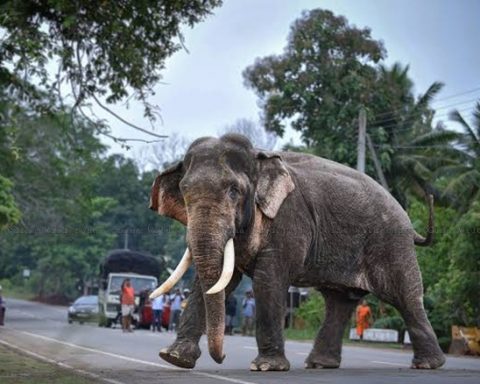
Humans and elephants have coexisted in Sri Lanka for thousands of years, yet today about 70% of elephant habitats overlap with human settlements, creating persistent conflict. Farmers cultivating crops in elephant-populated areas often face repeated destruction of their fields, leading to constant confrontations between people and elephants. The government first sought to resolve this issue in 1959 by confining elephants to wildlife reserves, but more than six decades later, the effort has had limited success.
Dr. Prithviraja Fernando highlighted that approximately 62% of Sri Lanka is inhabited by elephants, and 44% of the human population lives in shared elephant areas. He explained that while coexistence is visible in these regions, conflicts remain frequent as humans defend crops and elephants respond aggressively. Community-based electric fencing has emerged as a key solution, allowing farmers to protect their livelihoods without provoking elephants.
Dr. Sumith Pilapitiya emphasized that temporary electric fences along estate borders have been introduced to safeguard agricultural land during the two main farming seasons. The Divisional Secretariats are responsible for maintaining these fences, but initial implementation challenges, coupled with land allocation for development projects, have sometimes exacerbated conflicts. Proper management of these initiatives, Pilapitiya noted, is critical to reducing human-elephant confrontations.
In areas like Thirapane and Giritale, effective management of electric fencing has successfully enabled coexistence. Modern technology, such as GPS tracking of over 200 elephants, has provided insights into their movement, although elephant crossing operations in several regions have occasionally increased aggression rather than reducing it. Government plans, supported by the World Bank, Asian Development Bank, and Agrarian Development Bank, helped lower elephant deaths from 489 in 2023 to 388 in 2024, though numbers rose again to 400 by the end of 2025 following new operations.
Experts stress that while no plan can fully eliminate human-elephant conflict, the ongoing National Action Plan and community-based measures have proven effective in reducing fatalities and promoting coexistence. They advocate continuing and improving these strategies, integrating modern technology, and carefully managing development projects to ensure long-term harmony between humans and elephants.