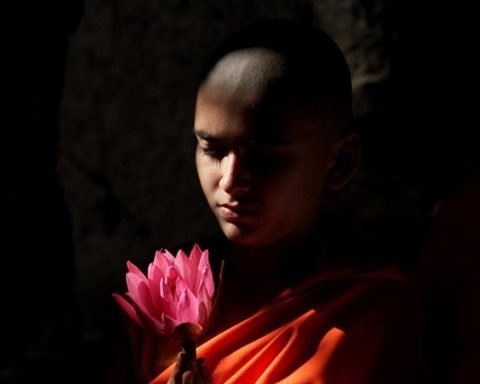
Sri Lanka is preparing a significant legal amendment aimed at strengthening discipline within the Buddhist monastic community, as discussions between state legal authorities and senior Buddhist leaders move forward. Commissioner General of Buddhist Affairs Gamini Senaratne has confirmed that agreements reached with the Attorney General on revising the Buddhist Temples and Devalagam Act have already been submitted to the island’s Chief Prelates for review, marking a key step in the government’s effort to formalize new disciplinary measures for monks across the country.
According to Senaratne, the proposed amendments are intended to address concerns over misconduct within sections of the Sangha, including cases where monks allegedly continue to wear robes despite disciplinary action taken by their respective monastic councils. He explained that recent discussions with the Attorney General resulted in a set of clear agreements that will form the foundation of the revised legal framework. These agreements have now been forwarded through official channels to the relevant registrars and monastic authorities, with the expectation that the opinions of the Chief Prelates will guide the final structure of the draft legislation.
Once the responses from the Chief Prelates are received, the Legal Drafting Department is expected to begin preparing the formal Buddhist Temples and Devalagam Amendment Bill. Officials have indicated that this process will incorporate feedback from religious leadership to ensure that the proposed legal changes align with both constitutional requirements and the traditional authority structures of the Buddhist clergy. The government has emphasized that the objective is not only legal enforcement but also the restoration and maintenance of discipline within the monastic order, which holds significant cultural and social influence in Sri Lankan society.
A key element under consideration in the proposed reform is the establishment of a more enforceable disciplinary mechanism that could include a structure similar to a “Sangha Court.” This concept is intended to strengthen the ability of religious and legal authorities to impose meaningful consequences in cases of misconduct, particularly where existing internal disciplinary decisions by monastic councils have not resulted in compliance. Officials argue that the current system lacks sufficient enforcement power when individuals resist or ignore rulings made within the Sangha framework, creating gaps in accountability that the proposed amendments aim to address.
The move comes amid growing public and institutional concern over maintaining ethical standards within religious institutions, particularly in cases where misconduct has drawn attention in recent years. While the Buddhist monastic community in Sri Lanka operates under long-established codes of discipline, enforcement has largely depended on internal mechanisms within different sects and councils. The proposed legal amendments would introduce a stronger state-supported framework that works in coordination with these traditional structures, rather than replacing them entirely, according to officials familiar with the discussions.
President Anura Kumara Dissanayake has also publicly underscored the importance of strengthening discipline within the Sangha. Speaking at the State Vesak ceremony, he emphasized that new laws would be developed promptly to ensure that the monastic community continues to uphold its ethical and spiritual responsibilities. His remarks reflect a broader policy direction that places renewed focus on institutional integrity within religious organizations, particularly those that play a central role in shaping public values and national identity.
The proposed reforms have also sparked careful attention due to the sensitive balance they must maintain between state authority and religious autonomy. Buddhist institutions in Sri Lanka have historically operated with a high degree of independence in internal governance, and any move to introduce formal legal mechanisms for disciplinary enforcement is expected to require extensive consultation and consensus-building among religious leaders. Government officials have indicated that this consultative approach will remain central to the drafting process, with the Chief Prelates’ feedback expected to play a decisive role in shaping the final legislation.