by Our Correspondent in Colombo
SriLankan Airlines made a significant improvement in its underlying operating performance during the 2024/25 financial year, but engine shortages, heavy finance costs and a severely weakened balance sheet continued to weigh on the carrier, according to the airline’s recently published annual report.
The SriLankan Airlines Group recorded an operating profit of LKR 28,422.90 million before foreign exchange gains, compared with LKR 28,147.92 million in the previous financial year. When foreign exchange gains and unscheduled engine repair costs are excluded, the operational loss identified in the report narrowed to LKR 6,660 million from LKR 18,792 million in 2023/24, an improvement of more than LKR 12 billion. The reported figures were nevertheless heavily affected by currency movements. The Group recorded a foreign exchange gain of LKR 3,925 million in 2024/25, far below the LKR 26,717 million gain recorded a year earlier following the restatement and revaluation of foreign-currency liabilities after the appreciation of the Sri Lankan Rupee.
Total Group revenue fell to LKR 303,093.89 million from LKR 339,591.65 million in 2023/24, while standalone company revenue declined to LKR 296,506.00 million from LKR 333,614.09 million. Passenger revenue was down 15 per cent to LKR 234.5 billion, with the report attributing the decline primarily to capacity constraints, global reductions in yields and the stronger Sri Lankan currency. Cargo revenue moved in the opposite direction, increasing by 2 per cent, with route yield rising to USD 1.29 per kilogramme from USD 1.17 per kilogramme in the preceding year.
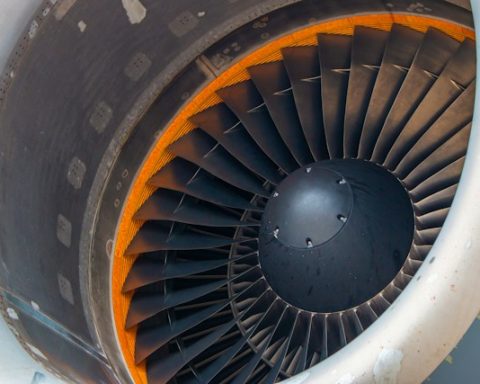
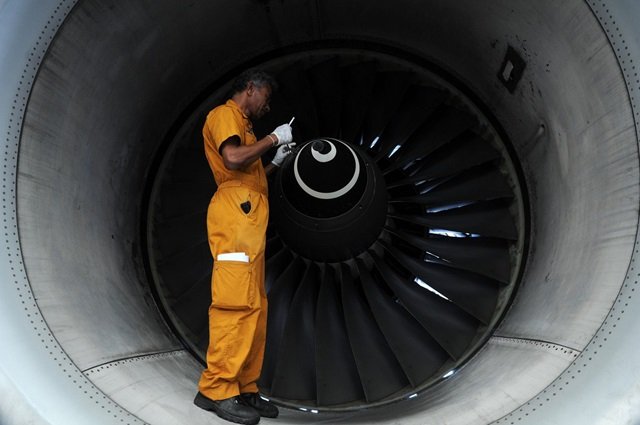
The most immediate operational constraint was the availability of Pratt & Whitney engines for the airline’s Airbus A320neo and A321neo fleet. Unscheduled maintenance, engineering delays and shortages of spare parts reduced available capacity and contributed to 487 flight cancellations during the year. SriLankan Airlines spent LKR 2.2 billion on unscheduled engine repairs and lease costs while using short-term damp-leases and wet-leases to maintain schedules and protect important revenue-generating routes. At the end of the financial year, the operating fleet stood at 22 aircraft, comprising 13 narrow-body and nine wide-body aircraft.
Passenger capacity, measured in Available Seat Kilometres, fell by 5 per cent to 14,714.85 million. Revenue Passenger Kilometres declined to 11,571.61 million, leaving the passenger load factor at 78.64 per cent, compared with 79.08 per cent in 2023/24. Across the wider operation, Available Tonne Kilometres stood at 1,908.92 million and revenue traffic reached 1,338.08 million Revenue Tonne Kilometres, producing an overall load factor of 70.10 per cent against a breakeven level of 76.17 per cent.
The airline’s businesses beyond passenger operations provided an important source of revenue. Ground handling and air terminal services increased by 17 per cent to LKR 24.9 billion, supported by increased international airline traffic at Bandaranaike International Airport. SriLankan Catering revenue rose by 13 per cent to LKR 7.3 billion. According to the report, both auxiliary businesses remained consistently profitable and helped offset deficits from passenger routes while supporting the Group’s cash flow.
Operating expenditure before exchange gains and unscheduled repair costs declined by 9 per cent to LKR 276,332.31 million, from LKR 312,929.37 million in 2023/24. The reduction was attributed to lower jet-fuel prices and cost-saving measures. At standalone company level, operating profit before exchange gains was LKR 22,472.37 million. These operating improvements, however, did not translate into a positive final result because of the carrier’s financial obligations and exceptional costs.
The Group ended the year with a net loss of LKR 2,735.28 million, compared with a net profit of LKR 7,925.01 million in 2023/24. The standalone company recorded a net loss of LKR 7,594.56 million, reversing a profit of LKR 3,870.86 million in the previous year. Net finance costs amounted to LKR 31.6 billion, while unscheduled engine repair costs added LKR 2.2 billion. The report identifies the global supply-chain difficulties and continuing engine performance problems affecting the Airbus A320/321neo fleet as major causes of the additional maintenance expenditure.
The balance sheet remained substantially weaker than the operating figures alone suggest. At 31 March 2025, Group assets totalled LKR 189,256.80 million, down from LKR 201,648.71 million in 2024, while company assets stood at LKR 181,971.09 million. Group shareholders’ funds were negative by LKR 379,519.61 million and company equity by LKR 403,172.55 million, leaving the carrier severely undercapitalised.
The Government of Sri Lanka has initiated financial restructuring measures to address the debt and cash-flow pressures. State-owned bank loans are being restructured under a framework providing for repayment over five years. Lazard Frères SAS has also been appointed as financial adviser on restructuring the USD 175 million Sovereign-Guaranteed International Bond, with the objective of reducing the annual net interest burden that had previously exceeded LKR 31.6 billion.
Alongside the financial restructuring, the airline has introduced a five-year strategic plan centred on shifting its network towards higher-demand regional markets including India, the Middle East and Southeast Asia, while optimising lower-yield long-haul routes. The programme also calls for greater automation of revenue management, digital transformation of customer-facing services and expanded code-share arrangements with global carriers. The Group employed an average of 6,786 people during the year, including 6,071 at company level, while staff turnover was approximately 7 per cent, attributed in the report to domestic economic conditions and competition from Middle Eastern carriers for engineering, flight-crew and ground-operations personnel.