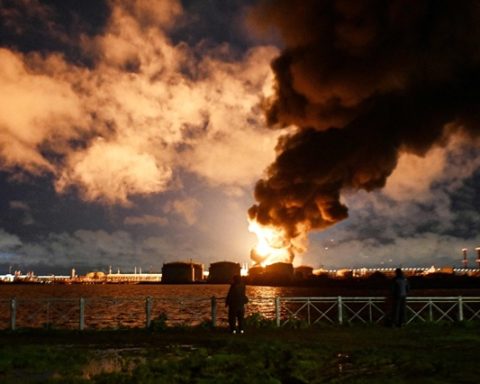
The war in Sudan has returned to its origins in a fierce battle for downtown Khartoum, where the Sudanese Armed Forces (SAF) have regained control of critical government institutions. After days of intense clashes, forces loyal to de facto president General Abdel Fattah al-Burhan successfully reclaimed the presidential palace from the paramilitary Rapid Support Forces (RSF) on Friday. The SAF has since expanded its control, capturing the central bank headquarters and other key government buildings in what appears to be a turning point in the ongoing conflict.
The recapture of these strategic sites marks a shift in momentum that has increasingly favored the SAF over the past several months. If the army consolidates its hold over Khartoum, it could pave the way for Gen. Burhan to establish a transitional government and seek broader international recognition.
However, the situation remains precarious. As reported by the Financial Times, a recent RSF victory in Darfur has highlighted the persistent risk of a de facto partition of Sudan. This reflects the deep-seated divisions that have fueled the war since it broke out in 2023. Initially, the army suffered a series of setbacks, retreating to Port Sudan on the Red Sea. But since last September, it has retaken vast swaths of land, including most of the capital, largely due to improved alliances, heavy rearmament, and waning RSF morale.
Conflict analysts suggest that the SAF’s resurgence has been aided by Islamist brigades backing the former regime, as well as the acquisition of advanced weaponry, including drones from Turkey and fighter jets from China and Russia. Meanwhile, the RSF has struggled to maintain its supply chains through Chad and Libya, further weakening its position.
Despite these gains, the battle for Khartoum is far from over. An RSF counterattack on Friday resulted in the deaths of a senior army spokesperson and several soldiers at the palace, and pockets of resistance remain active in the city’s southern districts. Additionally, the RSF recently seized a desert outpost in North Darfur, cutting off supply routes to army allies in El Fasher, further complicating hopes for a unified Sudan.
Political analysts and exiled opposition figures warn that complete army control of Khartoum does not necessarily bode well for Sudan’s future. “If the army regains full control of the capital, it is not necessarily good for Sudan’s future because they don’t care about Darfur,” said Nour Babiker, a politician from the moderate opposition Sudanese Congress Party.
The humanitarian crisis remains dire, with more than 12 million people displaced by the war and famine taking hold in various regions. Reports of atrocities by both sides continue to surface, raising concerns about human rights violations as the conflict drags on. The RSF, which has roots in the notorious Janjaweed militias accused of war crimes in past Darfur conflicts, has been accused of brutal reprisals as it withdraws from key positions. Meanwhile, the SAF and its allied militias have been implicated in ethnically targeted violence in areas they have reclaimed.
Gen. Burhan now faces the immense challenge of restoring order to a devastated capital while ensuring the availability of essential services such as food and water. At the same time, he must navigate complex international dynamics to secure reconstruction aid while managing the various factions within his military coalition. His recent successes have been supported by hardline Islamist factions tied to the former regime, which, while influential domestically, are viewed with suspicion by Western governments and regional allies such as Egypt and Saudi Arabia.