by Our Correspondent in Colombo
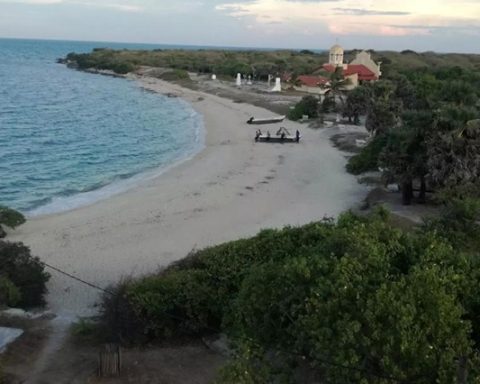
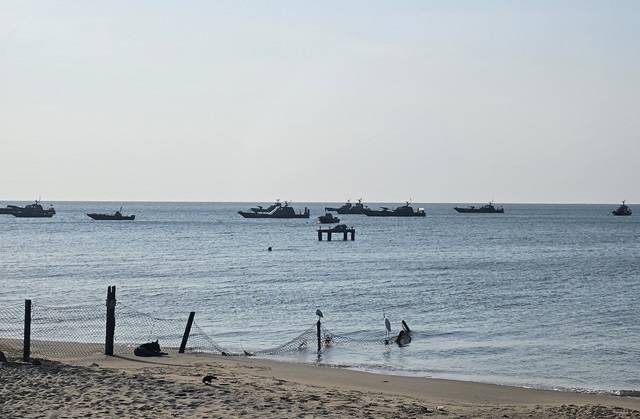
Tucked away on the windswept shores of Talaimannar, a remote town on Sri Lanka’s northwest coast, lies a site shrouded in faith, legend, and heated debate. Locals and a growing wave of Muslim pilgrims believe this humble grave is the final resting place of Adam and Eve — the first man and woman according to Islamic, Judaic, and Christian traditions. Yet, no archaeological evidence has ever verified such a claim. Instead, what exists is a story wrapped in spiritual conviction, historic conjecture, and geopolitical undercurrents, fiercely guarded by a Mullah who tends the site as both custodian and spiritual guide.
A Grave Without Proof, But Filled with Conviction
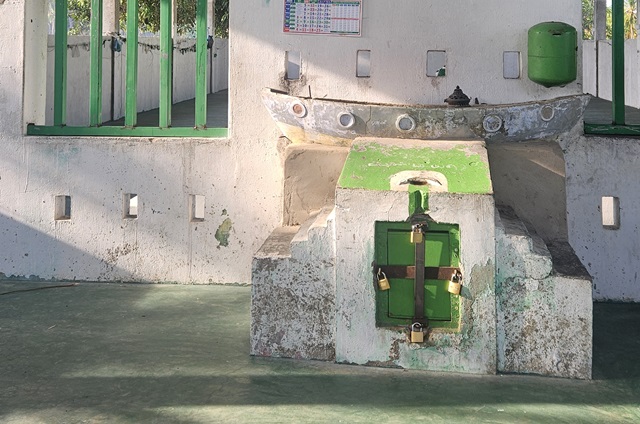
The grave in Talaimannar is modest — a stretch of earth by the sea, marked by simple stones and cared for by the local Mullah. “There is no scientific proof the bodies lie here,” he concedes, “but our belief is anchored in faith and the Qur’an’s account. Adam and Eve came by a boat and their bodies rest deep beneath these waters. This is what Muslims across Sri Lanka believe.”
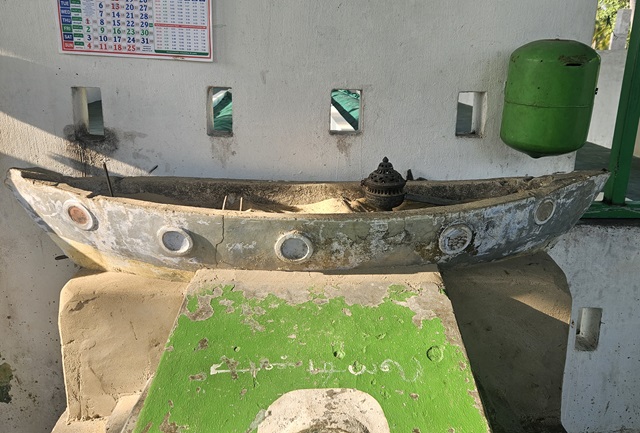
This belief is not an isolated folklore. The Mullah shows a carefully crafted boat model, symbolising the divine journey of humanity’s first couple arriving in this part of the world. Pilgrims arrive daily — not yet in throngs, but steadily growing in numbers. And while the site is far from the grandeur of established pilgrimage destinations, plans are afoot to develop it into a significant Islamic spiritual hub within five years, a “Makkah of South Asia,” a visitor of the grave proudly envisions.
Historic Records: Myth, Reality, or Political Narrative?
The idea of Adam and Eve’s graves has been a recurring theme in Abrahamic traditions, though consensus on location has always eluded scholars.
- Islamic tradition, particularly some Hadiths, describes Adam as an enormous figure—around 60 cubits tall (roughly 30 metres), a detail mirrored in the unusually large dimensions of the graves in Talaimannar, measuring approximately 40 feet (Adam’s) and 38 feet (Eve’s). These measurements are consistent with symbolic traditions rather than empirical anthropological data.
- In Jewish and Christian lore, the Cave of Machpelah in Hebron is widely accepted as the burial place of patriarchs Abraham, Isaac, Jacob—and in some traditions, Adam and Eve themselves.
- Other claimed burial sites include the Cave of Treasures near Jerusalem and the Tomb of Eve in Jeddah, Saudi Arabia—though the latter was sealed off by Saudi authorities in 1975, sparking speculation and pilgrim frustration.
Such conflicting claims illustrate a broader struggle over sacred geography. They highlight how religious narratives are often shaped by regional politics and identity rather than verifiable history.
Anthropological and Archaeological Paradoxes
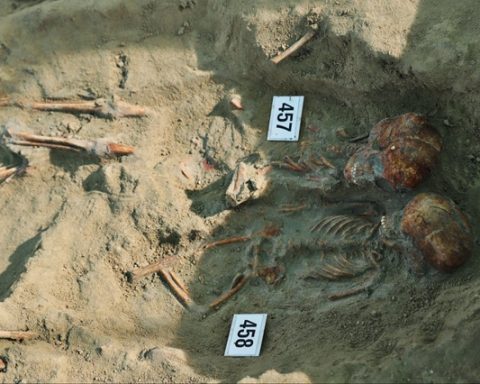
The claim that Adam and Eve’s graves exist in Talaimannar confronts modern science head-on. There are no remains, no carbon dating, no archaeological finds to verify the story. Nor is there evidence for the giant human stature described in Islamic texts beyond oral tradition.
Yet, the community’s unwavering belief — paired with the physical presence of oversized graves — lends the place a powerful aura. This tension between faith and reason reflects a wider global phenomenon where myth, religion, and history intersect uneasily.
Geopolitical and Inter-Religious Ripples
Talaimannar’s rise as a potential pilgrimage site is more than a religious development; it is a geopolitical event in the making. Sri Lanka, a multi-ethnic and multi-religious nation, has witnessed communal tensions in recent decades. The emergence of this grave site under Muslim custodianship could become both a unifying symbol and a flashpoint.
The Mullah hopes Talaimannar will unite, not divide. “This site affirms Islamic heritage in Sri Lanka. We respect other traditions but stand firm in our beliefs,” he states. He acknowledges “parallel claims by Zionists” and other groups, referring to competing narratives over the origins of humanity and sacred sites, but insists these should not escalate into conflict.
At the same time, regional powers and religious authorities in South Asia and the Middle East watch closely. As pilgrimage tourism potentially reshapes local economies, this small coastal grave could recalibrate spiritual maps and economic flows.
A Future Built on Faith, Controversy, and Development
In Talaimannar, the grave’s custodians are actively expanding the site’s infrastructure, preparing for what they hope will be a pilgrimage boom. The surrounding village is slowly transforming: new guesthouses, road upgrades, and religious study centres are planned, backed quietly by some government officials eager to tap into the economic potential.
Yet, the transformation is not without risks. Skeptics warn the site’s mythic claims could exacerbate existing religious tensions or invite external political interference. Others question whether Sri Lanka, with its fragile ethnic balance, can safely accommodate a growing religious magnet that could attract intense scrutiny and contestation.
A Site Where History, Faith, and Politics Collide
The grave of Adam and Eve in Talaimannar may never yield its secrets to science, but it offers a striking example of how faith, history, and identity collide in the 21st century. It challenges historians and theologians alike to reconsider the role of sacred sites in shaping geopolitical realities.
For believers, it is a place of profound spiritual significance and hope—a new axis for Islamic pilgrimage in South Asia. For sceptics, it remains a controversial symbol of contested history and identity.