


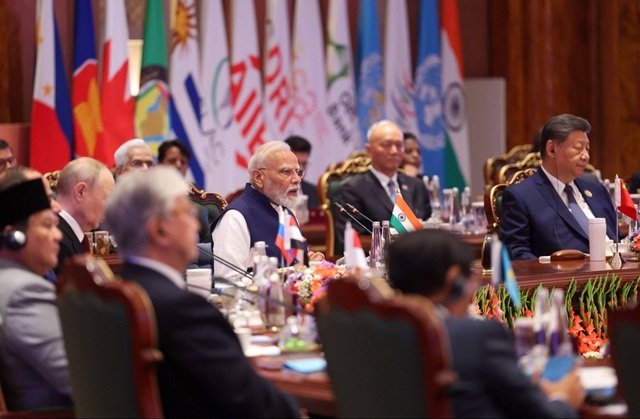
The international system is undergoing a period of structural change in which technology, geopolitical competition and the shifting economic centre of gravity are interacting to weaken established patterns of Western dominance, according to an analysis of what it describes as an “entropic shift” in the global order. The argument builds on the phrase “profound changes unseen in a century”, frequently used by Chinese President Xi Jinping to describe transformations in the international system. Chinese official sources use the phrase to characterise major changes in geopolitics, technology and global governance.
The analysis presented in the source describes the present period not simply as another great-power rivalry but as a transition in which the rules and institutions of the previous system are weakening while a new order remains unsettled. It identifies three forces behind the transition: rapid technological change, a shift in geopolitical and economic centres of gravity, and the expansion of strategic competition into new domains. Together, these forces are said to be affecting military affairs, economics, public opinion, governance and international politics.
Technology is central to the argument. Artificial intelligence, autonomous weapons and intelligent reconnaissance systems are described as lowering the threshold for military action and reducing the technological advantages that once separated major powers from smaller states. The source argues that military power is increasingly determined not simply by territory, troop numbers or weapons inventories but by computing capacity, intelligent warfare capabilities and the speed with which technologies can be developed and deployed.
The same process, it argues, is changing regional power balances. In Europe, France and Germany are described as pursuing greater strategic autonomy while Russia is using advanced military technology to challenge Western military advantages. In the Middle East, meanwhile, relatively small states and non-state actors are presented as increasingly capable of exerting asymmetric influence. The source specifically cites the Houthis and their use of comparatively low-cost technologies to disrupt shipping and regional geopolitics. The result, it argues, is a system in which technological capabilities can allow smaller actors to act as counterweights to much larger powers.
Nuclear security is also described as becoming more fragmented. The source argues that the rigid US-Soviet nuclear balance of the Cold War has given way to a more stratified system in which major nuclear powers retain strategic deterrence, states with smaller arsenals rely on them for regional security, and non-nuclear countries seek protection from larger powers. At the same time, it identifies proliferation, technology leaks, algorithmic miscalculation and covert nuclear manoeuvring as growing risks. The increasing integration of artificial intelligence and nuclear capabilities, it argues, makes security management more diffuse and difficult to contain within traditional great-power frameworks.
The analysis places the largest long-term shift in the movement of economic and geopolitical weight towards Asia and Eurasia. China, ASEAN, India and the Middle East are described as becoming increasingly interconnected, contributing to what the source calls a pan-Eurasian economic cycle. Regional integration, rather than global integration alone, is presented as an increasingly important response to sanctions, technological restrictions and geopolitical disruption. Emerging mechanisms including BRICS, the Shanghai Cooperation Organisation and the G20 are described as gaining importance alongside established institutions such as the United Nations, IMF and World Bank.
The source is particularly critical of the Western-led international order and argues that its credibility has deteriorated. It identifies Donald Trump’s “America First” approach as a major turning point, claiming that transactional diplomacy weakened alliance confidence and accelerated the erosion of US-led multilateral arrangements. The Biden administration is described as having attempted to restore confidence but, according to the analysis, failed to reverse the broader deterioration in trust.
Digital technology has introduced another dimension to the competition. The source argues that 5G networks, algorithmic recommendation systems and big-data profiling have transformed public opinion into a strategic arena. It describes digital competition as a form of cognitive warfare in which competing actors seek to shape perceptions, reinforce echo chambers and influence political behaviour. Governments are no longer the only participants: citizens, private organisations and other non-governmental actors have become part of the information environment through which geopolitical competition is conducted.
The analysis proposes a corresponding change in the meaning of national power. Economic size, military scale and territorial resources remain important, but technological capability, supply-chain resilience and the ability to absorb shocks are presented as increasingly decisive. Regional industrial systems, autonomous defence capabilities and local-currency settlements are described as mechanisms through which countries can reduce dependence on external powers.
Its longer-term argument is that globalisation will not disappear but will become more regionalised and diversified. Supply chains are expected to become more localised, while arrangements such as RCEP, SCO economic cooperation and BRICS cooperation are presented as potential foundations for regional economic systems. The source also argues that future competition will increasingly concern technological standards, governance norms and competing civilisational models rather than military confrontation alone.
The analysis ultimately envisages a global system characterised by multipolarity, regional resilience and broader participation in international governance. It presents the Asia-Pacific’s traditions of “mutual learning, symbiosis, harmony amid diversity, and win-win cooperation” as an alternative model to what it describes as Western zero-sum competition. The central claim is that the present period of instability is part of a longer restructuring in which established Western predominance is giving way to a more plural international system.









