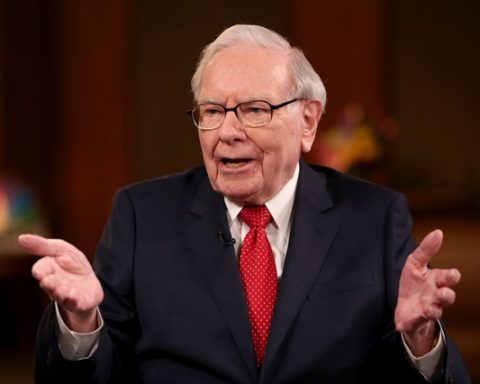
Temasek Holdings Pte. has been “forced to hedge” its US dollar exposure this year as the greenback’s slide weighs on returns for global investors, according to Chief Executive Officer Dilhan Pillay. Speaking Wednesday at the Bloomberg New Economy Forum in Singapore, Pillay said the rising cost of currency hedges has become a significant challenge for the state-owned investment firm.
“The cost of hedging has now gone up because, I find, everybody’s hedging,” Pillay told the audience. “It’s come to a point now where the cost of my hedges are becoming too much, that I have to therefore think about a natural hedge.” He said Temasek must now focus on investments capable of generating sufficiently strong expected returns on a net basis after accounting for currency risk. “Some US dollar-denominated assets will not give me a net return that would justify my allocation of capital there,” he added.
The greenback has fallen sharply this year, with the Bloomberg Dollar Spot Index down nearly 7% and the US currency weakening about 5% against the Singapore dollar. The declines have chipped away at returns for non-US investors, even as the US remains a dominant destination for global capital flows.
Temasek, which reports performance in Singapore dollars, has gradually increased its exposure to the US, with the Americas accounting for almost one-quarter of its S$434 billion ($333 billion) portfolio as of March. In July, the firm pledged to deploy $30 billion into the US over the next five years. It posted an 11.8% one-year total shareholder return in its last fiscal year, and a 10-year return of 5%.
Despite the currency headwinds, Pillay said US “exceptionalism” remains intact, noting that no other market currently has the capacity to absorb large rotations of global capital. He added that alternative asset classes such as commodities, infrastructure and private credit also remain heavily dollar-denominated, making rapid diversification difficult. “The rotation is not easy, and that’s the reality,” he said.