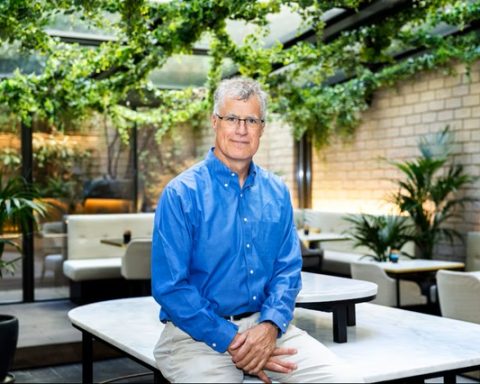
Investment decisions in the technology sector can no longer be based purely on financial metrics as geopolitical instability increasingly shapes global markets, according to Temasek Holdings chairman Teo Chee Hean. He warned that rising tensions over technology, resources, and trade are forcing investors to reassess risk frameworks in ways that were not previously required.
Speaking in his first major interview since assuming the chairmanship, Teo said technology has become a “highly sensitive” investment area where access to strategic resources and capabilities is increasingly being used as geopolitical leverage. He noted that sudden global events can significantly alter the prospects of companies, making traditional financial analysis insufficient on its own.
Teo emphasized that investors must now evaluate not only a company’s economic fundamentals but also how global political developments could affect its operations and long-term viability. He warned that failing to account for these shifts could expose institutions to investments that change fundamentally after capital has already been committed.
A central theme of his remarks was the transformative impact of artificial intelligence, which he described as a “real game changer” that will reshape industries and create entirely new categories of companies. Unlike earlier technological waves such as blockchain, AI is expected to penetrate deeply into how businesses are structured and how value is created across sectors.
Teo said that the emergence of AI-native companies could mirror the rise of internet-based firms in previous decades, with new players rapidly scaling into dominant industry positions. However, he stressed that investment strategies should go beyond foundational AI model developers and focus on companies that apply AI creatively to disrupt existing markets and generate practical value.
He also highlighted the importance of investing across the broader AI ecosystem, including hardware, infrastructure, and energy systems that support large-scale computing. These segments, he suggested, may offer more stability and fewer geopolitical vulnerabilities than highly visible software or model development firms.
Beyond technology, Teo pointed to long-term structural trends in healthcare and drug discovery as key investment areas. He cited growing demand for medical services in countries such as India and noted that Temasek-backed companies are preparing for public listings in the sector, reflecting rising investor interest in healthcare innovation.
He also described significant advances in pharmaceutical research, particularly where artificial intelligence is being used to accelerate drug discovery. By analysing decades of historical data, including unsuccessful drug trials, companies can better predict which compounds are unlikely to succeed, reducing costs and improving efficiency in development pipelines.
Teo further warned that global energy markets remain highly vulnerable to geopolitical shocks, particularly in the aftermath of conflicts in the Gulf region. Rising energy prices, he said, are already feeding into inflation and production costs, with secondary effects expected in food systems and global supply chains.
Despite these risks, he said that the Middle East remains an important long-term growth region, and that Temasek Holdings continues to see strategic opportunities there. However, he acknowledged that instability in the region is likely to have lasting economic consequences even after immediate conflicts subside.
Overall, Teo’s remarks underline a shift in sovereign investment strategy where geopolitical awareness, technological disruption, and macroeconomic resilience are becoming as important as traditional financial performance in shaping global capital allocation.