Thailand and Cambodia have agreed to an immediate and unconditional ceasefire, following five days of deadly clashes along their disputed border that have killed at least 35 people and displaced over 260,000.
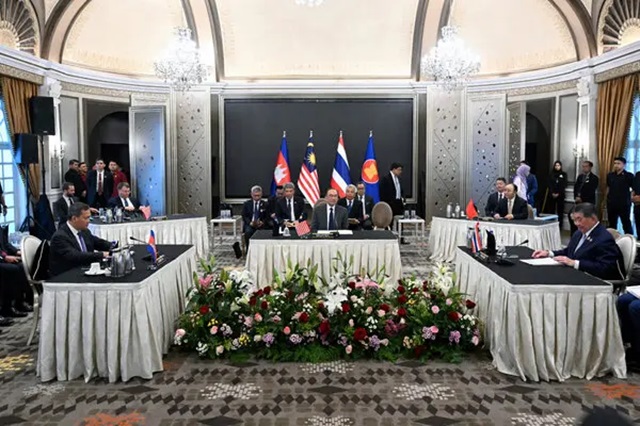
The announcement came late Monday after emergency talks in Malaysia, hosted by Prime Minister Anwar Ibrahim in his role as chair of the Association of Southeast Asian Nations (ASEAN). Anwar said the two countries had “reached a common understanding to take steps to return to normalcy.”
Reading from a joint statement, Anwar confirmed that the ceasefire would take effect from midnight, July 28.
Cambodian Prime Minister Hun Manet and Thailand’s acting Prime Minister Phumtham Wechayachai shook hands at the close of the brief press conference, signaling a rare moment of unity amid deepening tensions.
The ceasefire deal followed direct pressure from the international community, including U.S. President Donald Trump, who warned that the United States could reconsider ongoing trade deals with both countries if fighting continued.
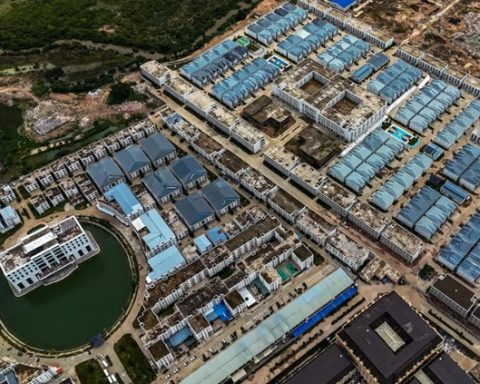
Fighting began last Thursday after a land mine explosion wounded five Thai soldiers near the contested border. Since then, artillery and gunfire have ravaged communities in Cambodia’s Oddar Meanchey province and Thailand’s Surin province. Both sides accused each other of provoking the conflict, and diplomatic relations quickly deteriorated, with ambassadors recalled and border crossings shut—except for Cambodian migrant workers returning home.
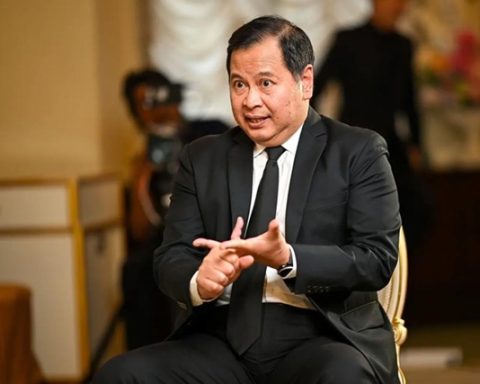
Earlier Monday, gunfire was still being heard along the frontier, and Cambodian defense officials described Thai assaults as “ongoing and strong.” Trust remained low heading into the talks, with Phumtham telling reporters before his departure for Kuala Lumpur that “Cambodia has to prove their sincerity.”
Chinese and American ambassadors in Malaysia attended the talks as observers, highlighting the international concern over the conflict. Pope Leo XIV also addressed the crisis on Sunday, calling for peace and praying for displaced families and children caught in the violence.
ASEAN, a 10-nation bloc that prides itself on peaceful dialogue and non-aggression, issued a separate statement Monday expressing grave concern over the rising death toll, destruction of infrastructure, and mass displacement. The group urged both sides to continue negotiating in good faith.
For civilians on the ground, the ceasefire offers a glimmer of hope.
“I don’t want to see this war happen,” said Ron Mao, a 56-year-old Cambodian mother who fled her home with her children. “If they reached the deal, I would be very happy… so we can return home.”
In Thailand, similar sentiments echoed in evacuation centers. “I beg the government. I want it to end quickly,” said Nakorn Jomkamsing, a 63-year-old farmer. “I miss my home, my pets, my pigs, dogs, and chickens.”
The 800-kilometer (500-mile) border between Thailand and Cambodia has long been a point of friction, but this week’s violence marked one of the most severe military escalations between two ASEAN members in recent history.
Whether the ceasefire holds remains to be seen, but Monday’s agreement offers a critical step toward de-escalation—and the hope that diplomacy may yet prevail over conflict.