

Launched by China in 2013, the Belt and Road Initiative (BRI) has evolved into the world’s most ambitious infrastructure and development programme. It spans 150 countries, encompassing ports, railways, energy pipelines, digital networks and industrial corridors.
While the BRI has helped close infrastructure gaps in many developing economies, it has also become synonymous with a host of controversies, such as mounting debt burdens, weak commercial viability and allegations of political leverage by China.
It is therefore no coincidence that rival infrastructure initiatives are now proliferating. The EU’s Global Gateway, the Group of Seven’s Partnership for Global Infrastructure and Investment (PGII) and India’s regional connectivity strategies did not emerge in a vacuum.
They are a direct response to the perceived shortcomings of the BRI, and seek to offer greater transparency, stronger governance safeguards, higher environmental standards and more sustainable financing arrangements.
Some observers view this growing competition as evidence that the BRI is losing relevance. That interpretation misses the bigger picture.
The emergence of rival frameworks reflects both China’s success and its failures. The country succeeded in transforming infrastructure into a central instrument of geopolitical influence. But it also exposed the risks of allowing a single dominant actor to shape the development landscape with limited accountability.
Far from disappearing, the BRI is being compelled to evolve, shifting towards smaller and more commercially viable projects, renewable energy investments, digital infrastructure and equity-based financing.
The real question, therefore, is not whether the BRI will survive. It almost certainly will.
The more important one is how and whether it can retain its influence in a world where countries increasingly have alternatives. The era in which China could dominate the global infrastructure agenda with limited competition is coming to an end.
For the first time, China must compete not merely on scale and speed, but on transparency, sustainability and trust. Those are areas where the BRI’s record remains far less impressive.
Criticisms of the BRI
Far from being a benign development programme, the BRI has been criticised as an instrument through which China exports financial, political and strategic influence under the guise of infrastructure development.
While the Asian country promotes the BRI as a win-win partnership, critics argue that many projects have left recipient countries saddled with debts they can ill afford.
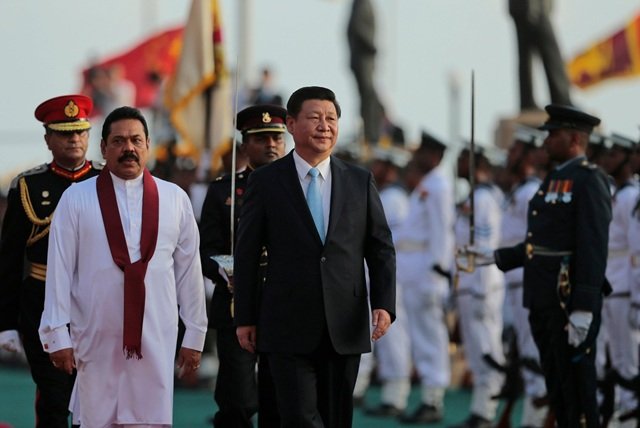
The most cited example is Sri Lanka’s Hambantota Port, where mounting debt pressures contributed to the government leasing the port to China for 99 years, fuelling allegations of “debt-trap diplomacy”.
In Pakistan, concerns have emerged over the financial viability of projects under the China-Pakistan Economic Corridor, while countries such as Malaysia and Zambia have sought to renegotiate or review BRI-linked agreements amid unease over costs and debt exposure.
The initiative has also been plagued by accusations of opaque procurement processes, inflated project costs, corruption and weak environmental safeguards. Numerous projects have failed to deliver the promised economic returns, resulting in underutilised airports, ports and industrial parks that have become expensive white elephants.
The BRI is widely viewed as a vehicle for advancing China’s geopolitical ambitions, enabling the country to secure access to strategic infrastructure, expand its diplomatic leverage, and increase its influence across critical trade routes.
Rather than fostering sustainable development, critics contend that the BRI has too often created dependency, weakened local bargaining power, and exposed vulnerable countries to significant economic and political risks.
Competitors operate differently
In the early years of the BRI, China operated in a relatively uncontested space. The overseas infrastructure strategies of the US, EU and other major economies were limited in coordination.
Over time, however, competition has intensified significantly, reshaping the global infrastructure landscape into a more explicitly geopolitical arena, with major powers seeking to expand influence through connectivity, finance and development partnerships.
EU’s Global Gateway, G7’s PGII as well as India’s connectivity strategy (including the Security and Growth for All in the Region, and Mutual and Holistic Advancement for Security and Growth Across Regions) are some examples of the intensified competition.
More importantly, these initiatives are a direct contrast to China’s state-driven model by focusing on transparency, environmental sustainability and debt sustainability.
For instance, the Global Gateway finances projects through a mix of grants and concessional loans. It also prioritises regulatory alignment, governance safeguards and private-sector mobilisation.
Separately, India has concentrated on regional connectivity projects that emphasise strategic autonomy and neighbourhood-first diplomacy.
Despite increasing competition, the BRI is likely to remain the dominant infrastructure model for the foreseeable future. These new initiatives are not a replacement of the BRI but an expansion of the global infrastructure marketplace.
China’s speed and scale
One of the BRI’s strengths is its ability to mobilise financing quickly through policy banks, state-owned enterprises and coordinated diplomatic channels.
Unlike many Western-led initiatives, which depend heavily on private capital and multilateral coordination, the BRI can combine financing, construction and political agreements within a single framework.
This enables projects to move forward even in environments where institutional risks are high and private investors may be reluctant to participate.
Many developing economies also continue to prioritise infrastructure delivery over procedural constraints, making China’s fast-execution model attractive.
While concerns around debt sustainability and environmental impact persist, the demand for rapid infrastructure development continues to be substantial.
First-mover advantage
Over the past decade, the BRI has established deep infrastructural, contractual and political linkages across Asia, Africa, the Middle East and Latin America.
These accumulated relationships, as well as a vast network of ports, railways and energy assets, create long-term dependencies, and continue to provide China with significant economic and political influence.
Even as new competitors emerge, they often build on or connect to infrastructure initially developed under the BRI framework. This gives China a structural first-mover advantage that is difficult to replicate on a comparable scale.
Adapting to new priorities
This is not to say that BRI has not adjusted to new norms and expectations. The initiative has adapted in response to criticism, market conditions and shifting global priorities.
Recent developments indicate a clear move towards renewable energy, industrial processing and digital infrastructure projects. This aligns the initiative with long-term global demand trends, particularly in developing economies that require both traditional infrastructure and new energy systems.
The expansion into green energy, electric vehicle supply chains and mining investments suggests that the BRI is not static, but responsive, to global industrial transformation.
The BRI has also moved into more diversified financing structures, paid more attention to environmental standards and focused on local economic integration. These adjustments reflect a maturing initiative that is transitioning from rapid expansion to consolidation and quality enhancement.
Taken together, these changes point to a more adaptive and market-oriented approach, while still maintaining strong state coordination and geopolitical objectives.
Hence, the emergence of competing infrastructure initiatives does not necessarily weaken the BRI. Competition acts as a disciplining mechanism.
It enhances the BRI’s evolution by introducing benchmarking pressures that encourage efficiency improvements, better governance practices and greater responsiveness to partner-country needs.
Competition as catalyst
The BRI today is no longer the uncontested initiative it was a decade ago. It faces greater scrutiny, stronger competitors and rising expectations from host countries.
Yet, these challenges should not be mistaken for signs of decline. If anything, they reflect the BRI’s extraordinary success in reshaping the global infrastructure agenda.
No competing initiative currently matches China’s combination of financing capacity, execution capability and accumulated networks across the developing world.
While rivals may constrain the country’s influence at the margins, they are unlikely to displace the BRI as the centrepiece of global infrastructure development.
The more likely outcome is a competitive ecosystem in which the BRI remains the dominant player, but one that is increasingly compelled to become greener, more transparent and more responsive to local concerns.
The global system is also moving towards a hybrid framework, where different models serve different needs: Chinese frameworks for scale and speed; Western ones for standards and transparency, and regional actors for strategic alignment.
Competition, therefore, is not the end of the BRI story. It is the reason the next chapter may prove even more consequential than the first.
This article was originally published in Singapore-based business daily The Business Times.