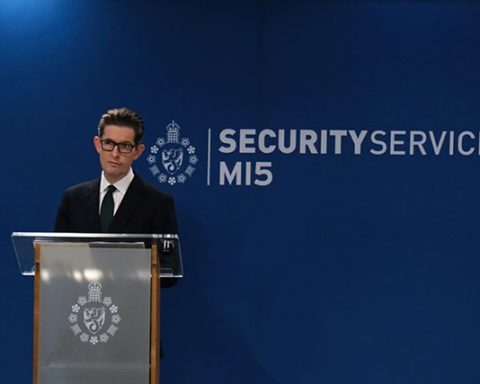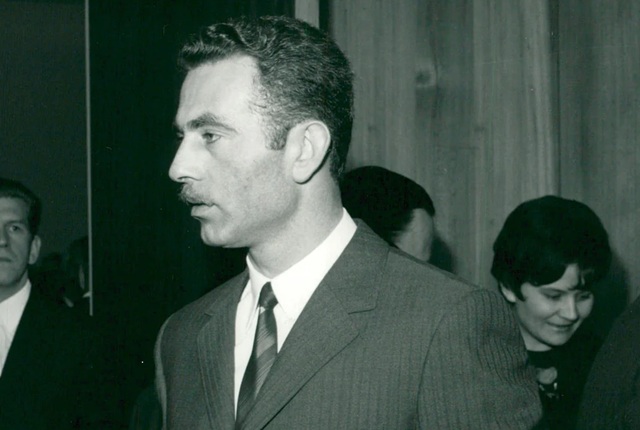
In the summer of 1971, British intelligence was still reeling from years of humiliation at the hands of Soviet spies when an unlikely figure appeared in a north London police station: Oleg Lyalin, a 32-year-old KGB officer posing as a trade official. Dishevelled and overwhelmed by a chaotic double life of espionage, marital breakdown, and late-night parties in the West End, he asked to be connected to MI5. What followed, newly detailed in declassified US intelligence files and reported by The Times UK, would transform the Cold War battlefield, cripple the Kremlin’s networks in Britain, and force Moscow to abandon some of its most aggressive covert operations.
Lyalin’s initial offer was met with deep suspicion. MI5 had spent years consumed by paranoia after the exposure of Soviet “moles” such as Kim Philby and Anthony Blunt, and the CIA had warned of a KGB “master plan” to infiltrate Western agencies using false defectors. Yet Lyalin came armed with revelations that were impossible to ignore. He disclosed that he had been sent to Britain by Department V, the KGB’s sabotage and assassinations unit, to prepare contingency plans for war — including attacks on Britain’s railway network, contamination of seawater with radioactive material, and even assassinations of political figures.
The Russian’s motives were bizarre: he did not initially want asylum but asked instead to be expelled from Britain so he could return to Moscow and divorce his wife. His personal life, riddled with affairs and conflict at home, had become unmanageable. MI5, instead of granting his wish, chose to keep him talking. Over four months of debriefings, his disclosures proved credible, including detailed knowledge of Soviet sabotage networks and the identities of undercover KGB and GRU operatives in the UK. Surveillance even confirmed his troubled marriage, adding weight to his story.
Events reached a breaking point when Lyalin was arrested for drink-driving in August 1971. Days later, ordered by the KGB to return to Moscow, he chose instead to defect with his lover, Irina Teplyakova, and seek political asylum. His cooperation led directly to “Operation Foot,” a dramatic British counter-move that expelled 105 Soviet officials — the largest mass expulsion of Kremlin spies by any Western nation. The purge dealt a devastating blow to Moscow, triggering an internal security crisis within the KGB and forcing it to shutter Department V.
The fallout was profound. For years, Soviet intelligence had forced Western agencies into a state of paranoia. Now, thanks to Lyalin’s disclosures, the tables were turned. Even as Britain celebrated the triumph, CIA counterintelligence chief James Angleton tried to discredit MI5’s achievement by claiming the Russian officer was a plant — an accusation that was ignored in London but reflected the deep mistrust between allies.
Moscow sentenced Lyalin to death in absentia in 1972, but by then the damage was irreparable. For much of the decade, Soviet networks in Britain were paralysed, and MI5 gained valuable time to recover from years of penetration by Soviet agents. Lyalin was resettled in northern England under a new identity, living quietly until his death in 1995.
Yet his story also foreshadowed the darker course of Russian intelligence under Vladimir Putin. After reviving Moscow’s assassination programme through the FSB, the Kremlin returned to targeting defectors abroad. Alexander Litvinenko, a former Russian agent who fled to Britain, was murdered in 2006 with radioactive polonium, while Sergei Skripal, a former GRU officer, survived a 2018 poisoning with novichok nerve agent in Salisbury. Dean Haydon, a former senior Scotland Yard official who investigated the Skripal case, said Putin’s agencies continue to operate with “impunity” and “a disregard for western rules of law.”
The tale of Oleg Lyalin remains a stark reminder of how fragile trust and fortune can decide the course of history. His chance decision to walk into a police station more than five decades ago not only saved Britain from infiltration but also forced the Kremlin into its own era of paranoia — a rare victory for MI5 in the long shadow war with Moscow.