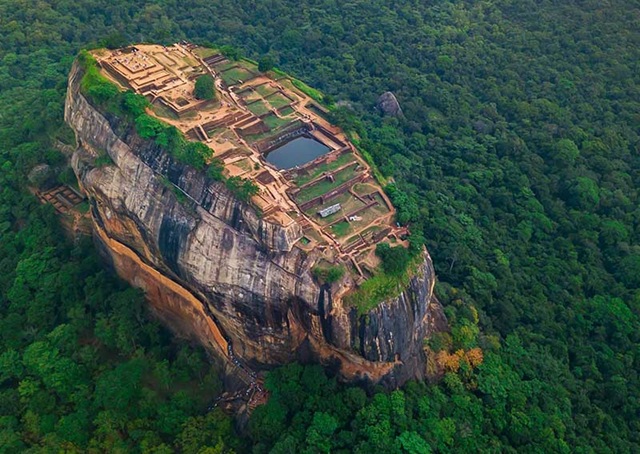
From the moment a visitor stands at the foot of Sigiriya and looks up at its mist-veiled summit, a strange quiet seems to press down on the landscape. The sheer granite monolith, rising abruptly from the plains of Sri Lanka’s cultural heartland, has long been celebrated as an artistic and architectural marvel. Frescoes, mirror walls, and carefully engineered gardens have earned it global admiration. Yet alongside this admiration runs a darker narrative, whispered through generations, suggesting that Sigiriya’s true history was deliberately sealed away during the colonial era, hidden beneath layers of concrete and official silence.
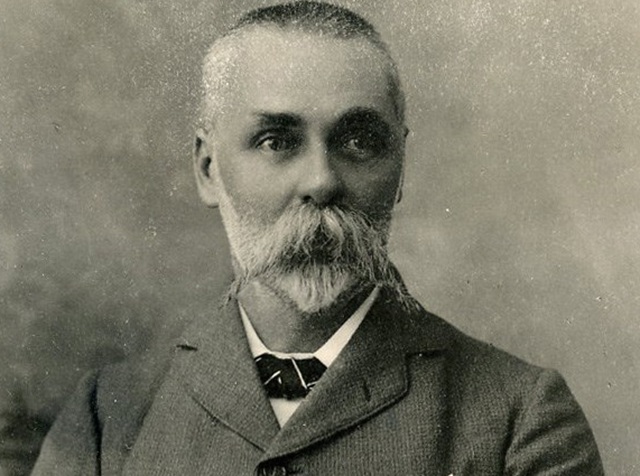
At the center of this controversy stands H.C.P. Bell, the first Archaeological Commissioner of Ceylon, whose excavations at Sigiriya in the 1890s laid the foundations for modern interpretations of the site. To many historians, Bell was a meticulous scholar working within the constraints and assumptions of his time. To others, particularly voices emerging from nationalist and alternative historical traditions, he is portrayed as the key figure in an elaborate concealment of ancient Hela technology and knowledge that challenged European notions of civilizational superiority.
According to these accounts, Bell’s work went far beyond the documented search for the Lion’s Paw entrance and the clearing of debris accumulated over centuries. Folklore and unverified testimonies claim that during his excavations, Bell uncovered a secret door hidden deep within the rock itself. Behind this door, it is said, lay evidence of an advanced technological system built by the ancient inhabitants of Sigiriya: chambers filled with gold, silver, and pearls, and mechanisms embedded with precious stones capable of illuminating the entire rock in a single stream of light. At the heart of this hidden complex, legends speak of a central control room that governed the sophisticated hydraulic fountains whose operation continues to puzzle engineers today.
What Bell allegedly did after this discovery forms the core of the accusation against him. Critics argue that revealing such technological sophistication would have undermined colonial narratives that framed Sri Lanka’s ancient civilization as impressive but fundamentally primitive. In this telling, Bell recognized that proof of advanced Hela engineering, potentially rivaling or surpassing contemporary European achievements, would shake the intellectual foundations of empire. The response, according to the allegation, was drastic: the secret entrance was sealed permanently with thick layers of concrete and granite, ensuring that it could never be reopened.
Visitors to Sigiriya today are often shown areas near the Lion’s Paw that appear oddly closed or reinforced. Bell’s official reports described such measures as necessary for safety and preservation. Yet skeptics argue that these explanations mask a more deliberate act of concealment. They point to persistent claims that Bell removed invaluable papyrus manuscripts and secret documents from the site, shipping them to Britain rather than depositing them in local collections. These materials allegedly contained references to aeronautical knowledge, rare metals, and mirror-based technologies once installed on the rock’s surface.
The disappearance of physical evidence fuels these suspicions. Bell’s diaries reportedly include vague references to unusual finds, but no artifacts corresponding to these descriptions have been publicly displayed or conclusively traced. To critics, this absence is not accidental but the result of systematic removal and suppression. They describe Sigiriya as having been transformed into a “concrete tomb,” where visible ruins are presented to the world while deeper truths remain entombed beneath colonial interventions.
Perhaps the most compelling element of the mystery lies in Sigiriya’s hydraulic system. Even today, its water gardens and fountains demonstrate an extraordinary understanding of pressure, gravity, and flow, achieved without motors or electricity. Engineers continue to debate how water was lifted and distributed across the complex terrain. In the alternative narrative, these systems were once part of a far more intricate network, one that Bell intentionally disabled to prevent further study. By closing off hidden channels and chambers, he is accused of burying not just stone and metal, but intellectual heritage.
These claims are, it must be emphasized, contested and controversial. Mainstream archaeology relies on documented evidence, stratigraphy, and peer-reviewed analysis, and does not recognize proof of the extraordinary technologies described in these stories. Yet the persistence of the accusations speaks to a deeper unease about colonial-era scholarship and the power dynamics that shaped what was recorded, preserved, or dismissed. For many Sri Lankans, Sigiriya symbolizes not only ancient glory but also the historical experience of having their past interpreted and controlled by foreign authorities.
As debates over decolonizing history gain momentum worldwide, Sigiriya’s “concrete silence” has taken on renewed significance. Calls have emerged for advanced, transparent archaeological investigations using modern technology to re-examine sealed areas of the rock. Proponents argue that even if the most dramatic claims prove unfounded, reopening these spaces could restore trust and allow Sri Lanka to reclaim full ownership of its heritage.
Sigiriya remains more than a tourist destination or an open-air gallery of ancient art. It stands as a powerful symbol of unanswered questions, where stone, legend, and history intersect. Whether the alleged secret door exists or not, the controversy itself reflects a broader struggle to understand the past on equal terms. Until the layers laid down during Bell’s time are re-examined, physically or intellectually, Sigiriya’s deepest story will continue to echo in silence, waiting beneath the concrete for a future generation to listen.