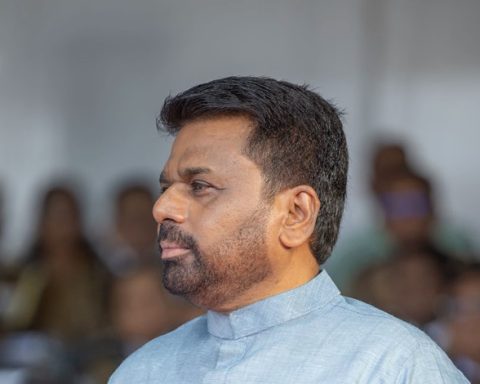
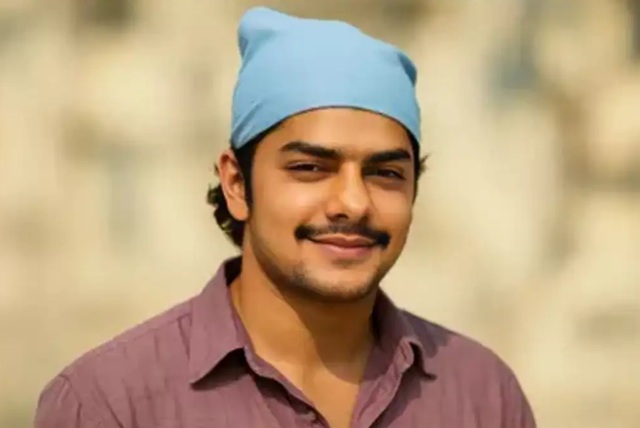
In a significant development in India’s fight against transnational organized crime and terrorism, Indian authorities – through a coordinated deportation operation – successfully extradited gangster Anmol Bishnoi from the United States (US) on November 19, 2025. Anmol, the brother of jailed gang leader Lawrence Bishnoi, arrived in New Delhi along with two Punjab fugitives (details pending) and 197 other undocumented migrants deported from the US.
Shortly thereafter, the National Investigation Agency (NIA) arrested him, and a Delhi court remanded him to 11 days of NIA custody to facilitate further investigation into multiple Bishnoi gang-linked cases. He is the nineteenth accused arrested in connection with the Bishnoi gang’s terrorism-crime syndicate. The NIA had earlier announced a reward of INR one million for information leading to his arrest. Security agencies in several states, including Maharashtra, Punjab, Rajasthan, and Haryana, are now seeking his custody in relation to pending cases.
Amid escalating inter-gang rivalries among Punjab-origin criminal groups, Anmol’s arrest by the NIA in New Delhi prompted his relatives in Punjab to appeal to the Union Government for his protection. The family has sought explicit security measures to ensure he is not harmed by rival gangs or other actors who may seek to target him.
On November 20, 2025, the US Embassy in India, in a statement issued on X, underscored the United States’ continued cooperation with Indian security agencies to enhance public safety, noting that both sides “work together” to dismantle terror-associated networks and hold criminals accountable.
Anmol, who served as a remote ‘operational commander’ for the Bishnoi gang, faces at least 43 criminal cases across India under various terrorism and organized-crime laws – ranging from extortion and targeted killings to arms trafficking and alleged links with pro-Khalistan groups such as Babbar Khalsa International (BKI). These include 22 cases in Rajasthan, 16 in Punjab, two each in Haryana and Maharashtra, and one in Delhi. High-profile cases linked to him include the 2022 assassination of Punjabi singer Sidhu Moosewala in Punjab, in which he is accused of facilitating weapons and logistics; the 2024 killing of Maharashtra politician Baba Ziauddin Siddique, in which he is considered the principal conspirator; and the 2024 firing incident outside Bollywood actor Salman Khan’s residence in Maharashtra, also attributed to his network.
Along with another wanted gangster, Sachin Thapan aka Sachin Bishnoi, Anmol fled India in April 2022 – one month before the killing of Sidhu Moosewala – using forged passports issued under the name ‘Bhanu Pratap.’ They travelled through Nepal, Dubai, and Kenya before Anmol eventually reached the US. Investigators believe they left India in advance to mislead law enforcement and avoid direct implication in the Moosewala killing. Sachin Thapan was later extradited from Baku, Azerbaijan, and arrested in July 2023. From the US, Anmol continued to remotely manage gang operations, including coordinating logistics, shelter, and funds for shooters, arranging arms trafficking and extortion activities, and liaising with key associates such as Satwinder Singh aka Goldy Brar (designated by India as an individual terrorist), and Rohit Godara.
Anmol Bishnoi allegedly recruited several young individuals, including many in their early twenties from northern India and abroad, offering cash advances, housing, and vehicles. He is believed to oversee a large transnational criminal network operating across the US, Canada, Portugal, Italy, Bulgaria, Turkey, the United Arab Emirates (UAE), and other countries. Designated overseas operatives in different countries are reportedly assigned specialised tasks, including maintaining hideouts for absconders, supplying high-grade illegal weapons and narcotics, laundering illicit proceeds, forging identity documents, training new sharpshooters, and luring local juvenile criminals. They also manage cloud-cloned social media accounts, virtual numbers obtained through online verification services, and VPN-masked logins to obscure their locations. Officials note that Anmol Bishnoi’s extensive use of auto-delete platforms and cloned profiles has become a case study for cyber-intelligence teams monitoring global organised crime networks.
Anmol was detained by US Immigration and Customs Enforcement (ICE) in California in November 2024 for travelling on fraudulent documents. His detention triggered a major split within the Bishnoi network after Goldy Brar and Rohit Godara failed to secure his bail, leading to a rupture between their faction and the core Bishnoi gang. This rivalry escalated into violent reprisals, including the killing of a Bishnoi gang associate in Fresno, California, on October 18, 2025, for which the Rohit Godara-Goldy Brar faction publicly claimed responsibility, branding Lawrence Bishnoi a ‘traitor,’ while the Bishnoi gang threatened retaliation.
The Bishnoi gang – one of the largest Indian-origin organized crime syndicates – led by Lawrence Bishnoi, who has been incarcerated since 2014 yet continues to direct an extensive criminal network of more than 700 operatives across multiple Indian states, actively seeking to expand its transnational influence. The surge in targeted killings in Punjab and major diaspora hubs in North America over the past three years – marked by inter-gang rivalries, execution-style attacks, extortion, and systematic intimidation – underscores the sophistication and resilience of the Bishnoi network and poses significant challenges to local law-enforcement and judicial systems. Reflecting these concerns, Canada, which has witnessed a rise in extortion-linked shootings and targeted killings within the South Asian community, designated the Bishnoi gang a ‘terrorist entity’ in September 2025.
Over the past year, Punjab has witnessed a sharp rise in arms smuggling from Pakistan, a trend closely associated with recurring targeted killings, grenade attacks on security establishments, and gang wars, most of which have been traced to overseas operatives of criminal gangs. On November 20, 2025, Punjab Police dismantled a multi-state gangster-terrorist module allegedly linked to the Bishnoi gang and the ISI, arresting five individuals – including two apprehended following an encounter – and recovering two Chinese 86P hand grenades, five .30-bore pistols, and approximately 50 live cartridges, near the Chahar Toll Plaza on the outskirts of Ludhiana city in Punjab. The group was allegedly planning to use the grenades to target government buildings and other sensitive locations in the state to incite unrest.
Many gang leaders operate as fugitives in Western countries – exploiting vulnerabilities in the international border-control and human rights systems, using forged documents and fraudulent asylum claims, and leveraging corrupt networks to evade security checks. Indian security agencies face significant challenges in bringing these criminals into the ambit of Indian law.
In coordination with central agencies, the Punjab Police alone is working to secure the repatriation of nearly 100 wanted gangsters and drug traffickers who fled abroad after committing serious crimes in the state. Among them, around 20 are believed to be hiding in the US. During Prime Minister Narendra Modi’s visit to Washington on February 13, 2025, Indian security agencies shared with US authorities a list of twelve US-based gangsters, including Anmol Bishnoi, Goldy Brar, Darmanjot Singh Kahlon aka Darman Kahlon, Amritpal Singh aka Amrit Bal, Harjot Singh, Harbir Singh, Navroop Singh, Swaran Singh aka Fauji, Sahil Kailash Ritoli, Yogesh aka Bobby Beri, Ashu aka Bhanu Pratap Sambhli, and Aman Sambhi. Apart from Anmol, however, the remaining extraditions are still pending.
Indian authorities believe that ongoing extradition efforts gained momentum after US President Donald Trump stated earlier this year that he would not allow American soil to serve as a safe haven for criminals. In a key development, on October 25, 2025, Haryana Police arrested a wanted fugitive and Bishnoi gang member, Lakhvinder Kumar, after his deportation from the US – an action initiated by a request by the Haryana Police via the Central Bureau of Investigation (CBI). Extradition proceedings against gangster-terrorist Harpreet Singh aka Happy Passia, arrested by the Federal Bureau of Investigation (FBI) in April 2025, and Bishnoi gang member Bhanu Rana, arrested by US authorities in November 2025, are also in their final stages. Both are wanted in multiple terrorism-related cases, including a series of grenade attacks in Punjab linked to the BKI, and Indian authorities have identified several of their US-based associates who remain connected to the network.
Anmol Bishnoi’s arrest not only underscores the growing threat posed by syndicates such as the Bishnoi gang but also reflects strengthened international cooperation aimed at curbing their expanding influence across North India, North America, and other regions. India’s increasing reliance on administrative deportation and bilateral arrangements – under which fugitives are promptly deported on immigration violations, bypassing lengthy judicial processes – has proved more effective than traditional treaty mechanisms alone. This shift signals a broader recognition that contemporary crime syndicates exploit global legal and procedural loopholes, necessitating correspondingly coordinated international law-enforcement responses.
Problems, nevertheless, persist with other countries. As transnational gangster-terror networks have expanded across Western nations, the Middle East, and Southeast Asia, India has sought the extradition of numerous gang members based abroad, many of which remain pending. India currently has 26 extradition requests awaiting action in Canada alone, including those for gangster-turned-terrorists, Arshdeep Singh aka Arsh Dala of the Khalistan Tiger Force (KTF) and Lakhbir Singh aka Landa, a key operative of BKI – both designated as individual terrorists by the Government of India.
There have, however, been occasional successes. BKI operative Parminder Singh aka Nirmal Singh aka Pindi was extradited from Abu Dhabi, UAE, on September 26, 2025, and the extradition of Haryana-based gangster Venkatesh Garg, linked to the Kapil Sangwan aka Nandu gang, who was arrested in Georgia in November 2025, is now in its final stage.
While the present arrest severs a key limb of the Bishnoi gang’s network, the syndicate’s decentralized structure – sustained by operatives dispersed across multiple countries – may allow it to regenerate local leadership, as seen in the 2025 Bishnoi-Brar split following Anmol Bishnoi’s arrest. Leadership transfer and operational continuity typically persist within such organizations, with intermediaries and family members often assuming critical roles when primary leaders are incarcerated.
However, while Anmol’s arrest is significant, the broader effectiveness of such interventions remains uncertain. Many of the gang’s major violent activities were executed while its leader was already incarcerated – enabled in part by systemic corruption – indicating that removing a single node within the network does not, by itself, curtail operational capacity. Only by strengthening institutional capabilities at both local and international levels can the momentum generated by landmark extraditions such as Anmol’s translate into a sustained reduction in the violence and criminality propagated by gangster-terrorist networks like the Bishnoi syndicate.