


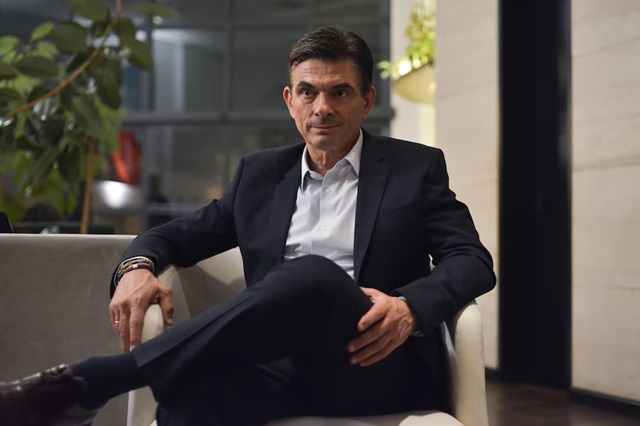
Rodrigo Paz, 58, will officially take office as Bolivia’s new president on November 8, after winning a decisive victory in Sunday’s second-round elections with 54.6% of the vote, nine points ahead of far-right candidate Jorge Tuto Quiroga, according to El País.
Much of Paz’s support came from voters who had previously backed Evo Morales’ Movement for Socialism (MAS), the party that ruled Bolivia for 20 years but is now weakened by internal conflicts and what many see as a lack of vision. “Many Bolivians who voted for Tuto Quiroga, Samuel Doria Medina or Rodrigo Paz had previously voted for MAS. Those are Bolivian votes, not MAS votes,” Paz told El País in an exclusive interview.
Paz inherits a country facing serious economic challenges. Bolivia’s gas sector, once a reliable source of foreign revenue, is no longer the economic windfall it once was. The nation now contends with a recession, high inflation, fuel shortages, and a central bank without reserves. “We need time to start a different way of managing the economy… We are isolated from the world. A full $60 billion has been lost over the last 20 years, leaving us with a debt of $40 billion,” he explained.
When asked about his political stance, Paz described himself as a centrist. “We could say we’re a democratic, national-popular party, with a strong national connection, but a democratic one. There were times in Bolivia’s history when the national-popular party was linked to the civic-military, and we do not repeat that,” he told El País.
Fuel shortages are at the forefront of his agenda. Paz emphasized the need to collaborate with neighboring countries to ensure supply while transitioning Bolivia to a new economic model. “If you ask the vast majority of Bolivians today whether they want to maintain the price without fuel or a new price with fuel, they will say they prefer the latter. The most expensive diesel is the one they don’t have. If there is a vulnerable sector, we will protect it,” he said.
Paz also shared his vision for a merit-based Cabinet that reflects Bolivia’s diversity. “Meritocracy will be important. The names will be based on our campaign commitment,” he noted, signaling a break from partisan appointments that have historically dominated Bolivian politics.
On foreign relations, Paz highlighted a pragmatic and inclusive approach. He spoke with Nobel Peace Prize laureate María Corina Machado, describing the meeting as a positive exchange of ideas. He also emphasized restoring relations with the United States, broken during Morales’ tenure. “First, there’s the return of the Embassy. There’s an obsession with the DEA… Cooperation and mutual work come first,” Paz said, criticizing Morales for decisions that drastically reduced Bolivia’s exports to the U.S. market.
Addressing critics, Paz clarified his economic approach is not neoliberal. “After 20 years of a sort of 21st-century socialism, our slogan is capitalism for all. In Bolivia, the formal economy is 15%, while 85% is informal. Everyone wants to pay taxes, to import, to export, but they understand that this state is very expensive. Capital plays a fundamental role,” he told El País.
Looking ahead to the end of his term in 2030, Paz offered a vision of optimism: “The future is better than the past. I want Bolivia to return to the world and the world to return to Bolivia. I want to create an economy for the people. The economy isn’t there for the state or for a powerful few,” he said.
As Bolivia prepares for the transition of power, the country faces a critical test: whether Paz’s centrist, pragmatic approach can navigate both economic turmoil and political expectations while uniting a polarized electorate.









