Two weeks ago, a WhatsApp group no parent ever wants to join stood at 25 members. Since then, four more have been added, bringing the total to 29 — each representing the death of a child influenced by social media, each a family shattered, lives irreversibly altered. The group, Bereaved Families for Online Safety, founded by Ian Russell after his 14-year-old daughter Molly took her own life in 2017, now serves as a grim testament to a crisis that has only grown. In May 2024, the group had 15 members. Two years later, the number has nearly doubled.
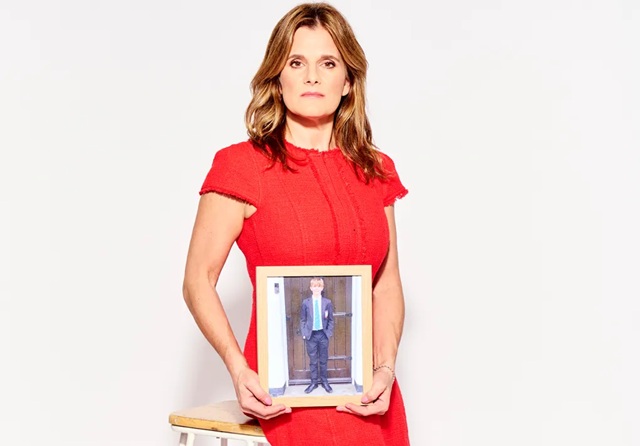
For Ellen Roome, the loss of her 14-year-old son Jools on April 13, 2022, remains a daily reality. The exact circumstances remain uncertain, as she cannot access her son’s phone data. She suspects he was attempting a challenge on TikTok, one among countless algorithmically promoted and dangerously addictive trends. Grieving, she reached out to Russell’s group, finding in others a rare understanding of trauma, loneliness, and anger that only parents who have lost a child in such a way can comprehend. “The group isn’t for everyone,” Roome says. “You have to feel ready to take on others’ grief as well as your own.”
Roome’s heartbreak propelled her into advocacy. Three years after Jools’ death, she sold her mortgage company to campaign for “Jools’ Law,” legislation that would require automatic preservation of online and social media data within five days of a child’s death. She has joined the parents of four other children — Isaac Kenevan, Archie Battersbee, Noah Gibson, and Maia Walsh — in a landmark US lawsuit against TikTok and ByteDance. She has also successfully had the police investigation into Jools’ death reopened after discovering that Gloucestershire police had completed a forensic download of his phone but did not examine it, dismissing his death as a typical teenage suicide. “His inquest lasted 23 minutes,” she recounts. “I’ve had longer meetings about stationery.”
The stories of the group’s members, as reported by Times UK, reveal chilling patterns. While the incidents differ — pranks, challenges, sextortion, cyberbullying, and coercion into self-harm or suicide — the underlying mechanisms are eerily similar. Children encounter algorithmically recommended content that encourages extreme behaviours, often without meaningful intervention. Many investigations are incomplete, and social media companies refuse to release crucial data, leaving families bereft of answers.
Mariano Janin, whose daughter Mia died at 14 after repeated online bullying, recalls the final straw: classmates at school superimposed her image on pornographic content and circulated it on TikTok. “She was 14. She was not a woman. She was a girl, a child in every way,” Janin says. He notes that Mia had been an avid reader and involved in drama and dance, her childhood previously full of learning and play. In the aftermath, Mia’s mother Marisa succumbed to illness, which Janin attributes to the trauma of losing their only child. Now, Janin lives alone with Mia’s dog, Lola, haunted daily by grief.
The parents’ campaign has also drawn attention to the dangers of platforms beyond TikTok. Lisa Kenevan’s son Isaac, 13, engaged with challenges on Roblox and Minecraft that promoted breath-holding and self-harm, sometimes encouraged by strangers posing as peers. George Nicolaou’s son Christopher, 15, was manipulated on Discord by multiple predators while playing Grand Theft Auto, receiving escalating challenges that culminated in his death. Nicolaou describes the experience as a nightmare of digital predation, with the platforms themselves largely unregulated and parental controls insufficient.
This wave of tragedies has spurred global attention. Australia, Spain, and France have introduced or are considering bans on social media for children under 15 or 16. In the UK, the House of Lords voted in favour of an amendment to the Children’s Wellbeing and Schools Bill, which could lead to a ban within a year if approved. Shadow education secretary Laura Trott has been supporting bereaved families, calling for a fast-tracked statutory ban. She warns that the harms are often invisible: “We look at our Instagram and see fashion and furniture; a 13-year-old sees extreme porn, violence, and content that makes them hate themselves.”
Despite these efforts, legal and corporate responses remain limited. Research by the Molly Rose Foundation, founded by Ian Russell, demonstrates that TikTok’s AI continues to recommend content glorifying suicide and self-harm. In the US, lawsuits are beginning to challenge Instagram and YouTube for harming children, while TikTok and Snapchat have already settled some claims. Parents in the UK fear that without urgent action, more children will die before protective legislation is enacted.
The trauma these families endure is both intimate and relentless. Roome recalls struggling to climb stairs after Jools’ death, consumed by grief, disbelief, and anger. Kenevan vividly describes finding Isaac’s body, a scene seared into memory. Janin remembers Mia’s last moments before she was tormented online, a cruel reminder that childhood innocence can be destroyed in an instant. Nicolaou recounts Christopher’s final interactions, controlled by predators manipulating games and social media. Each parent carries the burden of an unimaginable loss, united by a determination to prevent other families from experiencing the same pain.
As reported in Times UK, the parents’ advocacy has created a movement for accountability. They are pushing not only for legal reform, but for systemic change in how social media platforms operate, emphasizing the need to eliminate toxic algorithms and harmful recommendation systems. While some advocate for a blanket ban on under-16s, others argue that the platforms themselves must become inherently safe. Regardless of approach, the urgency is clear: the current digital environment poses lethal risks to children, and families will continue to demand action.
The stories of Jools, Mia, Isaac, Christopher, and the other children whose lives ended too soon are stark reminders that social media is not merely a benign playground. It is a powerful, sometimes deadly force shaping young minds, often beyond the reach of parental oversight. Bereaved families are now at the forefront of a campaign that blends grief with activism, seeking justice, protection, and recognition that children deserve more than algorithmic indifference. Roome, Janin, Kenevan, and Nicolaou speak with one voice: the loss of a child is a permanent scar, but through advocacy and law reform, no other family should have to walk in their shoes.
The grief is unending, the legal battles just beginning, and the stakes are global: in a world where social media has become inseparable from childhood, the question is no longer if, but when meaningful protections will be enforced to safeguard the next generation.