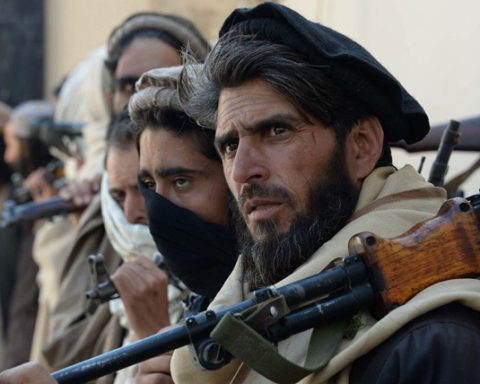
Pete Hegseth first caught Donald Trump’s attention when on Fox News he defended soldiers like Clint Lorance and Mathew Golsteyn. Golsteyn was accused and Lorance was convicted of killing unarmed detainees and civilians in Afghanistan. Hegseth argued on Fox News that such prosecutions for war crimes were not justice but a betrayal of our soldiers who we put in an impossible position. They were asked to fight an impossible war under rules that made victory harder. For Hegseth, the rules of war are the product of politically correct rules of engagement that tied soldiers’ hands in an unforgiving war. Trump was convinced and he granted clemency to the men Hegseth defended. His decision to appoint Hegseth Secretary of Defense and now Secretary of War was a clear sign that our judgment of soldiers’ conduct on the battlefield would shift from fighting wars legally and justly to fighting wars by any means necessary in order to win.
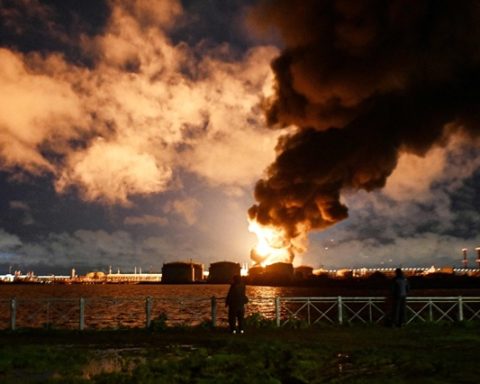
It is helpful to recall this history at a moment when Donald Trump’s advisers — including Hegseth — are telling him that attacking Iranian civilian infrastructure like power plants, bridges, and universities can be lawful when those targets are framed as supporting military operations. A report by Michael R. Gordon and Alexander Ward in the Wall Street Journal says, “Top aides have privately made the case to President Trump in recent days that Iran’s power-generating facilities and bridges are legitimate military targets because destroying them could cripple the country’s missile and nuclear programs, officials say. Trump embraced the rationale, sharply questioned by legal experts and human-rights groups, in a nationwide address Wednesday when he vowed to bomb Iran ‘back to the stone ages.’” The President and his aides are redefining “military target” so broadly that the distinction between civilian and military objectives collapses.
While international law scholars sign letters of protest, the change in U.S. policy has not caused an uproar. This new legal argument about war appears to mark a deeper shift in how we understand war itself. For generations raised in the aftermath of WWII, the idea of the laws of war rested on the simple but fragile premise that even in war, not everything is permitted. Above all, laws of war insist on the distinction between civilians and combatants, on the demand for proportionality, and the idea that military necessity does not erase moral and legal responsibility.
What is striking today is not simply that these moral and legal limits on war are violated, but that they are regularly disregarded. This is the case in Ukraine, where Russian attacks on Ukrainian energy grids, hospitals, and residential areas seem to be clear violations of the laws of war. There is also substantial evidence of forced deportations of Ukrainian civilians, including children, into Russia, which likely constitute war crimes and, in certain interpretations, elements of ethnic cleansing. In 2023, the International Criminal Court issued arrest warrants for Russian officials, including President Vladimir Putin, in connection with the unlawful transfer of children.
It is also the case in the war between Israel and Gaza, where both sides committed horrific war crimes. And it is increasingly the case in the war in Iran. Iran’s ambassador to the UN, Amir Saeid Iravani, told the Security Council that U.S. and Israeli strikes deliberately targeted civilian infrastructure, including residential areas, schools, hospitals, and Red Crescent facilities. At the same time, Iran has been indiscriminately attacking civilians throughout the Middle East. We are seeing a rejection, on all sides, of the very idea of war crimes — a retreat from the idea that war can be a limited and legal practice.
What we are witnessing then may not simply be a series of violations of the laws of war but something more unsettling: a growing recognition that those laws no longer correspond to the reality of modern conflict. As Hannah Arendt pointed out over 60 years ago, the distinction between combatant and civilian — the foundation of jus in bello — has been steadily eroded by wars fought across entire societies, where infrastructure, communication, and even daily life are entangled with military power. Already in the aftermath of World War II, Arendt argued that the line between soldier and civilian had become “obsolete,” not because it was rejected, but because it could no longer be meaningfully sustained. If that is right, then today’s open dismissal of the rules of war — from Moscow to Tehran to Washington — does not mark a sudden moral collapse. It marks something more troubling: the belated acknowledgment that we have long been fighting wars we can no longer honestly claim to regulate.
The question is no longer whether jus in bello is violated but whether it still exists as anything more than a language we invoke, even as we leave it behind. This is not simply a failure to enforce the law. It may be a sign that the laws of war no longer fit the reality they claim to govern.
In fact, this shift was already visible at the founding moment of modern war crimes law. As Hannah Arendt observed in reflecting on the Nuremberg trials, the international community did not truly set out to enforce the traditional laws of war. While war crimes were prosecuted in name, they were not the crimes that mattered most. The harshest judgments were reserved for what were then called the “new crimes” — genocide and crimes against humanity. Ordinary violations of the rules of war — bombing cities, targeting infrastructure, killing civilians — were largely set aside or quietly normalized, especially when committed by the victors.
What mattered, in practice, was not whether war was fought justly but whether it crossed the threshold into something worse than war — inhuman extermination and crimes that shocked the conscience. If that is right, then our present moment is less a break than a continuation. We have not abandoned the laws of war so much as hollowed them out, preserving them in principle while enforcing them only in their most extreme form. War crimes still exist as a category but one that is invoked selectively and punished only when violence becomes so radical that it can no longer be absorbed into the ordinary conduct of war.