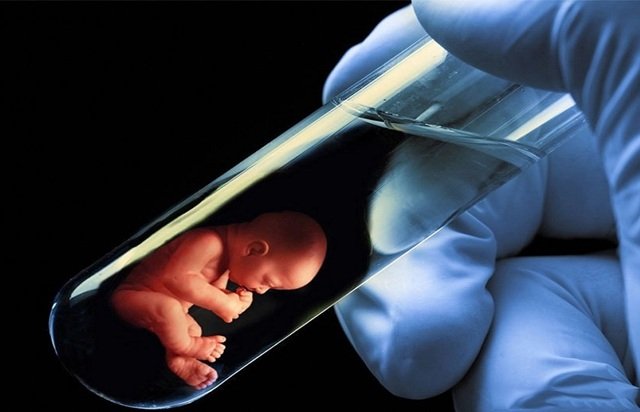
Nearly five decades after the birth of Louise Joy Brown, the first person conceived through in vitro fertilization, IVF has become one of medicine’s most transformative technologies. Millions of children have since been born through the procedure, which has steadily improved in safety and effectiveness. Yet despite its successes, IVF remains an imperfect science: expensive, physically demanding, and emotionally draining for many patients, with success rates that are not only variable but in some cases declining in recent years. Now, a new wave of technological innovation—spanning artificial intelligence, robotics, and genetic screening—is poised to reshape reproductive medicine once again.
The evolution of IVF has always been tied to technological progress, but researchers say the next chapter may be defined by attempts to solve problems that have long resisted medical understanding. Embryologists still cannot fully explain why many apparently healthy embryos fail to implant in the uterus, nor can they reliably predict why some patients struggle to conceive while others succeed quickly. These uncertainties have driven a surge of experimentation aimed at standardizing procedures, reducing human variability, and improving outcomes through machine-assisted decision-making. As reported by MIT Technology Review, the field is now entering an era in which automation and artificial intelligence are no longer supplementary tools, but central actors in reproductive care.
One of the most fundamental challenges in IVF is implantation—the moment when an embryo attaches to the uterine lining and begins pregnancy. Despite decades of refinement in laboratory techniques, even the most promising embryos successfully implant only 40% to 60% of the time. In Valencia, Spain, researchers at the Carlos Simon Foundation are exploring new ways to intervene in this critical step. Their work includes experimental devices designed to maintain uterine tissue outside the body and study implantation conditions more directly than ever before. The long-term ambition is even more radical: the possibility of artificial uteruses capable of supporting pregnancy entirely outside the human body, though researchers emphasize that such applications remain distant.
In the nearer term, the foundation is testing a device that alters how embryos are placed into the uterus. Instead of manual transfer, the system uses a camera-equipped tube and a controlled mechanism that can inject an embryo precisely into the uterine lining at the press of a button. Early trials are extremely limited, with fewer than ten patients having undergone the procedure so far, and no reported pregnancies yet. Still, researchers argue that early failure is not unusual in reproductive innovation, pointing to the decades of experimentation that preceded the first successful IVF birth in 1978.
Another frontier of innovation lies in how embryos are selected in the first place. Traditionally, embryologists rely on visual assessment, choosing embryos based on appearance and developmental patterns under a microscope. Increasingly, however, genetic testing is being used to refine those choices. One widely adopted method, known as preimplantation genetic testing for aneuploidy, screens embryos for abnormal chromosome counts that can lead to miscarriage or genetic disorders. Clinics using this approach, particularly for older patients, report improved success rates and fewer failed pregnancies, though the technique is not without controversy.
The expansion of genetic testing has also raised ethical concerns about how far embryo selection should go. Newer and more controversial tools attempt to predict complex traits such as height, cognitive ability, or disease risk based on polygenic scores. Some companies have begun marketing these services directly to consumers, promising insights into potential future children’s characteristics. However, many fertility specialists caution that the science remains uncertain and incomplete, warning that selecting embryos for one trait could unintentionally increase risks elsewhere. In several countries these practices are restricted or illegal, reflecting ongoing debate about the boundaries of reproductive choice.
Alongside genetic screening, artificial intelligence is rapidly becoming one of the most influential tools in IVF laboratories. AI systems are being trained to analyze vast numbers of sperm, egg, and embryo images in ways that far exceed human capacity. At Columbia University Medical Center, researchers have developed a system capable of scanning more than a million microscope images per hour to identify rare viable sperm in samples previously considered unusable. In at least one documented case, the system contributed to a successful pregnancy, demonstrating its potential to expand access to treatment for patients with severe infertility.
Beyond selection, AI is also being integrated into broader automation efforts. Some researchers are building systems that combine machine learning with robotics to carry out multiple stages of IVF with minimal human intervention. These experimental platforms can select reproductive cells, perform fertilization, culture embryos, and even determine which embryo should be implanted. Early versions of these systems have already contributed to the birth of children, though they remain in limited use. Proponents argue that automation could reduce human error, improve consistency across clinics, and eventually lower the cost of treatment by scaling IVF more efficiently.
Despite the promise of automation, experts emphasize that these systems still depend on a fundamental limitation: the quality of the biological material they begin with. No amount of technological sophistication can fully compensate for the absence of viable eggs, sperm, or embryos. This reality has led some scientists to explore even more controversial frontiers, including gene editing. Techniques such as CRISPR have been proposed as a way to correct disease-causing mutations in embryos before implantation. However, the field remains deeply divided following high-profile ethical violations and scientific backlash, including the case of genetically edited babies created in secret in the late 2010s.
Researchers and bioethicists continue to debate whether embryo editing should ever be used clinically, even for preventing serious genetic diseases. While some argue that tightly regulated applications could eliminate conditions like cystic fibrosis or sickle cell disease, others warn that the risks are poorly understood and could extend beyond intended outcomes. There is also concern that normalizing embryo modification could open the door to genetic enhancement or social inequality in reproductive access.
Across all these developments, a common tension defines the future of IVF: the drive to improve success rates and accessibility versus the need to ensure safety, ethical responsibility, and medical transparency. Automation and AI may make the process faster and more consistent, while genetic tools could improve selection and reduce disease risk. Yet each advancement introduces new uncertainties about control, consent, and long-term consequences.
As MIT Technology Review notes in its reporting on the field, IVF is no longer just a medical procedure but a rapidly evolving technological ecosystem. From robotic embryo transfer systems to AI-driven sperm selection and experimental genetic interventions, reproductive medicine is entering a phase of profound transformation. Whether this leads to more accessible and successful fertility treatment—or to new ethical and biological dilemmas—will depend on how carefully science, regulation, and society navigate the next steps.