
Editor’s note: The following excerpts are taken from a longer article originally published on the author’s official LinkedIn page.
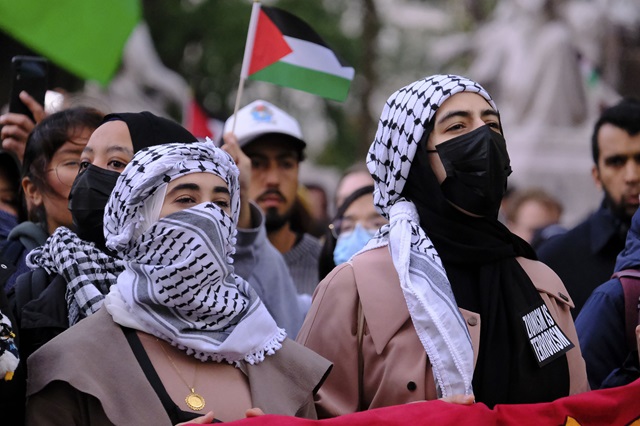
Since 7 October 2023, a brutal war between Israel and Hamas, initiated by Hamas, has devastated the Gaza Strip and sparked a global movement colloquially known as the Pro-Palestine Movement.
The heartbreaking images from Gaza have galvanised this movement across the world, from universities in the West to the streets of Sri Lanka, and most significantly, in the digital sphere of social media. It is a powerful movement that demonstrates humanity’s capacity for compassion for people far removed from themselves. It stands as a testament to the kind of humanist forces needed to bring all conflicts to a halt and to build a secure and peaceful world.
Unfortunately, the original noble aspirations of this movement have been subverted by violent extremist propaganda and performative activists eager to enhance their own social justice credentials. Precious little of the initial desire for a genuine end to conflict, the restoration of Palestinian dignity, and a serious effort towards a two-state solution remains within this movement.
While there are many rational voices—such as the Palestinian Ahmed Fouad Alkhatib or the Egyptian Loay al-Sharif—actively working for true peace and Palestinian statehood, there are overwhelmingly more irrational voices advocating for a globalised Intifada.
How did this happen?
The Pro-Palestine Movement is built on precarious foundations of half-truths and outright historical misunderstandings. One common misconception is the idea that all Jewish immigrants from Europe were Zionist conquerors who came solely to expel Palestinians and seize their homes. The reality is far less binary and simplistic.
History provides context. After the First World War, the League of Nations granted Britain a mandate over Palestine. This period saw a rise in both Arab nationalism and Zionism, the movement for a Jewish national state. Legal Jewish immigration to Palestine increased, driven in part by the desire to escape antisemitism in Europe, which in turn led to escalating tensions and violence with the local Arab population. The British attempted to manage the conflict but ultimately transferred responsibility to the newly formed United Nations.
On 29 November 1947, the UN General Assembly adopted Resolution 181, proposing the partition of Palestine into two independent states: one Arab and one Jewish, with Jerusalem designated as an international city. The plan allocated approximately 56% of the land to the Jewish state and 44% to the Arab state. This allocation was contentious, as the Jewish population, then a minority, was given the majority of the land.
The Zionist leadership accepted the plan as a crucial step towards establishing a Jewish state. However, the Arab leadership and surrounding Arab states rejected it, perceiving it as an unjust division of their land and a violation of the principle of self-determination for the Arab majority. Rather than bringing peace, the UN resolution ignited a civil war in Palestine. Between the UN vote in November 1947 and the end of the British Mandate in May 1948, violence between Jewish and Arab militias escalated.
A key misunderstanding of the partition plan is the belief that all non-Jews would be expelled from the 56% allocated to the Jewish state. This was not the case. At the time, neither a Palestinian state nor an Israeli state existed; the territory was legally administered by Britain as Mandatory Palestine. The partition merely established lines on a map: those on the Jewish side were granted Israeli citizenship, and those on the Arab side became Palestinian citizens. Today, two million Arab Muslims are naturalised Israeli citizens with full rights.
The fighting involved attacks by both sides on villages, cities, and armed forces. Arab forces sought to prevent the establishment of a Jewish state, while Jewish forces aimed to secure the territory allocated to them by the UN. On 14 May 1948, as the British Mandate ended, David Ben-Gurion, the first Prime Minister of Israel, declared the establishment of the State of Israel. The following day, armies from Egypt, Transjordan, Syria, Lebanon, and Iraq invaded the former Mandate territory, transforming the civil conflict into the first Arab-Israeli War.
During and after the war, an estimated 700,000 to 800,000 Palestinians were displaced. This displacement resulted from forced expulsions, voluntary flight due to fear of massacres, and the destruction caused by the conflict. Israel succeeded in establishing a state, while the Palestinians refused the partition terms and did not create their own state. This is the historical record, verifiable by any impartial source.
The next issue is the term “Zionism” and its contemporary misuse as either a slur or a label for European colonial conquerors. Zionism is simply a movement, like the Pro-Palestinian movement, aimed at establishing the Jewish state of Israel. It emerged in response to generations of oppression and pogroms, culminating in the Holocaust. To vilify Zionism is to vilify the Pro-Palestinian movement itself, as both movements are, at their core, genuine attempts to establish national self-determination for their people.
The anti-Zionist narrative has gained traction partly due to a misunderstanding of political systems and partly due to the maximalist goals of Hamas, other terrorist groups, and Iran. In media discourse, many distinguish between Zionism and Jews, but in practice, this distinction is often blurred. When the Pro-Palestinian Movement claims that Zionism is an evil, imperialistic European force perpetuating conflict, it is conflating Zionism with the far-right politics of Israel’s current coalition government, which favours harsh military measures and opposes a Palestinian state.
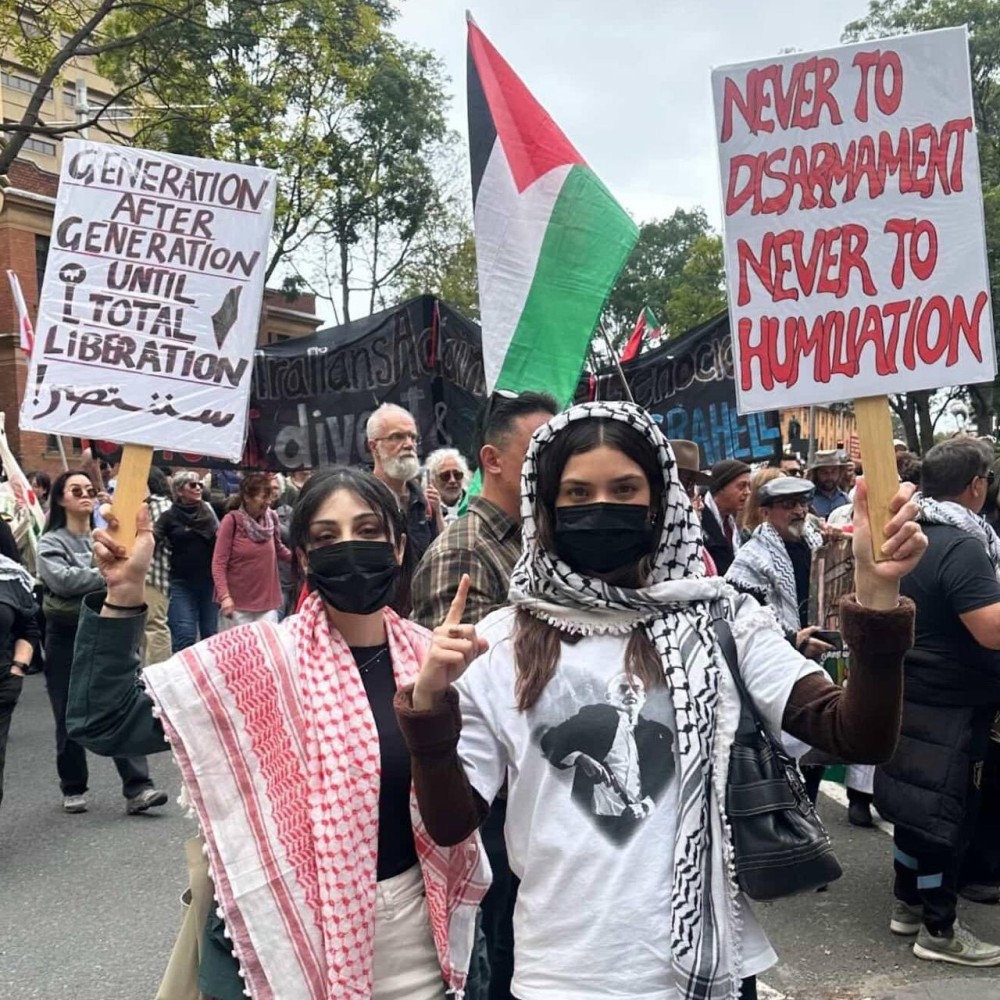
Why is the Israeli far-right opposed to a Palestinian state? Extremist narratives exist in all countries, but in Israel, these views currently dominate government due to security fears. The second Intifada, a violent movement influenced by Hamas, destroyed much support for a two-state solution and instilled fear among Israelis that Palestinians sought the elimination of the Israeli state.
Zionism, therefore, remains a nationalistic ideal of establishing Israel. However, its conflation with far-right politics has caused confusion in the Pro-Palestine Movement, creating misunderstandings between ordinary, peaceful Jews who consider themselves Zionists and support, or are at least open to, a two-state solution.
This confusion can foster antisemitic narratives. Decentralised terror groups, inspired by such rhetoric, may plan attacks on Jewish or Israeli targets worldwide. The 2019 Easter Sunday massacre in Sri Lanka, for instance, was justified by the perpetrators as retaliation for foreign conflicts against Muslims. There is nothing to prevent similar attacks against Israelis or Jews elsewhere if antisemitic narratives go unchallenged.
Another major problem is that the movement unintentionally hinders meaningful change for Palestinians in Gaza. Slogans like “from the river to the sea” or “globalise the Intifada” dismiss Israel’s legitimacy while legitimising Hamas’s brutal rule over Gazans. Many supporters are unaware that Hamas has not held elections since 2006, violently suppresses opposition, misdirects aid towards military aims, and forbids civilians from using its tunnel network for protection from airstrikes.
Rather than highlighting Hamas’s atrocities, the Pro-Palestinian Movement often focuses exclusively on Israeli military actions, ignoring or downplaying Hamas’s crimes. The 7 October 2023 Hamas attack, which took 251 hostages, is a prime example of a grave violation of human rights largely ignored in these protests. This whitewashing of Hamas’s crimes renders the movement ineffective for the Palestinians it claims to support.
The movement also risks inflaming tensions in countries far removed from the Middle East. In Sri Lanka, protests inspired by the conflict have divided communities, radicalised certain groups, and incited violence against Jews, Israelis, and the West. Effective advocacy requires condemning hostage-taking and terrorism alongside calling for Palestinian rights.
The Pro-Palestinian Movement, in its current form, has become a platform for performative activism rather than genuine conflict resolution. Activists often prioritise their visibility and self-image over pragmatic solutions, vilifying anyone who questions their narrative. The alignment of the movement with Hamas and extremist propaganda inadvertently serves the strategic goals of Iran, which finances terror groups in pursuit of regional hegemony.
To realign the movement with its original goals of ending conflict and improving Palestinian lives, several steps are essential. First, pressure must be applied on Hamas to release hostages; no meaningful progress is possible while hostages remain captive. Second, the movement should support the normalisation of relations between Israel and Arab states, as exemplified by the Abraham Accords. Third, it must advocate for the dismantling of Hamas, Palestinian Islamic Jihad, and other terrorist groups, followed by free and fair elections to allow Gazans to choose leadership in their best interests.
Supporters should also familiarise themselves with the Palestinian Authority’s political structure and its key figures. What Palestinians need is motivated, competent leadership focused on practical solutions. The path to a Palestinian state will be long and difficult, but the current global Pro-Palestinian Movement is obstructing rather than aiding this journey. True peace requires intelligence, consistency, and effort—not the endorsement of terrorism or divisive slogans.