Relevance of Soft Power
Since Joseph Nye articulated the term, “Soft power, “the phase has become imperative in the sphere of international affairs as it is a mandate to get things done without coercion. Compared to the soft power strategies espoused by countries like the USA and India, the interest of the leadership in the Russian Federation in projecting the country’s culture as an attraction in international affairs seems to be minimal.
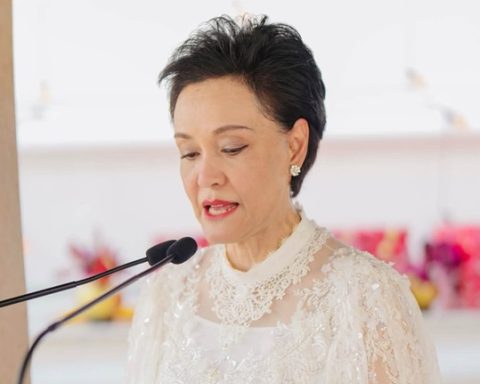
However, the legacy of Russian culture and its catalyst effect in shaping human history cannot be ignored. In the Global South, people’s passion for Russian literature, folklore and music grew as a mode of expression against the colonial culture imposed upon them by the British and French. In this context, the Russia House in Colombo, the principal representative of the Russian Federation in promoting the cultural affinity between Sri Lanka and Russia has taken fresh initiatives to reach the youth in Sri Lanka and the visit paid by its Director Madam Maria Popova to the Faculty of Law, General Sir John Kotalawala Defence University signifies the underlying commitment of Russia to foster its cultural values globally.
Maria Popova, a diplomat representing the Russian Federation, is well-known in the cultural circles of Colombo, frequently making appearances at various events. She has a deep admiration for Sri Lankan culture, referring to Sri Lanka as “Paradise Island” due to her affection for its pristine beaches and the tranquility of its rural landscapes. In a lecture delivered at the General Sir John Kotalawala Defence University, Madam Popova highlighted the historical trajectories that have shaped the relationship between Russia and Sri Lanka. The earliest connections between Russia and Sri Lanka date back to the visit of Russian merchant Afanasy Nikitin, who traveled to the Indian Subcontinent, including Sri Lanka. Nikitin’s memoir, which describes the enchanting beauty of Sri Lanka, served as an allure for Russians, inspiring them to explore South Asia. Russia did not establish a political presence in South Asia until long after it had begun trade relations with the region. Unlike other European powers that strategically gained access to maritime routes, Russia remained isolated from maritime ventures until Peter the Great transformed the country into a maritime power. Peter the Great had a particular interest in exploring the Indian Ocean, which led to his ambitious “Madagascar Project.” Nevertheless, this project fell apart after his death, as his successors focused on consolidating Russian power in the Baltic region.
Russian Connection in Sri Lanka
However, in her well-articulated lecture, Madam Popova unfolded how Russian zest in Sri Lanka known as an emerald island to Russians continued even before both countries established formal diplomatic relations in 1957. One of the early encounters of Russian relations with Sri Lanka was Anton Checov’s visit to Sri Lanka in the late 19th century. Chekov stayed in the island for two nights and three days during his visit from Sakhalin to Odessa. In his letter to Suvorin, he writes “Ceylon is the place where paradise was. Here, in paradise, I made over a hundred miles by railway and was fed up with palm forests and bronze women … in a coconut forest on a moonlit night.”
The other visitor who was besotted by Sri Lanka’s splendour was Ivan Bunin. Bunin came to Sri Lanka in 1911 and fell in love with the island at first sight. In his poem “Ceylon”, he says about the “Outskirts of the earth, uninhabited deserted coasts, ocean open to the very pole.
Apart from the writers who were besotted with Sri Lanka, Russian orientalists continued to explore the rich historical sources of the island as a part of their scholarship. Ivan Minayev , a Russian philologist in the 19th century travelled widely around Sri Lanka learning its native languages and culture. In his memoirs on Sri Lanka, Minayev deplores the cultural erosion Sri Lanka suffered under the British and he witnessed the triumph of Ven . Miggetuwatte Gunananda over Methodist clergy David Silva at the Panadura debate with a great sense of Euphoria showing his solidarity with the colonised.
After tracing this lesser known facts about Russo- Sri Lankan relations to the students at KDU , Madam Popova aptly described the nature of public diplomacy that the Russia House is dedicated to fulfilling as a bridge between the two countries.
In restoring and strengthening the cultural values between Russia and Sri Lanka, Russia House in Colombo has taken much of novel steps adopting timely strategies such as introducing contemporary Russian literature to the local readers through the use of technology. The poems of Maxim Gorkey were translated by Madam Popova into English aiming at the Sri Lankan youth who are keen admirers of Gorky’s “Mother”. Popova highlighted that many poems were echoing the lyrical melody of the Russian language that Sri Lankans have not yet heard of and the Russian Center in Colombo plans to forge the cultural ties between the two nations.
While reminiscing about the Great Russian masters Pushkin, Lermontov, Tolstoy and Dostoevsky, Popova mentioned that currents in Russian literature after the fall of the Soviet Union had not yet reached the literary circles in Sri Lanka. In my opinion, after the demise of great Sri Lankan writers who translated Russian classics into the Sinhala language such as Padma Harasha Kuranage and Dedigama V. Rodirigo, the interest in Russian literature began to decay as successive translators went on to translate the Russian literary works based on English translations. Under the acute guidance of Madam Maria Popova , currently, the Russia House in Colombo conducts a nationwide program to promote the Russian language.
The Russia House in Colombo is the embodiment of Russian cultural diplomacy to Sri Lanka resonating its profound ties with the people. The lecture delivered by its current director Madam Maria Popova at the General Sir John Kotelawala Defence University was a sign that Russia is much inclined to uplift its soft power in the Global South.