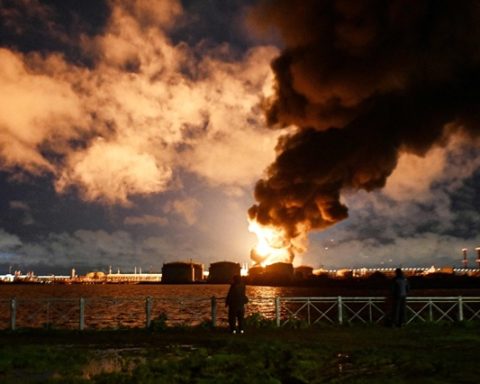
The Strait of Hormuz has long been one of the world’s most consequential energy chokepoints. Now, after nearly six months of conflict between the United States and Iran, its strategic importance is being challenged from several directions at once. A US naval effort to guide allied ships through the waterway appears to be increasing the volume of oil and gas reaching global markets, while Gulf states are accelerating plans to build alternative routes that could eventually reduce their dependence on the Strait.
The Soufan Center, in its assessment of the developing situation, says both Washington and Tehran continue to claim that their strategies are succeeding. Iran has sought to use attacks on shipping through the Strait as leverage, aiming to trigger critical global energy shortages and pressure President Trump to accept Iranian demands. The US strategy has been the opposite: restore energy flows, protect allied shipping and increase economic pressure on Iran without escalating to further military action.
As the June US-Iran Memorandum of Understanding formally expires on Monday, assessments of how much traffic is moving through the Strait are likely to shape the next phase of the conflict. There is growing agreement that US naval efforts have helped increase the flow of energy through the waterway, but disagreement remains over the scale of that improvement and the extent to which it has actually weakened Iran’s ability to restrict traffic.
Iran has simultaneously announced an agreement with Oman establishing safe passage channels through the Strait. Iranian Foreign Ministry spokesperson Esmaeil Baghaei confirmed that the bilateral arrangement covers technical and security details for transit routes, with Iranian defence involvement. Under the agreement, Oman will ensure the safe passage of ships leaving the Gulf, while Iran will manage vessels entering it.
Yet Tehran has made clear that the agreement does not mean the Strait will immediately reopen. Baghaei said the outcome depended on an end to US “military threats and the naval blockade”, and insisted that conditions in the waterway would “never return” to their pre-war state.
The agreement with Oman may itself indicate that Iran recognises that its strategic leverage is under pressure. Despite Tehran’s insistence that it remains in control of the situation, the volume of energy moving through alternative arrangements and under US naval protection is reducing the effectiveness of the closure.
Energy Secretary Chris Wright said on Thursday that US and allied efforts had substantially mitigated Iran’s threat to shipping. According to Wright, between 14 million and 15 million barrels of oil are still leaving the Persian Gulf every day, compared with 20 million barrels per day before the conflict. “So we’re short 5 or 6 million barrels a day from this region, but it’s a much smaller hole than people think it is,” he told Fox News.
The figures remain contested. Maritime tracking company Kpler estimates that volumes exported through the Strait are less than half those reported by the US Department of Energy. Wright argues that private tracking systems are undercounting traffic because many ships have switched off their automatic identification system transponders and are therefore effectively “dark”. While the Energy Department’s assessment has been questioned as potentially optimistic, industry and external sources nevertheless agree that the amount of energy passing through the Strait is increasing.
Part of that resilience comes from pipelines that already bypass the waterway. Saudi Arabia, the United Arab Emirates and, to a lesser extent, Iraq have diverted exports through alternative routes. Saudi Arabia’s 1,200-kilometre pipeline across the Arabian Peninsula to the Red Sea port of Yanbu has become a critical alternative. Aramco chairman Yasir Al-Rumayyan describes the route as the Kingdom’s economic “lifeline”, with the pipeline successfully rerouting seven million barrels per day away from the Strait.
The prospect of reduced dependence on Hormuz is now influencing investment decisions across the Gulf. Regional governments are acting on the assumption that the waterway may never again return to its pre-war role. The Soufan Center reports that Gulf states are expanding pipelines, other export infrastructure and storage capacity in Asia and elsewhere. The projects will cost billions of dollars and take years to complete, but governments now regard them as indispensable even if the conflict ends immediately.
The United Arab Emirates is planning a second pipeline from Abu Dhabi’s onshore oil fields to Fujairah on the Gulf of Oman, due for completion in 2027. The project is expected to double the UAE’s bypass capacity to 3.6 million barrels per day, potentially allowing almost all of its crude to avoid the Strait. The UAE is also reportedly developing an LNG processing facility near Fujairah, potentially giving it a stronger position in competition for LNG customers.
Saudi Arabia, meanwhile, is accelerating a multibillion-dollar expansion of the East-West Pipeline to Yanbu. Once completed, the upgrade will add between one million and two million barrels per day of capacity, leaving little of Saudi Arabia’s oil exports dependent on Hormuz.
Kuwait faces a more difficult position because it currently lacks alternative routes for exporting its oil. It is reportedly discussing a pipeline with Saudi Arabia, the UAE and Oman linking its oil fields to export terminals on the Red Sea or in Oman. In the meantime, Kuwait Petroleum Corporation chief Nawwaf Al-Sabah says the country is drawing down oil stored outside the region. Gulf states are also planning to expand storage capacity in South Korea, Japan and India to guard against future disruption.
Yet alternatives will not eliminate the risks. Kpler’s Amena Bakr argues that access to the Strait will remain crucial to Kuwait indefinitely. Moreover, pipelines and other facilities outside the Strait can still be reached by Iranian missiles and drones. Efforts to harden this infrastructure have yet to be tested against a determined Iranian barrage.
Iraq is also attempting to diversify its export routes. Prime Minister Ali al-Zaidi visited Ankara in late July and signed an agreement intended eventually to move 750,000 barrels per day of Iraqi crude through Türkiye. The plan would make greater use of the existing Iraq-Türkiye pipeline, which currently carries a few hundred thousand barrels per day but has an eventual capacity of 1.5 million barrels per day after repairs and extensions.
During Zaidi’s mid-July visit to Washington, Iraq and Syria also signed an agreement to reconstruct the long-shuttered Iraq-Syria crude oil pipeline, linking the oil-rich Kirkuk region with Syria’s Mediterranean port of Baniyas. Iraq’s state news agency said US major Chevron would carry out the project. The US State Department said the restored corridor would initially have a transport capacity of 2 million barrels per day and would provide a “critical energy corridor linking Iraqi oil production to Mediterranean export markets and beyond”.
Baghdad is also negotiating with Jordan over a proposed pipeline capable of carrying up to one million barrels per day to the Port of Aqaba.
Taken together, these projects point to a potentially profound change in the strategic value of the Strait of Hormuz. Iran can still disrupt shipping, and alternative infrastructure remains vulnerable. But every additional pipeline, storage facility and protected export route reduces the extent to which Tehran can use the waterway to exert pressure on global energy markets.
The Soufan Center’s assessment is that even if not all of the planned alternatives are completed, the combined effort could deprive Iran of its principal strategic “card” within the next three to five years. The immediate battle remains over ships moving through the Strait. The longer-term contest, however, is increasingly about whether the global energy system can be reorganised so that the Strait is no longer indispensable.
For Washington, that prospect strengthens the case for economic pressure rather than immediate military escalation. For Gulf governments, it has turned dependence on a single waterway into an infrastructure problem demanding billions of dollars in investment. And for Iran, the longer the conflict continues while alternative routes expand, the greater the possibility that the leverage created by controlling the Strait will gradually diminish.