
The reported Iranian drone strike on a U.S. military base in Jordan on July 17, which killed two American soldiers while another remains missing, has pushed the West Asia crisis into a far more dangerous phase. It is no longer merely a military confrontation; it has become a political test of deterrence for both Washington and Tehran. Once American military casualties occur, the crisis ceases to be confined to military calculations. It immediately becomes a domestic political issue in Washington, where any administration, irrespective of party, faces immense pressure to respond. That explains the speed and scale of the American reaction.
The first lesson, therefore, is that we should resist the temptation to analyse each missile strike or drone attack in isolation. If we focus only on the latest military exchange, we risk missing the larger strategic picture. The defining feature of the current crisis is not the latest strike itself but the gradual erosion of deterrence and the growing possibility of strategic miscalculation.
The United States seeks to restore deterrence by signalling that attacks on its forces and interests will invite a decisive response while reassuring its regional partners that its security commitments remain credible. Iran, on the other hand, seeks to demonstrate that, despite years of sanctions, economic pressure, and military coercion, it retains the capacity to impose significant costs on its adversaries. The latest escalation must therefore be understood as part of a broader contest for strategic credibility rather than as an isolated military incident.
History suggests that conflicts often widen not because either side initially seeks a full-scale war but because successive rounds of retaliation create their own momentum. Every response generates pressure for another response, narrowing the political space for restraint. The greatest danger is rarely the first strike. It is the possibility that unintended escalation or a misreading of intentions transforms a limited confrontation into a much wider conflict.
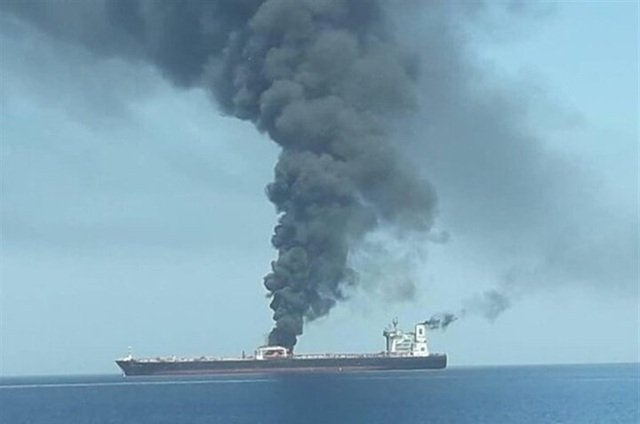
The implications extend well beyond the battlefield. One of the principal strategic concerns is the security of the Strait of Hormuz, through which nearly one-fifth of global oil supplies pass. Even the perception of possible disruption is sufficient to unsettle energy markets. Oil prices respond almost immediately, shipping costs rise, insurance premiums increase, and financial markets begin pricing in geopolitical risk well before governments formulate policy responses. In an interconnected global economy, uncertainty itself becomes an economic cost.
For India, these developments carry direct strategic implications. India has an important strategic partnership with the United States, close relations with Israel, longstanding civilisational and economic ties with Iran, and deep political, commercial, and energy interests across the Gulf. Millions of Indians live and work in the region, making stability in West Asia an issue of both national security and economic well-being. India’s interests therefore lie not in taking sides but in preventing further escalation and preserving regional stability.
New Delhi’s immediate priorities should be clear. The first is to safeguard energy security by maintaining adequate strategic reserves and diversifying crude oil procurement wherever feasible. The second is to work closely with regional partners to ensure the security of sea lines of communication, particularly in the Arabian Sea and the approaches to the Strait of Hormuz. The third is to maintain sustained diplomatic engagement with all principal stakeholders, including the United States, Iran, and the Gulf states, while remaining prepared to assist and, if necessary, evacuate Indian nationals should the security situation deteriorate further. At the same time, India must closely monitor developments because any prolonged disruption in energy supplies or maritime trade would inevitably affect inflation, economic growth, and domestic energy security.
Yet caution is equally necessary. It would be premature to conclude that the region is inevitably heading towards a wider war. History shows that even during periods of intense military confrontation, diplomatic channels often remain active. Responsible governments recognise that, however conflicts begin, they ultimately end through political engagement rather than military action alone.
The central question, therefore, is not who launched the latest missile or drone attack. The real question is whether the cycle of retaliation can be interrupted before it acquires a momentum that neither side can fully control. Once escalation becomes self-sustaining, events begin to dictate political choices rather than governments shaping events.
Military power can influence the course of a conflict, but it cannot by itself produce a durable political settlement. That ultimately requires diplomacy, dialogue, and political compromise. As tensions continue to rise in West Asia, the international community should focus less on managing the next military exchange and more on creating conditions for sustained political engagement. India must therefore continue pursuing strategic autonomy, intensify diplomatic engagement with all regional stakeholders, strengthen maritime security in the Arabian Sea, safeguard energy supplies, and remain prepared for contingency operations involving its large diaspora in West Asia. Balancing preparedness with diplomacy will best protect India’s long-term strategic and economic interests in an increasingly volatile region.