U.S. President Donald Trump has renewed his claim that he prevented a potential nuclear conflict between India and Pakistan, saying trade pressure and tariff threats forced both countries to halt hostilities during last year’s crisis. Speaking in an interview, Trump said he had “settled” multiple global conflicts using economic leverage and asserted that the standoff between the two nuclear-armed neighbors could have escalated dramatically. He alleged that as many as 10 aircraft were shot down during the confrontation and argued that tariffs were instrumental in pushing both sides toward de-escalation.
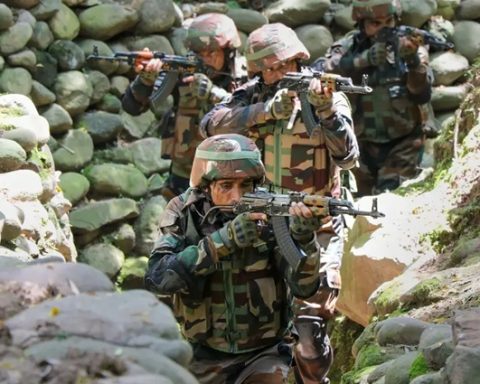
Trump has repeated variations of this assertion dozens of times since May last year, when he announced that India and Pakistan had agreed to a “full and immediate” ceasefire following talks he said were mediated by Washington. India, however, has consistently rejected the claim of any third-party intervention, maintaining that decisions related to the conflict were bilateral. The tensions followed India’s launch of Operation Sindoor on May 7, targeting what it described as terror infrastructure in Pakistan and Pakistan-administered Kashmir in retaliation for the April 22 Pahalgam attack that killed 26 civilians.
The renewed rhetoric comes alongside significant developments in U.S.-India trade relations. Washington has revised its official factsheet on the recently announced bilateral trade framework, notably removing earlier language that suggested India would reduce tariffs on certain pulses, a politically sensitive agricultural import. The updated document also softened wording that had described India as “committed” to purchasing over $500 billion worth of U.S. goods, changing it to “intends” and omitting references to agricultural products from the proposed purchases.
Further revisions eliminated mention of India scrapping its digital services tax, which had previously been included as part of the understanding. The updated language now focuses more narrowly on negotiations over digital trade rules without referencing tax removal. The changes are being viewed by Indian observers as a strategic win that protects domestic farm interests and preserves policy flexibility in key sectors.
Meanwhile, relations between Washington and Islamabad have also come under strain. Pakistan’s Defence Minister Khawaja Asif delivered an unusually blunt criticism of the United States in the National Assembly, accusing Washington of using Pakistan for strategic objectives and then abandoning it. He argued that Pakistan’s alignment with the U.S., particularly after the 1999 military shift and the September 11 attacks, inflicted deep and lasting damage on the country.
Asif described Pakistan’s role in supporting U.S. operations in Afghanistan through logistical access, intelligence cooperation, and military backing as a historic miscalculation driven by geopolitical considerations rather than religious motivations. He said the policy not only reshaped domestic institutions but also contributed to long-term instability, while accusing past military leaders of entangling Pakistan in conflicts whose consequences persist today.
The convergence of Trump’s renewed claims, evolving trade negotiations with India, and Pakistan’s sharp rhetoric highlights the continuing complexity of South Asia’s geopolitical landscape, where security tensions, economic diplomacy, and historical grievances remain tightly intertwined.