President Donald Trump signed an executive order aimed at prioritizing the resettlement of white South Africans in the United States, citing what he described as “government-sponsored race-based discrimination” in South Africa. The order directs U.S. officials to focus on the resettlement of Afrikaners, descendants of the Dutch colonists responsible for enforcing the apartheid system, who Trump claims are victims of racial discrimination.
The executive order has prompted significant backlash, both domestically and internationally, with critics accusing Trump of targeting a minority group in South Africa while sidelining the ongoing struggles of the Black population, who continue to face the consequences of apartheid policies.
Trump’s directive further included an immediate halt to all U.S. aid to South Africa, much of which is directed towards programs fighting HIV/AIDS. In 2023, the United States provided nearly $440 million in aid to South Africa, including funding for the U.S. President’s Emergency Plan for AIDS Relief (PEPFAR), which supports 17% of South Africa’s HIV/AIDS treatment efforts.
The executive order accused the South African government of engaging in policies that systematically undermine the rights of Afrikaners, particularly focusing on land expropriation without compensation. Trump alleged that South Africa was seizing agricultural land owned by ethnic minority Afrikaners and enacting laws that deprive them of equal opportunities in employment, education, and business.
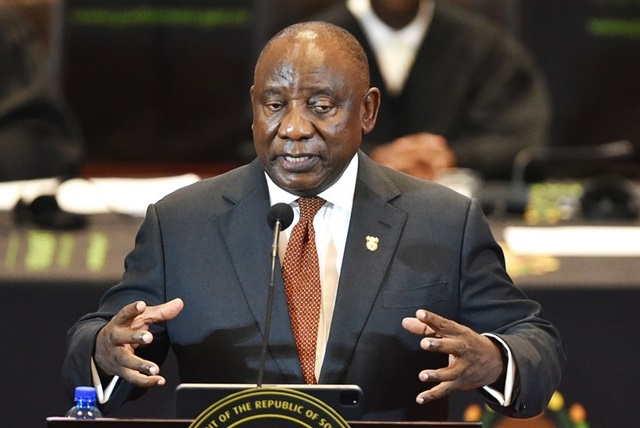
The South African government has strongly rejected these accusations, stating that its land reform policies are designed to address the historical injustices of apartheid by redistributing land to those who have been marginalized. President Cyril Ramaphosa responded to Trump’s remarks by asserting that the country’s land expropriation efforts are constitutionally mandated and not an act of “confiscation.”
“South Africa is a constitutional democracy that is deeply rooted in the rule of law, justice, and equality,” Ramaphosa stated. “The Expropriation Act is not a confiscation instrument, but a constitutionally mandated legal process.”
Despite these assertions, Trump directed his administration to expedite the resettlement of white South Africans who claim to be victims of racial discrimination, with the Secretary of State and the Department of Homeland Security instructed to prioritize their refugee applications.
This move marks a stark reversal from Trump’s first day in office when he signed an executive order suspending the U.S. refugee admissions program, arguing that refugees posed a strain on receiving nations. However, Trump’s new order acknowledges the need for case-by-case exemptions and offers a pathway for these Afrikaner refugees, who, according to the order, would be granted special status within the U.S. refugee program.
The decision to prioritize white South African refugees comes amid rising tensions over race relations and land reform policies in South Africa. Trump’s right-wing allies, including Elon Musk—who was born in apartheid-era South Africa—have been outspoken critics of the current South African government, with Musk previously labeling the nation as “anti-white.”
In response to Trump’s rhetoric, South African officials have attempted to clarify their position on land reform. Ramaphosa has continued to defend his government’s stance, rejecting accusations of racial discrimination and emphasizing the importance of justice and equality for all South Africans.