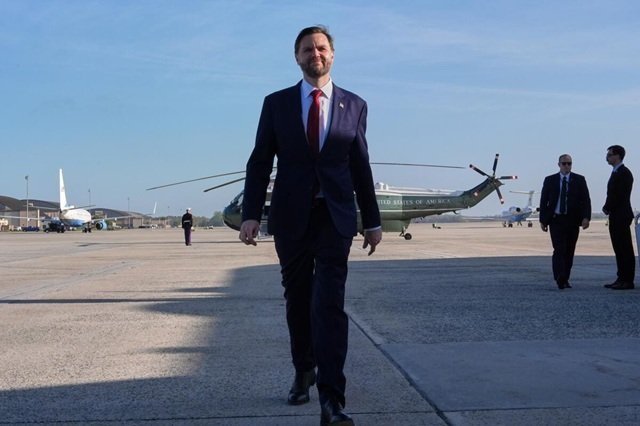
US President Donald Trump has signalled that his administration is abandoning efforts to negotiate a peace agreement with Iran, casting doubt on a diplomatic initiative led by Vice-President JD Vance and mediated by several Middle Eastern governments.
“We don’t need a deal with Iran. Those days have long since passed. We’ve got their money, Hundreds of Billions of Dollars, and we’ve got their Strait [of Hormuz]!” Trump wrote on his Truth Social platform on Thursday.
The statement came days after Trump indicated that Washington would maintain the existing military and economic pressure on Tehran rather than launch a fresh bombing campaign. It also appeared to mark an end to Vance’s recent efforts to revive negotiations, which included a direct letter to Mohsen Rezaei, Iran’s senior security official, last month.
Regional mediators, led by Qatar, have spent several weeks attempting to secure an interim agreement between Washington and Tehran, while urging Trump to allow more time for diplomacy. Their efforts intensified after Trump and Israeli Prime Minister Benjamin Netanyahu suggested last month that military attacks on Iran could resume following the US midterm elections.
Concerns that military action was imminent, particularly after significant Republican losses at the polls last week, prompted a series of diplomatic interventions over the weekend. The leaders of Qatar, Saudi Arabia, Turkey and the United Arab Emirates contacted the White House as regional governments sought to prevent a renewed confrontation.
Following a meeting with Qatari Prime Minister Sheikh Mohammed bin Abdulrahman al-Thani in Washington on Monday, Trump said there was “positive momentum” towards ending the war. A diplomat briefed on the meeting, which also involved Vance, described the discussions as positive and said there was an “agreement that diplomacy is the preferred way forward to get a deal”.
Trump subsequently indicated that military action was becoming less necessary. He said his administration intended to continue applying economic pressure through sanctions and a US naval blockade of Iranian ports to force Tehran to accept Washington’s demands.
“It’s really status quo territory. We’re keeping it going,” he told reporters at an impromptu news conference.
US Secretary of State Marco Rubio also defended the economic strategy during a visit to Paris this week, saying Washington’s “economic campaign is working so well that the president really doesn’t have any need to conduct major combat operations”.
However, Trump’s latest statement suggests that the administration is no longer prioritising negotiations. He said he had instructed Vance to redirect his attention towards what he described as “Democrat run Cities and States”, alleging, without providing evidence, that those jurisdictions were stealing billions of dollars each month.
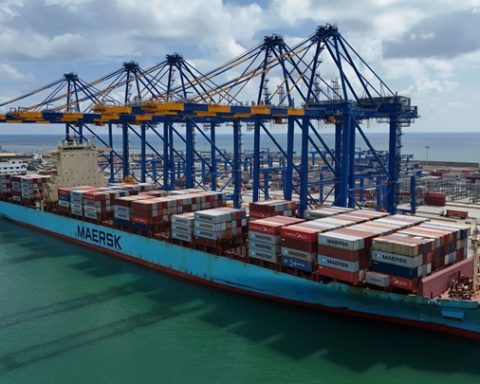
A US official told the Financial Times that Washington was in a “very strong position” and described Iran’s economy as “collapsing”. The official also repeated Trump’s assertion that the United States had control of the Strait of Hormuz, despite explosions disabling two oil supertankers on Wednesday night.
Negotiations have faced substantial difficulties despite Iranian officials initially responding positively to Vance’s letter. Mediators have struggled to bridge deep mutual distrust and significant differences over the conditions of an interim agreement.
Under a recent proposal, Iran would permit the free movement of commercial shipping through the Strait of Hormuz, a major energy export corridor, while the United States would lift its naval blockade, allow Iranian oil exports and provide access to some of Tehran’s frozen overseas funds.
Washington is also demanding that Iran allow International Atomic Energy Agency inspectors to visit its principal nuclear facilities, which the United States bombed during a 12-day conflict last year.
Two major obstacles remain the sequencing of the proposed concessions and the future of Iran’s 440kg stockpile of highly enriched uranium. Washington has insisted that Tehran transfer the material offshore, a demand Iranian officials have publicly rejected. Tehran, meanwhile, wants the United States to take concrete measures, including lifting its naval blockade, before any formal agreement is reached.